
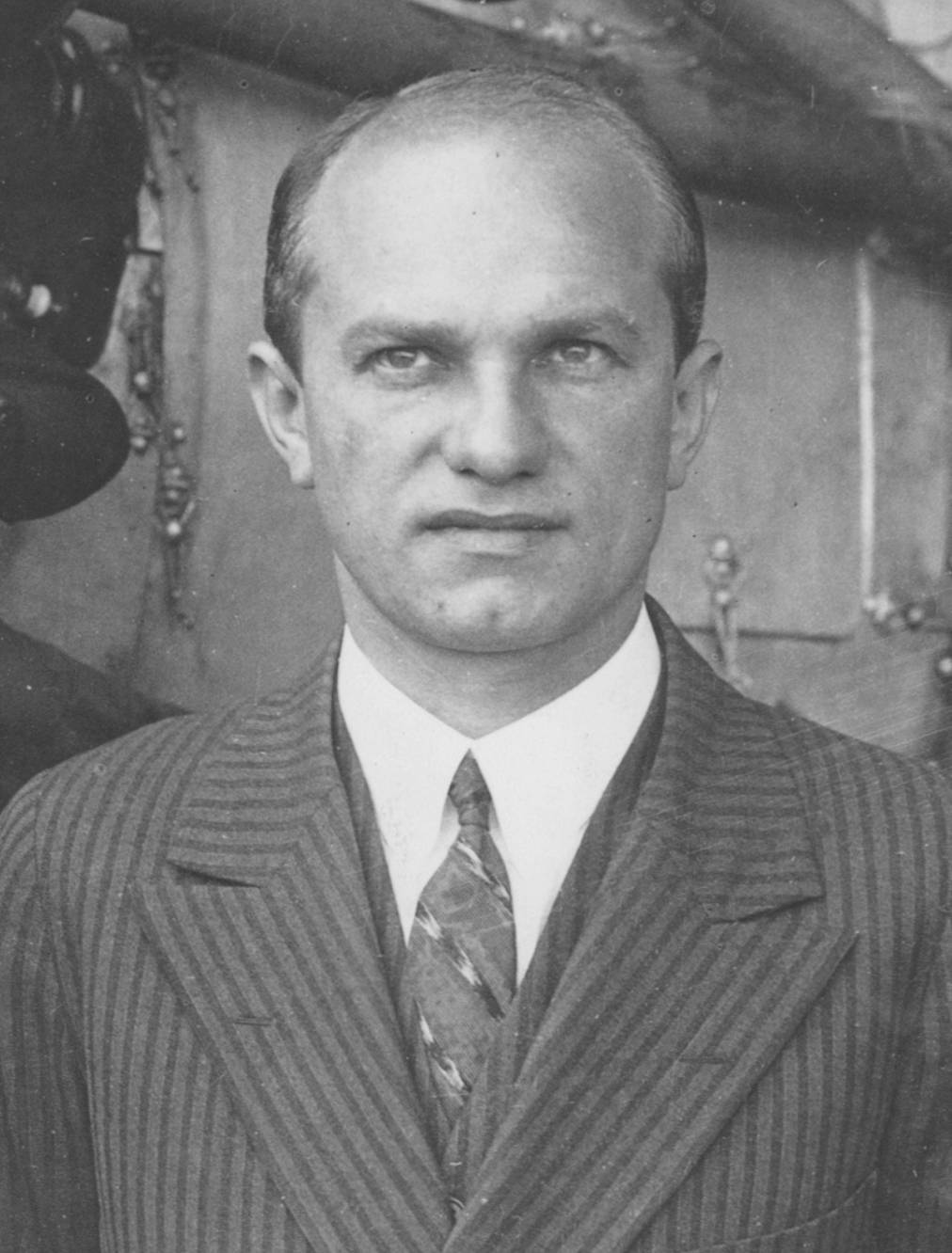
Aviation anti-hero Charles A. Levine. Photo via Wikimedia.
After making his millions in a Greenpoint scrap yard, the legendary aviator sought fame in the skies.
GEOFFREY COBB | gcobb91839@Aol.com
Author, “Greenpoint Brooklyn’s Forgotten Past
In 1991, Charles Levine was a disheveled ninety-four-year-old bum, living in one room in a seedy Bowery flop house. Seeing him, few would have imagined that this man had not only once been a millionaire, but that he had even been an international hero.
His tragic life story only proves that wealth and fame are often fleeting. Today Levine’s name is forgotten, but he was once a massive celebrity. Born in 1897 in North Adams, Massachusetts, he moved as a child to Williamsburg, where as a teenager he did the books for his father’s business. At the end of World War, not yet thirty years old, Levine made a fortune by extracting the scrap metal contained in the dangerous military stockpiled in Greenpoint. Levine managed to develop a method to cut the valuable brass casings safely from the shell, making him fabulously wealthy and allowing him to enter aviation in the days before the first trans-Atlantic flight.
He bought an airplane capable of crossing the ocean and dreamed of gaining the glory that would come to Charles Lindberg, the pilot of the first Transatlantic flight in 1927. Had Levine’s luck been better he might have beaten Lindberg. He was preparing to fly across the Atlantic at the same time that Lindberg made his famous flight in “The Spirit of St. Louis,” but a lawsuit prevented him from using his plane.
Two weeks later, he was ready to risk his life by flying over the ocean. Light was just breaking in the sky as the plane, flown by Charles Chamberlain with Levine as passenger, lifted off the runway straight into the rising sun at Roosevelt Field, Long Island. Slowly pulling its heavy weight, the plane ascended. Levine’s wife screeched in horror. She had come there to watch the historic event with her husband. Levine told he was just going to taxi around the field, to let him get a feel for the aircraft, but to her sheer terror they took off, and she shrieked in horror thinking she would shortly become a widow. She angrily cried aloud that if she had known that her husband intended to fly with Chamberlin, she would have burned the plane first.
The Columbia, though, was a better-designed and more powerful aircraft than Lindberg’s, but an injunction kept the Columbia grounded and Levine out of history. The Sheriff’s attachment had been lifted just hours before Lindberg took off in the iffy weather, too late for the Columbia to beat Lindberg. The following day, Levine announced that his plane would not just surpass Lindberg’s record but would do so with him as the first-ever transatlantic passenger.
Levine’s plane pulled skyward heading east. Reaching the coast of England, the Columbia crossed the English Channel. Levine was intent on making it to Germany and winning the $15,000 prize for the first New York to Berlin flight, but he argued with Chamberlin demanding a change in course that wasted precious fuel. They landed 115 miles short of Berlin out of gas. They were greeted by an exuberant crowd of Germans.
A refill of petrol allowed them to fly again only to learn the engine got the wrong fuel and they crashed landed. The next day, though, they arrived in Berlin with an estimated 100,000 people awaited cheering them wildly. Levine and Chamberlain became heroes, hailed by the world media, royalty, high society and women, who threw themselves at Levine. The President of Germany, Paul Von Hindenburg, personally welcomed them. The American Ambassador to Germany met the fliers and presented a congratulatory cable from the President Calvin Coolidge. In the ensuing weeks, Levine was granted a private audience by the Pope, the first private audience ever granted to an American in the throne room. Levine wasspeechless as the Pope blessed him. Levine met and amicably discussed flying with Italian leader Benito Mussolini. Jewish breasts at home swelled with pride as a Yiddish song written in his honor proclaimed, “Hurrah far unzer held Levine.”
Sadly, his story turned tragic. He became a womanizer and left his wife and family for another woman who stripped him of much of his wealth. He lost a fortune in the depression and ended up doing time for counterfeiting.