COBB: The Wall Street Bull’s Greenpoint Origins

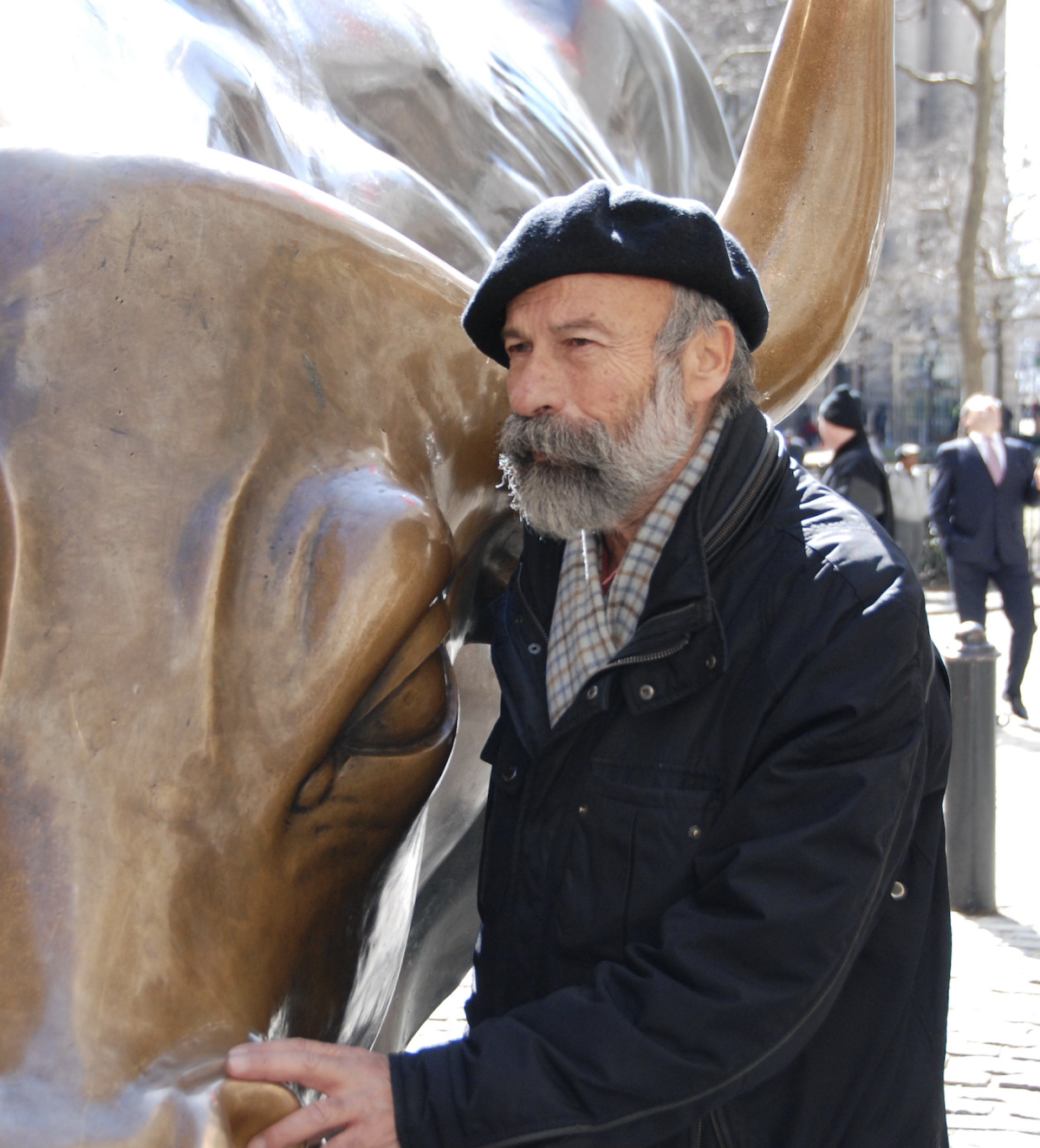
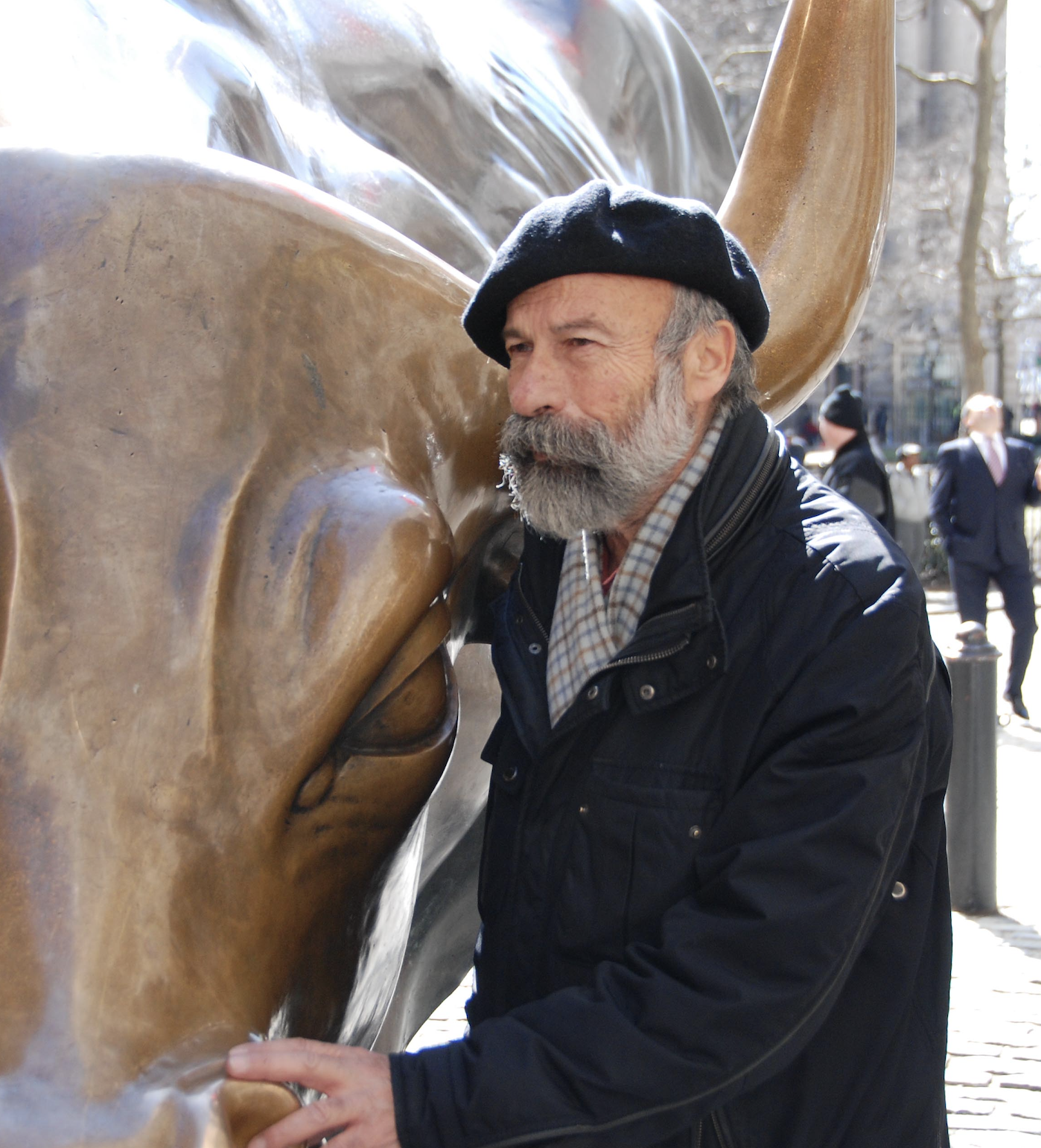
Arturo Di Modica with his bull. Photo via Wikimedia.

GEOFFREY COBB

Author, “Greenpoint Brooklyn’s Forgotten Past”

gcobb91839@Aol.com

The Charging Bull sculpture is a New York Icon, representing the power of Wall Street and the strength of capitalist institutions. The iconic bronze statue that charms visitors to Bowling Green in Lower Manhattan is one of the most popular Instagram photos in New York. Visitors from around the world take selfies with the massive, menacing Bronze bull, but few of those taking selfies know the amazing story behind the creation of this iconic piece of New York art.

Few Greenpointers realize that the iconic charging Bull bronze statue that sits in Bowling Green was actually created in Greenpoint at the Bedi-Makky, fine arts foundry on India Street. It is the same foundry where the world’s largest bronze sculpture, the Marine Corps Memorial depicting the raising of the American flag over Mount Suribachi on Iwo Jima was also cast there.

Most people seeing the iconic bronze bull imagine that the stock market or some investment house commissioned the work, but it is actually a piece of renegade art with a fascinating back story.  The bull was the creation of Sicilian-born artist Arturo di Modica, who had arrived as a penniless artist in New York and had ended up becoming a respected sculptor and driving a Ferrari. Di Modica felt indebted to America for welcoming him and enabling his success. With Wall Street suffering a lack of confidence from its huge losses on “Black Monday,” he decided to give Wall Street a get-well present that, symbolized Wall Street’s bold future.  Di Modica later said, “My point was to show people that if you want to do something in a moment when things are very bad, you can do it. You can do it by yourself. My point was that you must be strong.”

He conceived the iconic Charging Bull sculpture, which was intended to inspire each person to persevere through the hard times. Di Modica spent the next two years working with Bedi-Maki creating the 16-foot bronze, while personally financing the huge $350,000 cost.

He finished his sculpture, but the New York Stock Exchange denied his request to place it on Wall Street, his intended location. Never one to be thwarted, Di Modica schemed.

Lacking a city permit for the bull, he devised his greatest caper.  Di Modica spent weeks scouting Lower Manhattan after midnight, taking note of how often police officers passed by. Then, around 1 a.m. on Dec. 15, he loaded his sculpture onto a flatbed truck and drove to Broad Street, near the stock exchange, where about 40 of his friends were waiting with a crane and a truck.

When the sculptor and his friends arrived at the spot he had picked, they were surprised to see a Christmas tree had been erected there. “Drop the bull under the tree,” he shouted. “It’s my Christmas gift.” They carried out a lightning-swift operation to plant the statue near Bowling Green park, a short stroll from the headquarters of the stock exchange, without city approval. After depositing the bronze bull, Di Modica and his friends uncorked a bottle of champagne to celebrate.  Di Modica stayed by the bull all night and greeted the astonished morning commuters as they gazed in wonder at the sculpture.

The Bull was removed by the city, but its creator was determined. Di Modica found out where his bull was taken, and paid $500 to retrieve it, while headlines about his caper spread around the world, including the front page of the New York Post. The headlines created  a public outcry demanding the bull’s return and  Parks Commissioner Henry Stern arranged for the sculpture’s installation at Bowling Green on December 20th of that year, where it still stands The bull  quickly became one of America’s most famous works of art and a draw for millions of tourists, most of them completely  unaware of the sculpture’s illicit installation.

In 2017, Charging Bull received media attention when a sculpture of a small female child called Fearless Girl appeared in front of it. Di Modica complained the sculpture changed the meaning of his work and threatened litigation, and at one point in exasperation stated: “Now I’m going to turn around the bull myself.”

Di Modica spent the final years of his life on several major projects, including a secretive monument called Unfinished Journey that would have marked the 250th anniversary of the founding of the United States in 2026. Built of stainless steel and bronze, he sculpted “a sailing ship representing the very imperfect start to the American experience” and “the [continuing] quest for a more perfect union.” He died of cancer in 2021.
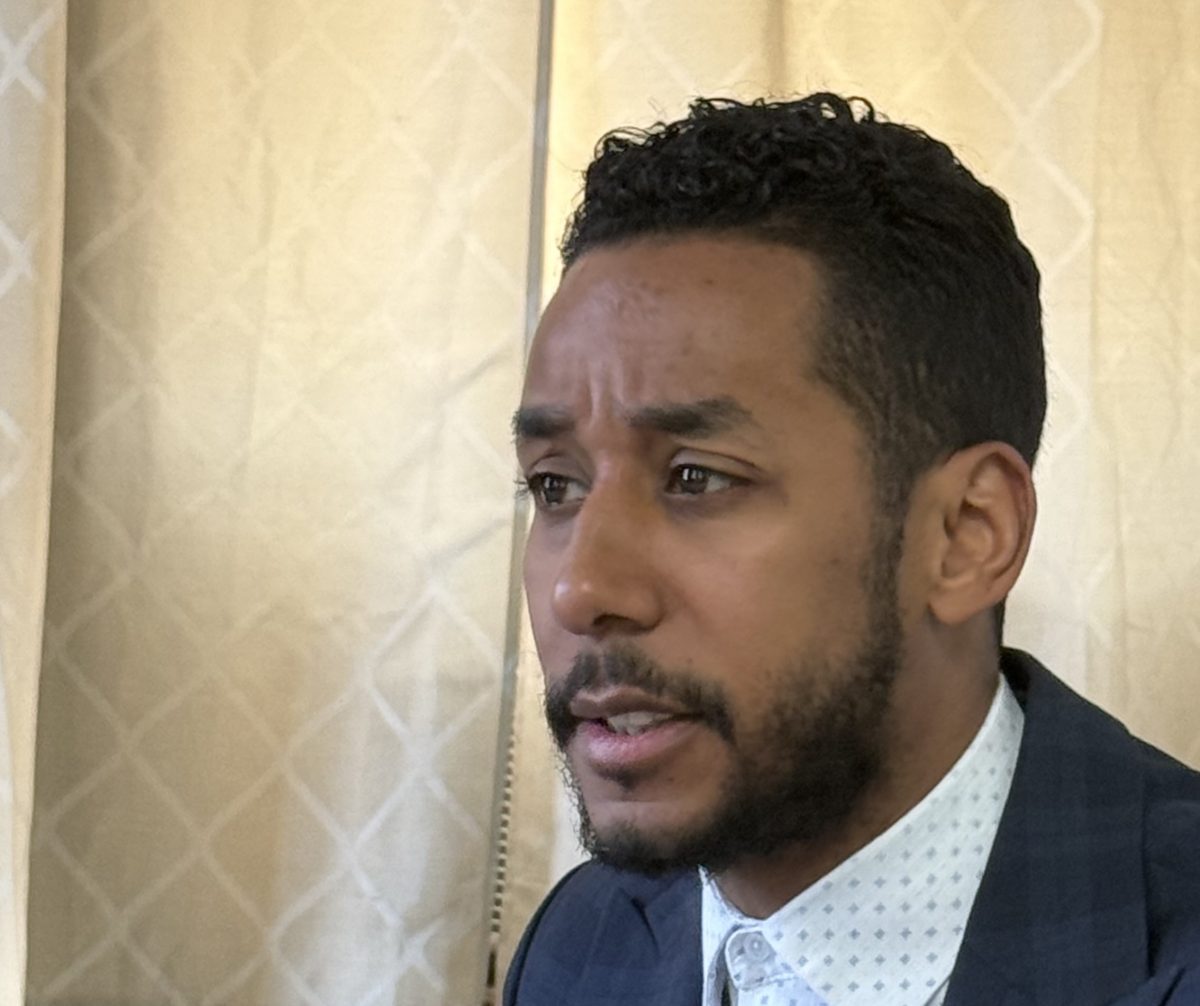
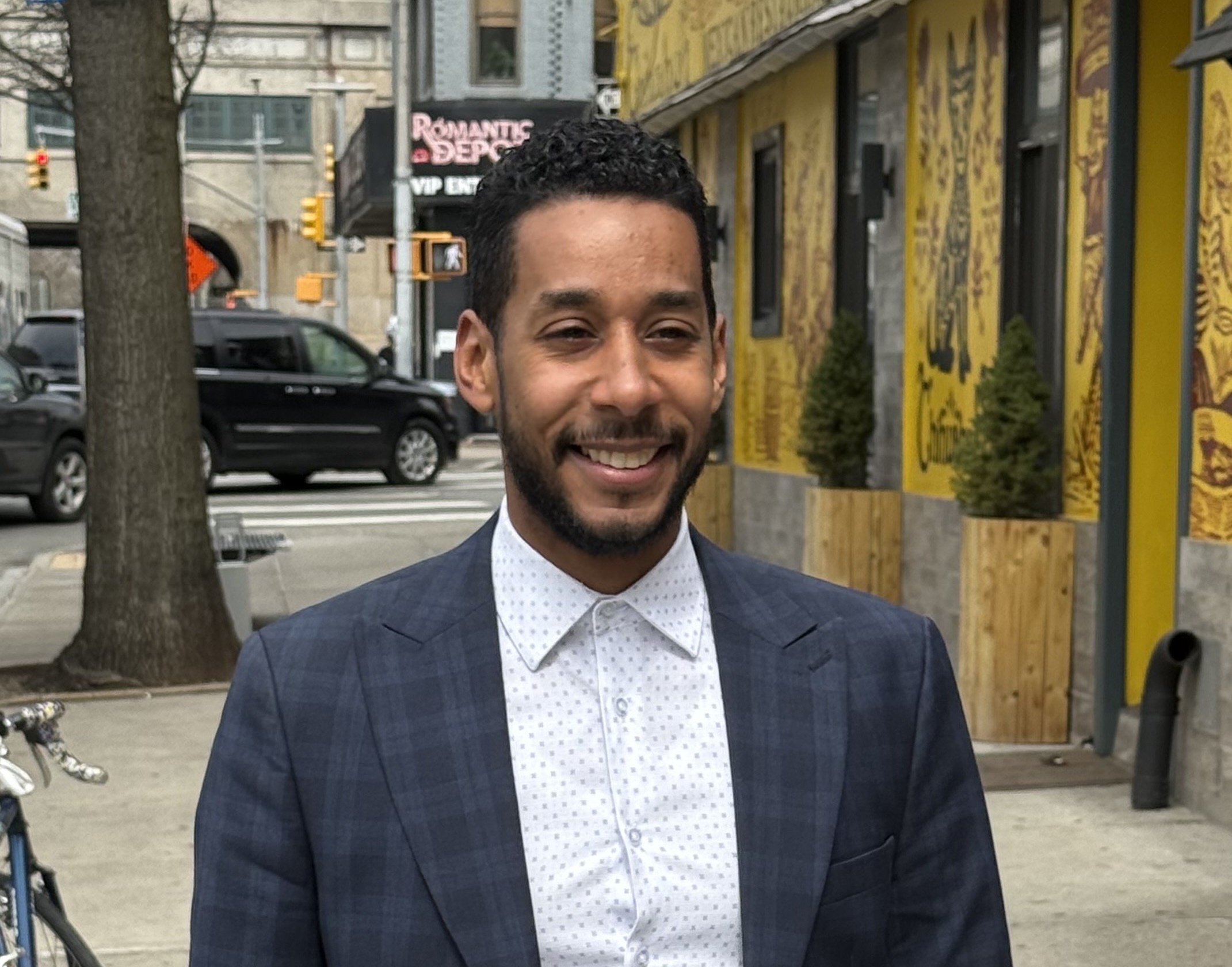
“I Get Things Done”: Brooklyn BP Antonio Reynoso Campaigns for Congress in NY-7

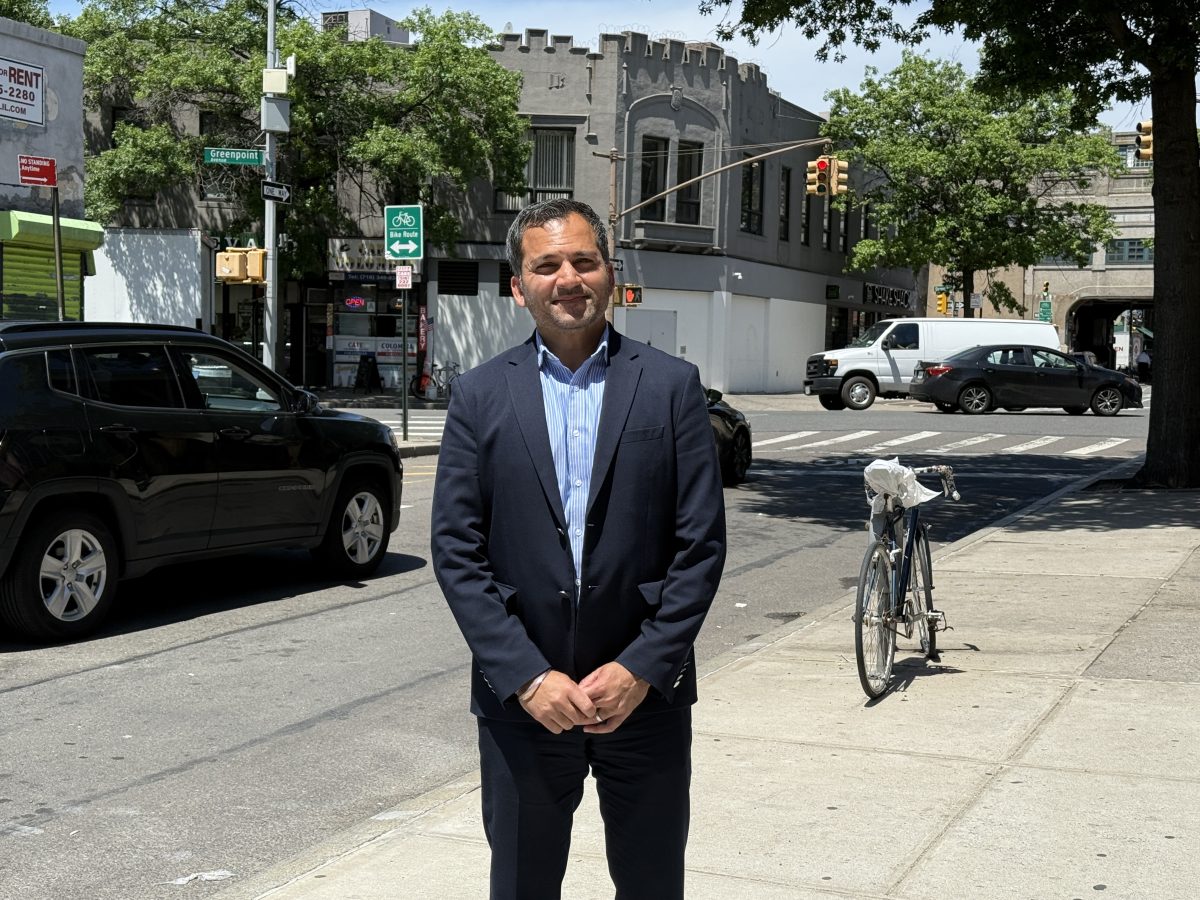
Borough President Antonio Reynoso is looking to replace his mentor, Rep. Nydia Velazquez, in New York’s seventh congressional district on June 23. (Photo: Walter Sanchez)

BY JACK DELANEY | jdelaney@queensledger.com

Antonio Reynoso has an infectious smile, the kind of easy warmth that’s invaluable for a borough president. But as countless political power players have learned over his nearly two decades in city government, he’s more than willing to ruffle some feathers to get the job done. 

Back in 2017, Reynoso — then a City Council member representing Bushwick, Ridgewood, and Williamsburg — spearheaded the Right to Know Act, which required NYPD officers to inform New Yorkers of their right to refuse certain searches. At the time, that kind of police reform seemed dead on arrival: Brad Lander and Jumaane Williams had pushed through sweeping changes to stop and frisk only four years earlier, and Mayor Bill de Blasio wasn’t eager to rein in the department further.

“It was a disaster,” the 42-year-old recalled during a recent roundtable with the Ledger. “I mean, everyone told me my career would be dead if I passed that legislation.”

But Reynoso, undaunted, threatened to force the bill to a vote anyway. He remembers de Blasio calling him into his office in a panic, creating the leverage needed to negotiate the bill across the finish line. 

“I fought against my own friends to make it happen,” said Reynoso. “I don’t care if you’re my ally, I’m willing to push if it means that we could effect change in the progressive movement.”

Now, nine years later, Reynoso finds himself in familiar territory as he runs to replace his mentor Nydia Velazquez in the House of Representatives. Once again, there’s a mayor in his path — one of his opponents, the first-term state Assembly Member Claire Valdez, is backed by Zohran Mamdani and the ascendant local chapter of the Democratic Socialists of America (DSA).

Yet like before, Reynoso isn’t blinking, positioning himself as the most battle-tested candidate for the roughly triangular 7th Congressional District, which spans from Downtown Brooklyn in the west, to Glendale in the east and Astoria up north. 

Touting endorsements from the Working Families Party, Queens Democratic Party, and Velazquez, among others, Reynoso’s campaign is unabashedly progressive, promising to “abolish ICE, tax the rich, end the genocide in Gaza, and fund healthcare, housing, and education.”

Reynoso was born in Brooklyn to parents from the Dominican Republic and grew up in the Los Sures section of Williamsburg, not far from where he still lives with his wife and two sons. After attending P.S. 19, he commuted to La Salle in Manhattan for high school, before graduating with a degree in political science from Le Moyne College in upstate New York. 

Reynoso broke into the scene as an organizer for NYC’s branch of the Association of Community Organizations for Reform Now (ACORN), a left-leaning nonprofit that later reincarnated as New York Communities for Change (NYCC). In 2006, he founded the New Kings Democrats, and in 2009 he was appointed chief of staff to Diana Reyna; when she termed out in 2013, Reynoso ran himself, besting the infamous Brooklyn Democratic Party head Vito Lopez. In 2021, following eight years in the City Council, he was elected to his current post as Brooklyn’s borough president.

For some, the pivot from council member to borough president might risk whiplash, since the latter can’t pass laws, instead doling out discretionary funds and overseeing community boards. But for Reynoso, the job has offered the chance to find a more universal brand of politics.

“People from Bushwick think a lot differently than people from Sheepshead Bay, and I wanted to be the borough president that represented everyone,” he said. “I wanted to make sure people felt they were heard, so I changed my politics to one of common denomination.”

Building on his time as a lawmaker — where he crafted the original outdoor dining bill during the pandemic, and reduced the disproportionate share of the city’s trash (at one point 40%) being processed in Williamsburg — Reynoso has used his new pulpit to highlight borough-wide inequality, earmarking $45 million for maternal health facilities and converting underused space into a legal hub for 6,000 immigrants seeking work papers.

Yet Reynoso’s signature issue may just be the one he’s shifted his stance on the most over his career: housing. 

In 2019, Reynoso proposed creating historic districts in Bushwick to limit development amid his district’s rapid gentrification, and in 2021 reiterated his support for community boards’ say over the pace of construction. 

But by 2023, he had changed tack, arguing that the root cause of skyrocketing rents isn’t that there are too many apartments going up, but not enough and only in select neighborhoods. While stressing the need for tenant protections, he has since boosted a range of major housing projects, including the $3.5 million redevelopment of the Brooklyn Marine Terminal in Red Hook.

“When I was an organizer, I thought that housing was an introduction to gentrification and there was no way around it,” explained Reynoso. “But I ended up learning that scarcity is the introduction to gentrification. Minneapolis did it. Austin did it. They’ve lowered rents. What did they do? They built a ton of housing, and they oversaturated the market.”

Reynoso’s campaign for Congress rests upon a broader and longer-lasting vision of affordability, however, something more durable than momentary relief from rising costs. 

“The Democrats should be the party of rebuilding the American dream and the middle class,” he noted, proposing an affordable home ownership program for those making less than $250,000 annually, and an expansion of public housing in New York City that’s matched by a sustainable maintenance budget. (It may be a moonshot, he acknowledges, but if he’s able to build a new NYCHA building in North Brooklyn or Western Queens, he would name it after Ruth Bader Ginsberg.)

To achieve these goals, Reynoso recognizes that his party needs to rethink its approach. “People are angry, and they want to see [their representatives] fight. They want a reaction to the crisis that is similar to it,” he said. “Right now, what we see from our elected officials is that everything is out of whack, and they’re just moving through life like everything is business as usual.”

As Reynoso gears up for the primary on June 23, he faces a conundrum that’s becoming increasingly common in NYC in the wake of Mamdani’s win: When the leading candidates are all progressives with similar platforms, such as Valdez and the Astoria-based City Council Member Julie Won, what sets them apart for voters? 

Reynoso’s answer is clear. “Democrats don’t get anything done — that’s how they describe us,” he said. “I get things done.”

Vichal Kumar Looks for Upset Win in NY-7

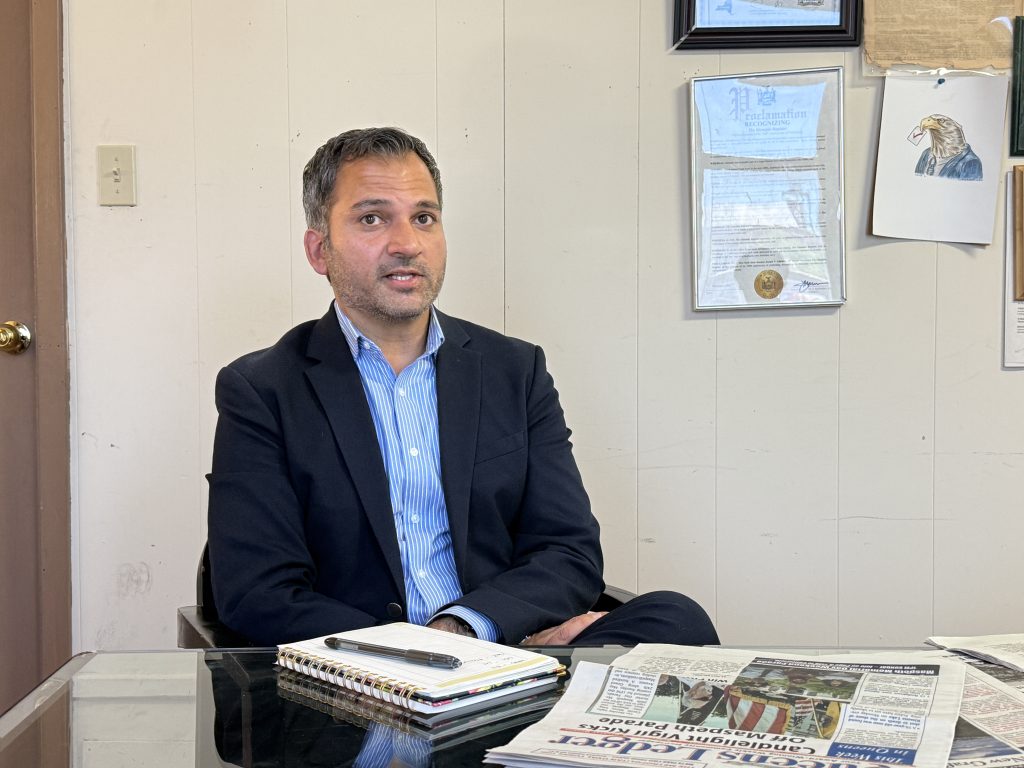
Vichal Kumar, a public defender from Brooklyn with over two decades of experience, is hoping to mount an upset win in NY-7 on June 23.

BY JACK DELANEY | jdelaney@queensledger.com

The June 23 primary is only weeks away, and one of the most closely-watched races in the city — New York’s 7th Congressional District, which forms a rough triangle between Downtown Brooklyn, Astoria, and Glendale — is being viewed by many as a referendum on the balance of power in the local progressive movement.

The Democratic contest is packed with three prominent politicians, pitting Mamdani’s endorsement against an older guard of Brooklyn and Queens representatives. But a fourth candidate stands out: Vichal Kumar, a 46-year-old public interest lawyer who has cast his relative lack of political connections as an asset. 

“Their experience is being politicians, with allegiances to their ideologies and machines,” Kumar told the Queens Ledger at a recent round-table. “Our experience is actually working to protect community members that have needed it the most.”

Kumar’s platform advocates for abolishing ICE, establishing universal healthcare, and ending military aid to Israel. Yet it also includes a detailed plan to help small businesses thrive by facilitating better access to loans, informed by his own family’s experience of owning a convenience store.

Kumar was born in Manhattan, but grew up in the working-class New Jersey town of Kearney. His interest in law started early: When he was eight years old, a customer sued his parents, pushing their home to the brink of foreclosure. Kumar remembers the sense of injustice he felt — his parents had taught him that “if somebody needs something, you always have to give it to them,” and would regularly extend thousands of dollars worth of credit to their customers. Now legal fees were preventing them from paying for heat and electricity.

“It didn’t leave me in a position where I was like, ‘Oh, I should go do something really lucrative,’” said Kumar. “I was like, ‘I want to be a lawyer, and I want to be a lawyer that helps people that can’t afford it.’”

Kumar attended Rutgers University before pursuing a law degree at Hofstra, attending night classes while working at The Bronx Defenders, which provides pro-bono legal services to thousands of low-income residents each year.

Since then, Kumar has occupied a range of roles spanning private practice, federal government — working to appeal a capital punishment conviction — and nonprofits, such as the Immigrant Defense Project and the Neighborhood Defender Service of Harlem. 

A former president of the South Asian Bar Association (SABA) of North America, Kumar currently serves as the managing director of Partners for Justice, a network that supports public defender offices across the country.

Kumar argues that the job, which required him to navigate districts that were sometimes politically hostile, has prepared him for Congress. “Being the Brown lawyer from New York walking into spaces where the legislatures are all MAGA Republicans could potentially be jarring,” he said. “But [I was focused on] coming out with the result we needed, which was the resources to create hubs that were invested in the community.”

Last year’s mayoral election largely revolved around discussions of affordability, an issue that continues to dominate in this campaign cycle. Kumar’s approach draws from a career-long interest in the intersection of criminal justice and social services.

“We know that if somebody has stable, affordable, long-term housing, they’re 85% less likely to interact with the criminal legal system,” said Kumar. “So instead of us always focusing on how to punish and ‘rehabilitate’ people, because that’s a terrible word, why don’t we focus on providing the front-end services that community members need?”

To that end, Kumar promised to push for two interventions: fully funding Section 8 housing and NYCHA’s backlog of capital investments, which could collectively cost about $200 billion — pricy, he acknowledged, but meager compared with federal defense spending.

Kumar also wants to tackle affordability through his small business plan, hoping to “deepen and continue” the work of outgoing Rep. Nydia Velazquez, whose retirement announcement triggered this summer’s four-way succession scramble. The proposal calls for a no-interest federal startup program to help small business owners get off the ground, coupled with a crackdown on corporate mergers like the impending $29 billion takeover of Restaurant Depot — a wholesale provider that supplies 725,000 businesses — by the distribution giant Sysco.

Kumar also outlined a proactive framework for regulating AI, including banning federal agents from using facial recognition software and placing a 3-year moratorium on new data centers in New York. But the public defender, who describes himself as a “prison abolitionist,” balked at being pigeonholed as a progressive.

“Am I a progressive? A moderate? A corporate Democrat? A socialist?” said Kumar. “I spent 20 years fighting establishment institutions that have failed our people, so I think that’s something voters can make judgments about themselves.”

Kumar has lived in Clinton Hill, Brooklyn, since the early 2000s, attending courthouses throughout New York City and holding posts in both the Bronx and Manhattan. Why run for Congress, then, rather than a city-level position?

Kumar argues that sweeping change has to come from the top down. “Eventually you recognize that you can build new institutions, you can build new nonprofits, you can bang your head against the wall in court every single day — and no matter how successful you are, there’s a cap,” he said. “Our system must be realigned to serve people, not squeeze them.”

Fill the Form for Events, Advertisement or Business Listing