
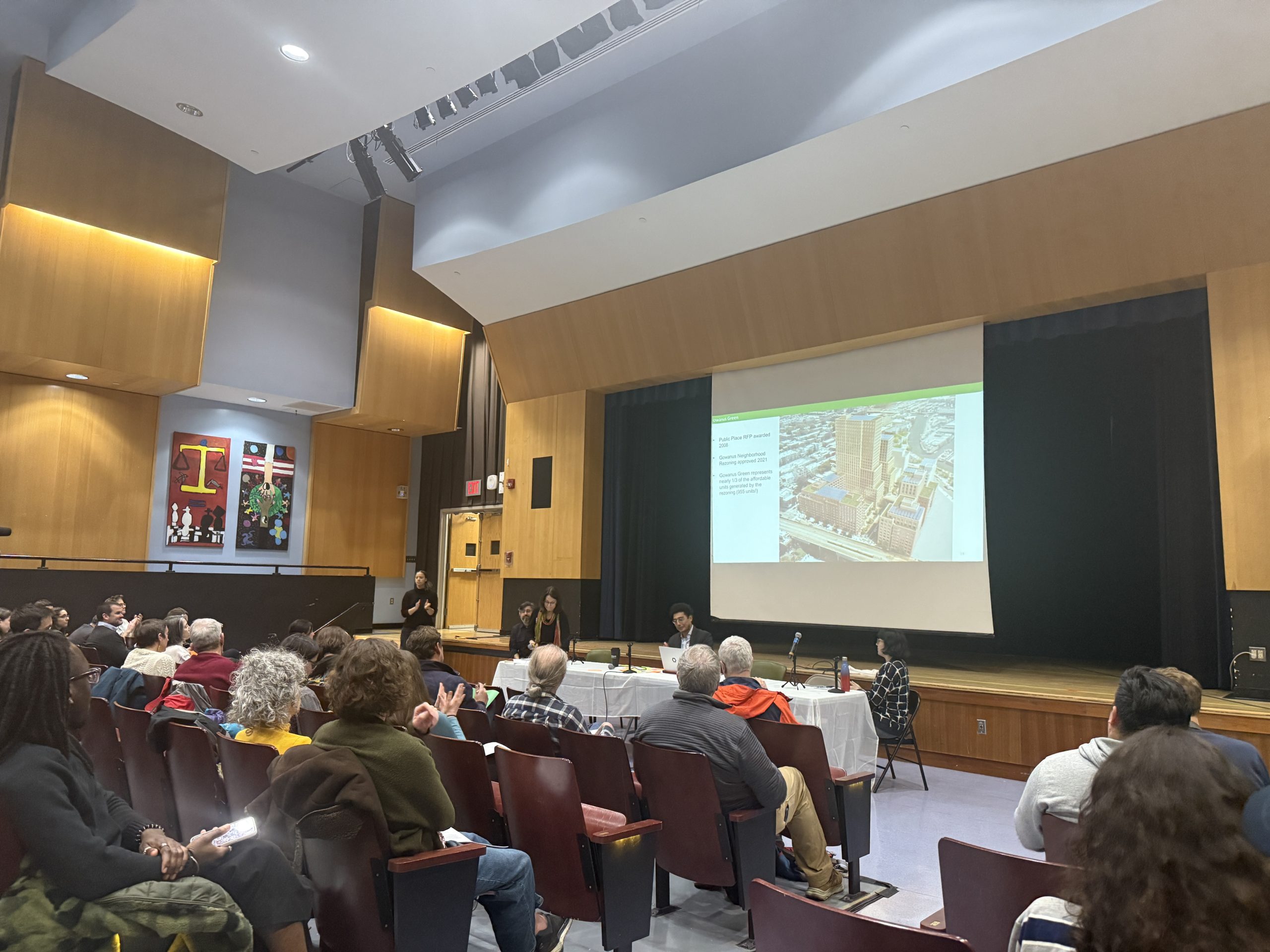
The Gowanus Oversight Task Force hosted an info session on Thursday, March 12, to discuss the polluted land that’s earmarked to become a mixed-use development called Gowanus Green.
By Jack Delaney | jdelaney@queensledger.com
GOWANUS — One of Gowanus’ most controversial sites is finally seeing some movement.
For years, state regulators with the Department of Environmental Conservation (DEC) have struggled to enforce the cleanup of a huge — and massively polluted — chunk of land along the banks of the Gowanus Canal.
From the 1860s until the 1960s, the Citizens MGP site off Smith Street was home to a manufactured gas plant that provided energy to the neighborhood, but left coal tar and other toxic byproducts in the soil. Today, the zone slated for remediation has been divided into four parcels, each with their own roadblocks.
Parcel 4, or 424 Hoyt St, has frustrated DEC officials for a simple reason: They can’t get in. Since 2019, the owners of what is now a commercial parking lot for food trucks have ignored regulators’ attempts to test the property and formulate a cleanup plan.
The state’s patience has finally worn thin. Last week, at a meeting of the Gowanus Oversight Task Force on Thursday, March 12, DEC representative Andrew Guglielmi announced that his team had issued a “record of decision” document for Parcel 4, and will be entering the site — “Whether or not they want us to” — later this summer.
Along with the move to confront Parcel 4’s owners, Guglielmi added that seven years of stop-and-start remediation have removed approximately 66,000 gallons of pollutants from the site. And he dropped another piece of good news: The dispute resolution, a lawsuit by National Grid in 20 that argues it should not be the only gas company on the hook for remediation, “is very close to being over.”
At the end of Guglielmi’s presentation, the auditorium broke into applause, a rarity for meetings in Gowanus about remediation efforts.
But other aspects of the cleanup continue to face local scrutiny.
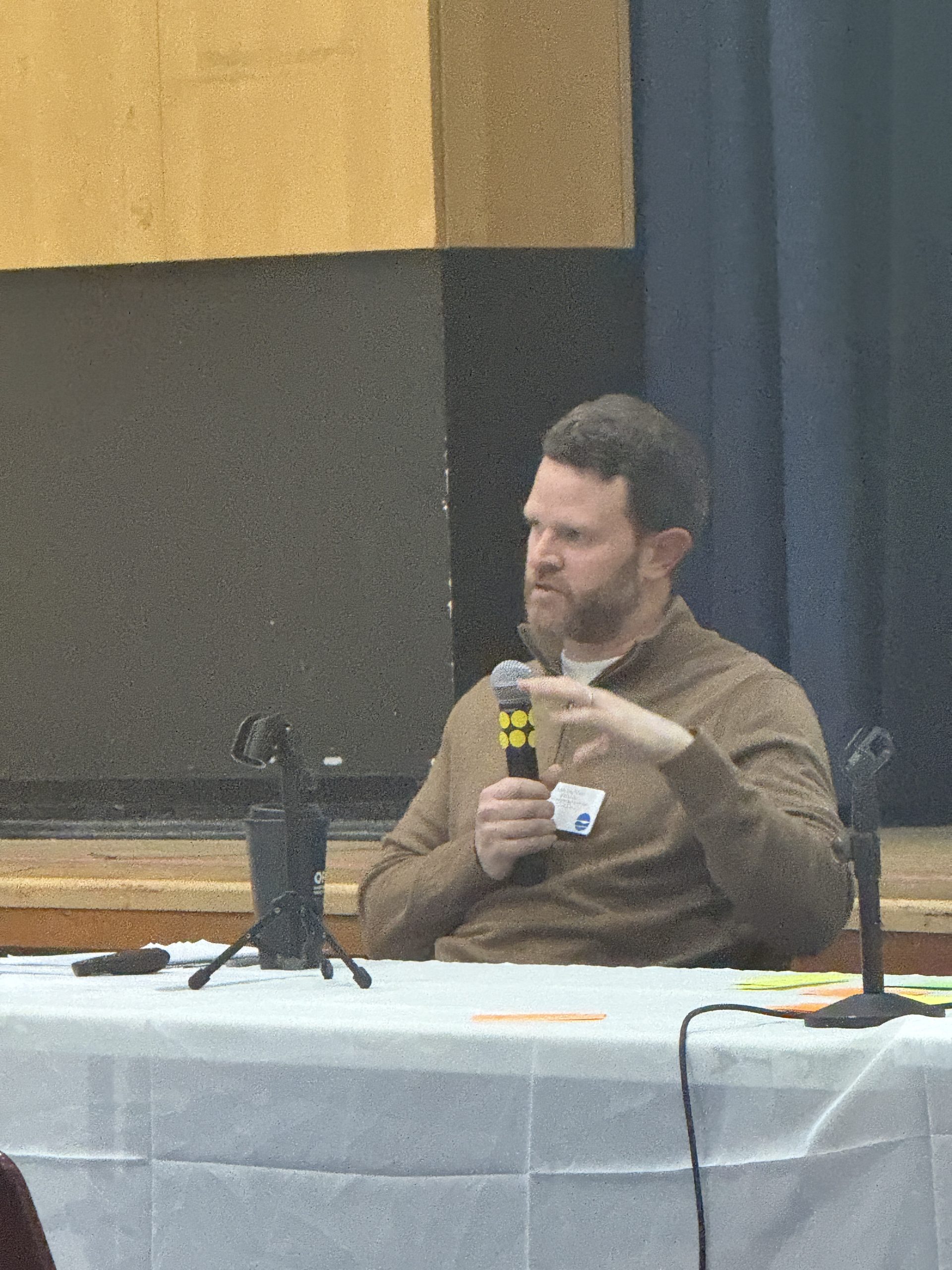
Andrew Guglielmi of the DEC said his office will be taking action on Parcel 4 this summer.
At an info session last summer, DEC regulators announced that the Citizens MGP site would be handled under New York’s Brownfield Cleanup Program (BCP), rather than the stricter framework of a State Superfund designation. Residents immediately called foul, arguing that the BCP is insufficient given the high level of toxins in the soil and that it would result in superficial remediation.
Yet Guglielmi pushed back against a similar line of questioning at last Thursday’s meeting. In response to a resident wondering why only Parcel 4 was placed under the Superfund program. “No one approached us,” Guglielmi maintained that his office would have transferred it to the BCP — which incentivizes outside companies to take on remediation in exchange for tax breaks — if an applicant had materialized.
The DEC rep also noted that a sub-slab depressurization system (SSDS) will block any toxins from seeping into the apartments planned at the western wing of the parcel, a project known as Gowanus Green. (Building A is set for completion in 2029; the developers shared that over 120,000 people recently applied for only 45 affordable units in the neighborhood, highlighting what they say is an urgent need to expand the local housing stock.)
Only some of the crowd was convinced. Jack Riccobono, a member of the grassroots advocacy group Voice of Gowanus, blasted the DEC for using the BCP — a decision he said would endanger future residents, given that some evidence suggests toxins may be migrating off-site.
“You’ve been misleading the public about these two programs, and we’re sick of it,” he told Guglielmi. “It’s about money, not about health.”