NYC Industrial Plan Sparks Backlash, Gentrification Fears at Brooklyn Town Hall

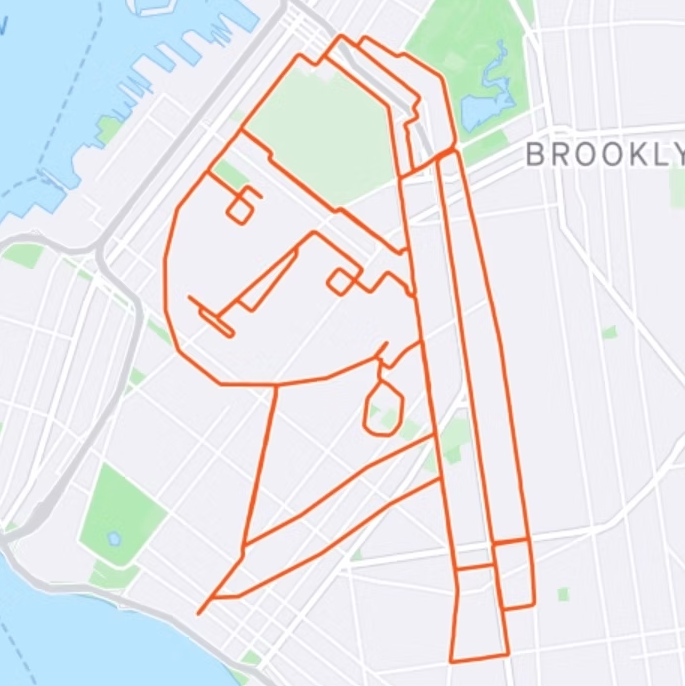
Brooklyn’s current industrial-zoned areas. Photo via NYC Department of City Planning.

By COLE SINANIAN 

news@queensledger.com

At a town hall in Downtown Brooklyn on October 16, city planners faced sharp criticism from activists and North Brooklyn business leaders as they presented a first draft of the “NYC Industrial Plan” —  a report first published in September that recommends rezoning some of the city’s historically industrial areas to allow for different kinds of economic uses and housing construction. 

Although it could inform future land-use policy decisions, the plan is a draft report and does not guarantee any future rezonings, city planners stressed at the town hall, with a final version set to be released on December 31. Still, the plan drew swift condemnation from groups like Evergreen, a manufacturing business alliance in North Brooklyn, and Uprose, an environmental organization based in Sunset Park who warned that the plan’s failure to recommend protections for industrial areas in Williamsburg and Greenpoint would soon bring real estate speculation and could displace some of North Brooklyn’s last remaining manufacturing hubs. 

“It’s sending a message to the market that it’s open season,” said Leah Archibald, Evergreen’s executive director. “They’re signalling to the market that they’re open to rezoning. And that alone imperils our business.”  

In a written statement to the Star, Department of City Planning (DCP) Deputy Press Secretary Joe Marvilli urged that public feedback from the town halls would inform the final report and that nothing is set in stone yet:

“As the first comprehensive look at our industrial sector in decades, the NYC Industrial Plan is a great opportunity to ensure that these businesses, workers, and surrounding communities all continue to thrive,“ he wrote. “These recommendations can guide policies to create enough space for everyone and secure the city’s economic success for years to come.” 

A feedback form about the plan can be found at www.nyc.gov/content/planning/pages/our-work/plans/citywide/nyc-industrial-plan

The Industrial Plan

The draft plan is set to be updated every eight years, and was mandated by 2023’s Local Law 172, a bill sponsored by the Bronx city councilmember Amanda Farias. 

City planners researched the evolution of New York City’s industrial economy and surveyed the current distribution of industrial jobs across the five boroughs. The city’s industrial economy peaked in the mid-1950s, when industrial jobs accounted for nearly half of total employment. The industrial sector has shrunk since then but has also diversified, the draft report states. Newer kinds of industrial activity the report names include high-tech, prototyping, film, and green energy. More traditional industrial uses include construction, transportation, manufacturing, energy, utilities and waste management. 

The report found that less than half of the identified industrial jobs in the city are headquartered in areas zoned for manufacturing, or M zones, while only 25% are located in “Industrial Business Zones,” or IBZs. These zones, created in 2006, provide tax credits to industrial and manufacturing firms that relocate to one the of 21 currently designated IBZs in New York City. IBZs also carry a stated commitment by the City to not allow rezoning that would permit housing, all in an effort to preserve their manufacturing and industrial uses. 

Critics fear the plan’s failure to protect industrial zones in North Brooklyn’s IBZs — which, according to Evergreen, generate $15 billion in industrial economic activity — could invite real estate speculation and lead to future neighborhood displacement. 

City planners highlighted the ways in which New York City’s industrial economy has changed at a Brooklyn town hall on October 16. Photo by Cole Sinanian.

“An immigrant industry”

Visitors to the 5th floor event space at St. Francis College where the town hall was held were promptly handed a flyer by an Uprose activist titled “The New Draft Plan is a Death Sentence for Manufacturing.” The flyer highlighted key points of the plan that activists saw as threatening to local manufacturing companies, like the proposed allowance of non-industrial development — namely office buildings, creative studios and housing — in what are currently IBZs.

Meanwhile, Archibald walked around the room arguing with DCP staffers and handing out copies of Evergreen’s condemnation of the plan. Evergreen’s statement argues that the plan would “create a blueprint for gentrification” and “drive out industrial employers,” thereby erasing “accessible, family-sustaining jobs.”

The custom tailor Martin Greenfield Clothiers is one of Evergreen’s North Brooklyn manufacturing companies. Founded by Martin Greenfield, a Holocaust survivor who immigrated to Brooklyn in the 1940s after escaping Auschwitz, the company has dressed the likes of Bill Clinton, Lebron James, Leonardo DiCaprio and Barack Obama. Martin Greenfield passed away in 2024 and his sons Tod and Jay have since taken over. Tod, who attended the town hall, said his company has provided a gateway to the American dream for countless immigrants. According to statistics provided by Evergreen, industrial jobs in North Brooklyn, like those at Martin Greenfield Clothiers, pay significantly higher wages than the Brooklyn average for workers with only a high school diploma. 

“These people can’t get a high tech job,” Greenfield said. “These jobs are the jobs they need. They live in the neighborhood, they walk to work, and this plan is going to gentrify the neighborhood. It’s going to push out their jobs, and it’s going to push them out.” 

“We have 70 employees and they’ve all put their kids through college,” he continued. “And they’re all immigrants. It’s an immigrant industry. It’s a place where someone without a college degree, and even without any language skills, can get a steady job. All they have to do is show up to work and be diligent. They have health care, they have a pension, they have a good wage, and they have an opportunity to establish their family and become citizens.” 

Greenfield compared his father’s experience in America with those of the immigrants who currently work for his company. When Martin Greenfield arrived in America, he was an orphan who didn’t speak English. It was a well-paying job in the manufacturing industry that allowed him to raise a family of first-generation Americans, his son said. The office jobs and tech jobs that the City’s plan suggests should come to North Brooklyn’s manufacturing corridor are generally not accessible to immigrants without English skills or a college degree. A major rezoning, Greenfield worries, could push many immigrants out of the area. 

“Those jobs are critical to that community,” Greenfield says. “And that community is important. Where am I going to get people to run our sewing machines once the neighborhood gentrifies?”


Brooklyn Pharmacists Bring Home Community Awards

The nonprofit Healthfirst selected 12 independent pharmacists from around the city for its 2025 Pharmacy Excellence Awards, including Mohammad Rashed (third from right) of Bed-Stuy. Photo courtesy of Healthfirst

By JACK DELANEY | jdelaney@queensledger.com

Most recent headlines about independent pharmacies read like horror novels: one article on the collapse of the industry in Missouri reports that filling prescriptions has become “economic suicide” for many small providers, as monopolies narrow their already-thin margins.

But in New York City, at least, healthcare heavyweights are hoping to shift the balance back in favor of community drug stores.

Last month, Healthfirst — a leading not-for-profit plan serving over two million New Yorkers — announced the winners of its inaugural Pharmacy Excellence Awards, with three recipients hailing from Brooklyn.

The award spotlights local pharmacists who have helped older adults, in particular, by achieving the highest rates of medication adherence and interventions in the city for 2024.

One of this year’s winners is Mohammad Rashed, who has run Pharmacia Popular Inc, located across the street from Woodhull Hospital in Bed-Stuy, since 2003.

“I feel privileged and honored,” said Rashed, who worked at Walgreen’s and Duane Reed before realizing he wanted to open a more community-minded pharmacy of his own. “My whole team feels like we’re being recognized for the vision and mission that we’ve been working towards.”

The other two Brooklyn-based awardees are ABC Pharmacy Inc., in Borough Park, and Sisto Pharmacy in Williamsburg. The nominees were drawn from a pool of more than 100 independent pharmacists enrolled in a Healthfirst initiative that provides software and technical assistance.

“Community pharmacies know their patients by name and understand the challenges they face every day, and that they want more time to educate patients with medication management but also have the demands of running a small business,” said Bhavesh Modi, a vice president at Healthfirst. “Through this program, we’re giving pharmacists the tools and resources they need to make an even greater impact on the health of their communities.”

As of last year, there were 19,000 independent pharmacies in the country, accounting for 35% of the overall sector. While data isn’t available for Brooklyn, some recent estimates set the tally for NYC at 2,500.

Rashed stressed that despite the increasing prevalence of corporate chains and artificial intelligence, community pharmacists remain crucial to supporting older residents.

“We all have to reach that age. Until we reach that point, we will not know how it feels to be dependent on someone,” he noted. “Having a good pharmacy plays a big role — from morning to evening these customers think about their health condition, because it’s deteriorating, and the only people beside a family member or caregiver who can make them feel better are their physician and their pharmacist.”

A Slice of History: Smiling Pizza Added to Historic Business Registry

Three generations of the Zito family celebrate the induction of Smiling Pizza into a statewide historic registry with Assemblymember Bobby Carroll (second from left) and City Councilmember Shahana Hanif (not pictured).

By JACK DELANEY | jdelaney@queensledger.com

“You don’t remember me,” the man in his thirties said, beaming, “but I used to get pizza here when I was a little kid.”

Santo Zito had just arrived at Smiling Pizza to receive an award, and the booths of his beloved Park Slope eatery were packed with long-time customers eager to give him his flowers.

It had been decades in the making: on Sunday afternoon, the family-owned, triple-generational pizzeria — known to many locals as Smiley’s — was inducted into the New York State Historic Business Preservation Registry, joining 277 other ventures around the state that have both been open for at least 50 years and have become an integral part of their community’s history.

“It’s Always Good”

Smiling Pizza’s roots trace back to the mid-60s, when Santo emigrated to NYC from Sicily — trying his luck in a wide array of industries before settling on pizza.

“He put duct systems with sheet metal into the World Trade Center. He sold fruits and vegetables out of a van down on the street corner. He did car service,” recalled his son, Stefano Zito. “He did what he had to do as an immigrant coming to a new country. That was the bottom line with the pizzeria. He’s like, at the very least, my family won’t go hungry. But it’s stuck, thank God, and here we are 50 years later.”

By 1975, the Zito family was living in Bensonhurst. Some of Santo’s friends laughed at him for jumping at the opportunity to buy a pizza shop in faraway Park Slope, but his mind was set.

Smiling Pizza sits on the bustling corner of 7th Avenue and 9th Street in Park Slope.

Things were a bit cramped, at first. There were only two tables, and with no room for a real kitchen the family’s matriarch, Maria Concetta, would cook the chicken and veal cutlets at home in Bensonhurst every morning and bring them to the store.

Park Sloper Bob Kaye remembers those early days. He started going to Smiling Pizza not long after it opened, and recounted how on rainy days his mother would send him to run along the tunnels between 7th Avenue and 8th Avenue and bring back a couple slices.

“I still come a lot,” said Kaye, who is now 75. “I’ll get a meatball parm to go, they make great sandwiches, or I’ll get a plate sometimes — they have great baked ziti and ravioli too. It’s always good.”

The Zitos expanded into the adjacent storefront in the ‘80s, and business has been buzzing ever since.

Bob Kaye, who lives only a block away, has been eating at Smiling Pizza since it first opened 50 years ago.

“The neighborhood feels like our family at this point,” said Stefano, and they’ve tried to give back to the community that has supported them. Smiling Pizza has sponsored Little League Baseball through the 78th Precinct for years, while donating to the nearby Saint Saviour Catholic Academy. They also offer a special 10% discount for anyone affiliated with Methodist, the enormous hospital two blocks away.

That spirit of generosity extends beyond the pizzeria’s official gestures. “Santo, the owner of Smiling Pizza, was quite a life saver to most of us kids,” wrote Eric Britt on Facebook, earlier this summer. “My first car got new shocks with Tony’s help in ‘76.”

A Slice of History

The Historic Business Preservation Registry was created in 2020 to celebrate local spots, while giving them a boost amid rising costs fueled by gentrification.

“From the delicatessens that have fed immigrant communities for over a hundred years, to the bars that provided safe havens for LGBTQ New Yorkers, to the timeless Hudson Valley inns that were visited by some of our country’s founders,” said Assemblymember Daniel O’Donnell at the time, “New York State has many businesses that serve as invaluable symbols of our pride and heritage.”

But, O’Donnell added, “Many businesses face unprecedented challenges that threaten their ability to survive and serve their communities.”

Santo Zito welcomes one of his longest-standing patrons.

The honorary initiative doesn’t carry the stricter requirements and regulations of landmark status. Yet lawmakers have noted it could someday include financial assistance and other perks.

The registry launched with 100 participants, and continues to grow. In 2024, the state increased the maximum by local reps each term from two to 10. The list now encompasses eight locations in Brooklyn, boasting the likes of Sahadi’s and Gleason’s Gym in Downtown; the unmissable Kellogg’s Diner off Metropolitan Ave; and most recently, Deno’s Wonder Wheel Park in Coney Island.

Smiling Pizza was nominated by Assemblymember Bobby Carroll, who said the addition was a no-brainer. “I don’t know if the first slice of pizza I ever had was at Smiling Pizza, but I’ve been eating it for 39 years,” he told the small crowd of customers who’d come for the event. “I think it was my sons’ first slice.”

Back at Barclays: Nets Attempt Daring Comeback vs Cavs

By Noah Zimmerman

noah@queensledger.com

The Brooklyn Nets staged a wild and improbable comeback in their home opener against the Cavaliers last Friday night at the Barclays Center. After trailing Cleveland by as much as 25 points in the second half, Brooklyn powered their way within a single point before their late run ultimately came up short.

It’s been a lackluster start to the season for a team most expect to be among the league’s bottomdwellers. Despite the low bar the Nets have put up impressive fights against solid teams, showing their capability to hang with playoff teams like Cleveland and San Antonio.

It’s clear that the focus and priority this season is on development and asset management, especially with the NBA record recently set with five first round selections in the 2025 draft. Of those five rookies, the two with significant minutes so far have been 8th overall pick Egor Dëmin and #26 overall Ben Saraf.

In the season opener Dëmin scored his first 14 points in NBA action. The Moscow-born BYU product showed potential as a scorer and playmaker, tied for the team lead with 5 assists in the losing effort in Charlotte. He was one of six Nets in double figures against the Hornets.

During Friday’s game at the Barclays Center it was a slow start for Brooklyn. A seasoned playoff team in Cleveland outscored the hosts in the first three quarters, led by star guard Donovan Mitchell, Sam Merrill, and former Net Jarrett Allen. The Cavs defense also gave Brooklyn fits, seemingly getting their hands on the ball in each defensive possession.

At its worst, the Nets saw their deficit grow to 25, but even in the face of adversity they battled back in the final frame.

Leading the charge for Brooklyn were new acquisition Michael Porter Jr., third year scoring sensation Cam Thomas, and Ziaire Williams, each finishing with at least 25 points.

To cap the run, Dëmin knocked down a clutch three, making it a 1-point game and sending the home crowd into a frenzy. The rookie showed great composure and his shooting skill will be paramount in his development.

“[Egor’s] a great player and an even better human. I’m really glad we added him to the team,” commented Williams postgame. “I’m excited to see his future and work with him.”

While Dëmin only scored three points the following game in San Antonio and missed Monday’s game in Houston, the rest of the Nets stepped up to be competitive despite losses. Thomas recorded his first 40-point game of the season against the Spurs, the 10th of his career. He battled Victor Wembanyama who scored 31 in the 118-107 victory as San Antonio recorded their third win in the first three games.

After Monday the Nets sat at 0-4, the lowest mark in the league. It’s going to be a long and difficult season in Brooklyn, but still one worth watching as long as the Nets can continue their development and competitive play.

New York City FC Finish 5th in East, To Play Charlotte in MLS Cup Playoffs

New York City FC fell at Citi Field to the Seattle Sounders on Decision Day, 2-1. (Photos: Noah Zimmerman)

By Noah Zimmerman

noah@queensledger.com

The Boys in Blue will enter the 2025 MLS Cup Playoffs as the 5th seed in the Eastern Conference following their loss to the Seattle Sounders and Miami’s win over Nashville SC on Decision Day last Saturday. They open the postseason on the road in Charlotte in a best-of-three first round series.

It was a difficult night in Queens for New York City FC, who welcomed Seattle to Citi Field for their final match in Flushing in 2025. NYC were unable to build decisive attacking chances, barely testing former MLS Cup MVP Stefan Frei in the Seattle goal.

Former MLS Cup Final MVP Stefan Frei wasn’t tested much in the Sounders net as he helped see out the 1-goal win.

The match was a physical one, but also tightly called by referee Chris Penso. While no goals were scored in the opening 45 minutes, three NYC players entered Penso’s book in stoppage time, as Kevin O’Toole, Justin Haak, and Matt Freese each received a yellow card.

In the second half, Seattle broke the deadlock from a set piece. Jordan Morris got his head on a ball from point blank range, tucking it into the net. The hosts immediately subbed on three players in Julian Fernandez, Agustin Ojeda, and Jonny Shore, now chasing an equalizer to salvage a point.

NYC captain Thiago Martins pleads his case to referee Chris Penso after a penalty was awarded to Seattle. The call was later overturned by VAR.

A more inspired NYC attack finally broke through with 8 minutes remaining. A shot by Nico Fernandez was nearly blocked, but the ball was redirected into the Sounders net, with nothing Frei could do to keep it out.

Even though they were locked into the West’s #5 seed, Seattle fought hard to regain the advantage. Once again they were able to take advantage of a controversial call (or rather this time a no-call) and scored another header in the 87th minute, this time from Jackson Ragen.

Suddenly, NYC’s playoff seeding was out of their hands, as the final whistle blew soon after the Sounders’ second goal. Luckily they were saved by Lionel Messi, who completed a second half hat trick to defeat Nashville SC and keep New York City in the East’s 5th seed. 

With the standings final, New York will visit 4th place Charlotte FC in the opening round. With Miami’s win over Nashville, the two sides will face off again as the 3rd and 6th seeds. FC Cincinnati will take on the Columbus Crew in a playoff edition of the “Hell is Real” Derby, while Supporters Shield winners Philadelphia await the winners of the Wild Card match between Chicago and Orlando.

The first round matchups will be a best-of-three series, with the top seed hosting the first match and the final game if necessary. NYC will head to Charlotte on Tuesday, October 28 for Game 1 at 6:45pm. Then the sides will meet at Yankee Stadium for Game 2 on Saturday, November 1 at 3:30pm. The final game would be held back in Charlotte on Friday, November 7.

Charlotte will be without star forward Wilfred Zaha for the opening game as he picked up a red card in their final match against Philadelphia. Still, Charlotte holds the joint-best home record in the East, and will be difficult to beat twice in a series where they’d host two games.

Open House Aboard the Mary A. Whalen

The historic tanker ship spotlights Red Hook’s maritime past and its uncertain future.

By COLE SINANIAN 

news@queensledger.com

The humble Mary A. Whalen, a small tanker ship moored in Red Hook, pales in comparison to the 1,082 foot-long, 217-foot tall Enchanted Princess cruise ship docked at the adjacent Brooklyn Cruise Terminal. Cruise ships like the Enchanted Princess dock in Red Hook almost weekly, and they’ll often announce their departures and arrivals with a cadence of deafening horns, says Carolina Salguero, who executive directs PortSide, a maritime-advocacy nonprofit based out of the Mary A. Whalen. 

It’s a warm, breezy October afternoon, the best kind of day to spend on the water. As part of the citywide Open House NY program, the Mary A. Whalen opened its doors to more than 300 members of the public on Saturday, joining hundreds of public and private spaces across the five boroughs. 

Salguero is a protector and advocate for not just the Mary, but the entirety of Red Hook’s Columbia Street waterfront. The area has been in the headlines recently as the City’s Economic Development Corporation (EDC) proceeds with an expansive plan to redevelop the port and build a new neighborhood of luxury condos, a plan that Salguero and her colleagues fear could evict PortSide and erase the neighborhood’s long maritime-industrial history, of which the Mary A. Whalen is one of the last remnants. 

The Mary A. Whalen began life in 1938 as a coastal oil tanker, transporting petroleum products for the Brooklyn-based company Ira S. Bushey & Sons from Red Hook throughout the Mid-Atlantic region, regularly travelling as far as the coast of Maine. Much of her work in the mid-20th century was in the New York City area, according to PortSide’s blog, where she would fuel larger ships and sail up the Gowanus Canal or Newtown Creek to deliver oil for heating. She’s now listed in the National Register of Historic Places, partly due to her being one of the last remaining examples of a “bell boat,” a strange kind of configuration that had the captain communicate with crew members in the engine room below via a series of bells and “speaking tubes” to control the boat’s speed and power. 

As the 20th-century wore on, fuel demands grew and the Mary, with her relatively small size, struggled to keep up. She was put out of work in 1994 after her engines broke, and was eventually converted to an office for Hughes Marine, a marine industrial supply company. In 2006 PortSide moved in. In 2012, Salguero and a few PortSide staff weathered Hurricane Sandy on the ship, successfully preventing it from running aground in the storm surge, which reached nearly six feet at the Atlantic Basin entrance at Pioneer and Conover Streets. 

Which wouldn’t have been the first time. On December 23rd, 1968, the Mary A. Whalen ran aground in the Rockaways. En route from Bayonne, NJ to Island Park, NY, head-on gale-force  winds and 10-foot waves, complicated by the fact that the coast guard light at the Rockaways was out, led the Mary A. Whalen straight into the sands of Rockaway Beach. The accident resulted in US vs Reliable Transfer, a landmark 1975 Supreme Court case that established a key principle of modern maritime law: each party in a maritime accident is responsible for paying damages proportional to their culpability, overturning the 50/50 split that had been common practice since the mid-1800s. 

The Mary A. Whalen ran aground in the Rockaways in 1968, leading to a major Supreme Court decision. Photo via PortSide.

Below the Mary’s deck, a scrawny black ship cat named Chiclet scampers into her quarters, which is no larger than a walk-in closet and littered with cat food and cleaning supplies. Across the hall is a child’s room with a bunk bed full of plushies and a painting of a jumping sailfish. No children live here, although PortSide keeps the youthful furnishings for its educational visits. 

The hallway opens into a cavernous chamber where a ladder descends into a boiler room of knobs and twisting pipes. Cider is boiling in the kitchen, which also serves as PortSide’s main office. A traditional Norwegian sweater, or Lusekofte, hangs on the wall in the hallway. It’s a gift from Karen Dyrland, whose father, a Norwegian named Alf Dyrland, captained the Mary from 1962-1978. He was a member of a near-forgotten immigrant enclave of Norwegian sailors in South Brooklyn who, when not on the water, would spend much of their time packing the saloons and seamans’ dive bars that once crowded Red Hook’s Hamilton Ave. According to A.N. Rygg’s 1941 book, Norwegians in New York, the era between 1870 and 1910 saw the peak of Hamilton Ave’s status as a cultural hub, rendezvous and drinking destination for the Norwegian sailors of Brooklyn. At one point, Brooklyn had the 3rd-largest population of Norwegian speakers in the world and the largest outside Norway. 

The kitchen on the Mary A. Whalen. Photo by Cole Sinanian.

To Salguero, this maritime history is a crucial part of Red Hook’s heritage. She edits a blog called “Red Hook Water Stories,” which positions the city’s ports and waterways as “a language New York City has forgotten.” In one of her monologues to visitors on Saturday, Salguero explained that the City’s plans to develop the area put PortSide, the Mary A. Whalen, and this whole section of the Red Hook waterfront at risk. The plans mention an “experiential learning center,” but they do not name PortSide nor the Mary A. Whalen. Back in 2008, the EDC had offered to provide PortSide with an official campus and base of operations that would serve as South Brooklyn’s maritime cultural hub as a gift to the community. Although PortSide submitted elaborate business plans, the EDC never followed through. 

Now, 17 years later, PortSide remains land-less. Salguero sees the EDC’s failure to give PortSide a home as reason to mistrust the organization, which is essentially a quasi-governmental entity that runs City development projects. 

“This corner is cut out,” she says of the EDC’s redevelopment plan. “We’re not in the tenant list. They’re so used to getting away with things they thought that they were gonna somehow not mention us and people weren’t gonna notice.” 

Visitors can board the Mary and enjoy her deck for free, seven days a week from 12-6. For more about the Mary A. Whalen, PortSide, or the Brooklyn Marine Terminal redevelopment plan, visit redhookwaterstories.org and portsidenewyork.org

Yes, You Can Believe the Polls… Mostly

Political Whisperer

By Robert Hornak

Robert Hornak is a veteran political consultant who has previously served as the Deputy Director of the Republican Assembly Leader’s NYC office and as Executive Director of the Queens Republican Party. He can be reached at rahornak@gmail. com and @roberthornak on X.


When you talk about election polls you hear many different responses. What many Republicans have been saying lately when it comes to the polls for the NYC mayors’ race is that they don’t believe the polls. And that’s a shame.

Polling is not intended to definitively predict the winner of an election, especially months before an election. What polls offer is a snapshot of what the electorate is thinking at that moment in time and insight into what each candidate needs to do to increase their voter appeal.

Candidates can look at these polls and find their strengths and weaknesses, then go about emphasizing their strengths while minimizing or adjusting for their weaknesses. That’s what campaigns are all about.

When this is explained, many people will push back, saying, well what about Trump? Well, if you look at the Trump polls, they were very interesting. In 2016, Trump was trailing Clinton the entire race. But as the election took shape, a phrase was coined in response to what the polls were showing. Voters related to Trump but were not saying they would vote for him. These were increasingly referred to as the hidden Trump voter.

And in the end, while Trump won the electoral college, he did lose the popular vote as the polls predicted.

The 2020 election is now the third rail of politics, but the polls showed Trump down and he ended up losing. And in 2024, Harris was up at the very beginning, but as she stumbled while responding to serious questions, the polls narrowed and Trump took the lead in many national polls and almost every swing state poll.

But for mayoral polling you can look no further than the 2021 election. The first polls that came out after Eric Adams won the primary showed Sliwa with under 30% of voter support. That was where he stayed the entire race, and that was where he finished on election day.

In the Democratic Primary this year, Cuomo was up early and expected to easily win. But that wasn’t where the polls stayed. As each month passed, Mamdani closed the gap, leading to many people questioning Cuomo’s strategy and commitment. As the election drew near the polls were showing a tight race, with two polls actually showing Mamdani pulling ahead.

Now, the polls have all consistently shown Mamdani leading in the 40’s. with Cuomo until recently in the 20’s, and Sliwa in the low teens. That has not changed significantly all through the summer and in the Quinnipiac poll after Adams dropped out, and it showed all his support going to Cuomo, propelling him up to 33% and just over ten points behind Mamdani.

This has clearly become a two- person race, but not between the two people that Sliwa supporters claim it’s between.

Sliwa’s campaign strategy has not changed since June, and neither have his poll numbers. In fact, he’s essentially running the same campaign he did in 2021 that got him 28% of the vote. Disappointed Republicans have gone to Cuomo in large numbers (many by way of Adams), leaving him with approximately half the support he had last time.

The polls have accurately laid out each candidate’s strengths and weaknesses by issue. Mamdani was very strong on a number of issues, like affordability. Cuomo was very strong on a number, like experience. Sliwa has not shown strong on a single issue, even on his signature issue public safety, where voter confidence for him is still weak.

Yes, the polls can be off. It requires an ability to accurately predict who will turn out to vote and asking the right questions from a scientifically random sample of voters. Campaign strategists are required to and often do it well.

The idea that they will be off, and consistently, by 30 points or more is silly to believe. This campaign has always been a race to 40% and Mamdani is in the catbird seat. Cuomo needs to win over Mamdani supporters to have a chance to beat him and be the one who finishes over 40%.

Judge Orders City to Resume Negotiations with Queens Garden

The 3×3.5ft memorial for local trans-rights activist Cecilia Gentili is one of the violations cited in the City’s eviction notice.

The Jardin de Santa Cecilia Gentili, formerly known as Sunset Community Garden, was facing immediate eviction after members condemned Zionism.

BY COLE SINANIAN

At a federal district court house in Downtown Brooklyn on Friday, US District Judge LaShann DeArcy Hall ordered NYC Parks to resume negotiations with the Jardin de Santa Cecilia Gentili, a community garden in Ridgewood that the City had moved to evict after a neighbor complained its community values statement — which condemns Zionism, anti-semitism, nationalism, transphobia and “all forms of hate” —  was discriminatory. 

The City had previously terminated the garden’s license in May and issued a notice in August directing gardeners to vacate the space — located at the intersection of Onderdonk and Willoughby Avenues in Ridgewood — by September 3rd. The case had been moving through State court, but after a judge sided against the gardeners in July, the garden’s legal team re-filed in federal court, seeking a preliminary injunction to halt eviction. 

Judge Hall gave the gardeners and the City until November 7th to negotiate outside of court, asking the City’s lawyers to tell NYC Parks they must come to an agreement with the garden and present it to her on the 7th. 

The City alleged the gardeners had failed to adjust their community values to comply with public space rules and that a small memorial to Cecilia Gentili, a deceased neighbor and trans-rights activist, violated Parks’ rules. The City received complaints about the garden through City Councilmember and staunch Israel supporter Robert Holden, who submitted them on behalf of a neighbor named Christina Wilkinson. Wilkinson had been involved in the garden’s development in the early 2010s, but was no longer involved by the time the garden opened in 2023. 

But the gardeners, who are the plaintiffs in the case, argued that the City’s termination of the garden’s license based on the content of its values statement constitutes viewpoint discrimination, violating their First Amendment rights. And an NYC Parks official had admitted that the City rarely enforces rules on art installations in public gardens, which the garden’s legal team has argued is evidence of selective and discriminatory enforcement as the art piece in question honors a transgender woman. Successful eviction of the gardeners on behalf of a single disgruntled neighbor would set a dangerous legal precedent, the plaintiffs argued, and would embolden critics to employ the City’s power as a cudgel to silence marginalized groups. 

“It would unleash a chilling effect across the city, sending a clear command: censor yourself — surrender your Constitutional rights — or risk license termination and harassment,” wrote Niki Cross, the garden’s co-counsel, in a prepared statement to Judge Hall. 

Cross addressed the courtroom draped in a black keffiyeh — a traditional scarf known to symbolize solidarity with Palestinians — while the garden’s attorney, Jonathan Wallace, sat silently, sporting a low gray ponytail. Besides NYC attorneys Leslie Spitalnick and Blake Ahlberg, the City’s side of the courtroom was empty. About a dozen observers sat on the gardeners’ side, several of whom wore keffiyehs as well. In the minutes before the hearing began, an observer on the garden’s side distributed a pamphlet titled “The Land and the People: Community Gardens in NYC.”

A courtroom sketch by Melo Davis.

Cross argued that since the community values were written by private citizens who do not represent the City, they are protected by the First Amendment. Cross then addressed the Gentili memorial, asserting that it was targeted not because of City rules, but because of the message it memorializes a transgender activist. The gardeners provided evidence in a series of NYC Parks Instagram posts that depicted another, much larger wooden art installation in the garden that the City had not enforced, and in comments made by Carlos Martinez, director of NYC Parks’ Green Thumb program — which administers community gardens. He told gardeners in a meeting that the City tries to “turn a blind eye” to enforcing art installations because they are “part of the vibrancy of gardens.” 

Ahlberg delivered the City’s defense, arguing that the gardeners’ request for injunction was invalid since proceedings began in State court had been re-filed in federal court. He then characterized language in the community values — particularly the mention of Zionism — as likely to discourage members of the public from joining. 

Judge Hall expressed frustration that the case was in federal court at all, and criticized the City for halting negotiations with the garden. She also criticized the gardener’s discrimination claim and insisted that the City responding to a complaint is not equivalent to discriminatory animus. 

According to Cross, the City confirmed it would not evict the gardeners before November 7. 

“If negotiations fail for whatever reason, we will resume litigation, with the next step of seeking an injunction again if necessary,” Cross wrote in an email statement. 

Since it opened in 2023, the Jardin de Santa Cecilia Gentili has grown into a highly productive operation, producing hundreds of pounds of fresh fruit and vegetables. The gardeners deliberately built it as a safe space for Ridgewood’s queer, trangender and immigrant communities, though they maintain that no one has ever been turned away and that all are welcome in the garden. The community values statement that triggered the initial complaint was the democratically agreed-upon result of months of meetings and votes, and were intended to ensure inclusivity, gardeners say. This intent has been misconstrued— a series of New York Post articles falsely characterized the gardeners as antisemites, which gardeners say couldn’t be further from the truth. 

“As a Jewish person, I have always felt safe and accepted at the Garden,” wrote Jewish garden member Marcy Ayres in an affidavit. “With the response from the City and GreenThumb, I feel like they are endangering our safety, including my safety and that of the Garden’s other Jewish members.”


“No More 24!”: Home Care Workers Rally in Downtown Brooklyn

Home care workers rally outside the Department of Labor’s offices in Downtown Brooklyn, calling for an end to 24-hour shifts and accountability for wage theft.

By Jack Delaneyjdelaney@queensledger.com

For five years, Velkis Cid barely slept at all.

Cid was making ends meet as a home care worker with Royal Care, one of the largest agencies in the New York area. “I used to sleep like two hours,” she said, “but I had to be ready, because the patient would call me and I would wake up. So I never slept eight hours straight.”

Under a state law called the “13-Hour Rule,” home care companies are allowed to pay live-in aides for only 13 hours of a 24-hour shift, provided they receive at least eight hours of sleep and three hours for meals. If those conditions aren’t met, however, the employer is required to compensate them for the entire shift.

Yet despite enduring what they describe as sweat-shop conditions, Cid and thousands of her fellow home care workers — most of whom are immigrant women of color — allege not only that they were never paid for those long hours, but that the state’s Department of Labor (DOL) has been actively trying to kill investigations into stolen wages that likely total over $6 billion.

They’ve had enough. On Wednesday, October 8, Cid joined over a hundred home care workers and an intergenerational coalition of allies called the Ain’t I a Woman?! campaign at a rally outside the DOL’s offices in Downtown Brooklyn, demanding that it both reopen probes into widespread wage theft and end the 24-hour workday for good, by splitting shifts in half.

“Like many of us, my health is destroyed,” said Mireya Silva, who often worked consecutive 24-hour shifts during her 12 years with the United Jewish Council of the East Side, as she looked out on a sea of posters with messages in Chinese, Spanish, and English. “I have had three operations — one on my spine, one on my arm, and one for my hand. Plus, I was robbed of almost half of my pay from those 24-hour shifts. No more! Pay us now, not tomorrow or later!”

A System on the Brink

This is a precarious moment for the future of home care in New York. Since the 1990s, the state has offered patients and their families more flexibility through a popular Medicaid program called CDPAP. In 2023, the state announced that it would be transitioning from a system in which those customers could choose from over six hundred companies for help with payroll and benefits, to one with a single fiscal intermediary — an embattled company called Public Partnerships LLC, or PPL.

Soon after the switch, all hell broke loose. Many caregivers reported incomplete or severely delayed paychecks, and were unable to contact PPL amid a raft of technical and communications failures. It didn’t help that when state lawmakers hauled the commissioner of the Department of Health in for answers last month, they were told that nothing was amiss.

From left, state Senator Jessica Ramos; Assemblymember Ron King; and City Councilmember Chris Marte.

The stakes are particularly high, given that New York is sitting on a demographic time bomb. As of 2024, home care work was already by far the largest job category in the state at 623,000 positions, almost triple those of retail sales, the runner-up. (New York also has more home care workers per 1000 older adults than any other state.) Nonetheless, officials have been sounding the alarm on a looming crisis: according to a 2023 report from the Fiscal Policy Institute, more than 4.6 million New Yorkers will be over age 65 by 2035, and the state will be 1.5 million home care workers short of its needs.

Policymakers agree on one cause of the shortage: the job is physically and emotionally challenging, and vastly underpaid. Some fixes are more popular than others. In 2023, Governor Kathy Hochul approved a $1 minimum wage hike for home care workers. The next year, however, she awarded another multimillion-dollar bundle of grants to the Chinese American Planning Council (CPC), a home care juggernaut that has been accused by Assemblymember Ron Kim of stealing over $90 million from its employees.

Who Watches the Watchmen?

A recurring theme at the rally was the sentiment that the home attendants had been abandoned by the very entities that are supposed to protect them.

Since 2017, the New York Department of Labor (DOL) has ordered home care companies to return more than $5 million in back pay, making the sector the third-worst offender after restaurants and construction contractors. But that number doesn’t include active cases, nor claims — like Cid’s — that the DOL has dropped or ignored.

For those seeking a better sense of just how ingrained wage theft is in the home care industry, a more accurate ballpark was revealed by a lawyer for 1199SEIU, the dominant healthcare union in New York, during a closed-door meeting with home care workers in 2019. Needless to say, it’s much, much more than $5 million.

“We estimate that if everybody got paid what they were owed from missing meal breaks and rest breaks, we’d be talking somewhere between 5 and 6 billion dollars,” the lawyer explains in a leaked recording, urging the workers to content themselves with a $30 million payout the union brokered that year — equivalent to about half a cent of wages for each unpaid hour. “There isn’t enough money in the industry to pay back every dollar of what everyone is owed for missing meal breaks and rest breaks. And if the employers were pushed to pay back every penny, they would all go out of business.”

Paradoxically, several home attendants at the rally had come to view their union as a barrier to achieving better labor conditions.

“Home care workers’ organizing in the last two years has actually gained traction to the extent that now they are changing industry practice,” said Kiran Chaudhuri, a longtime volunteer with the Lower East Side-based organization National Mobilization Against Sweatshops (NMAS). “Many agencies are phasing out 24-hour shifts and splitting them, many are paying back the workers — but not the unionized agencies.”

A blockbuster report released by Assemblymember Kim’s office in 2022 pointed the finger squarely at 1199SEIU. In 2015, fearing that proliferating lawsuits could eventually bankrupt the industry, the union signed an agreement with the CPC that laid out a safety mechanism: its members would be required to let the union negotiate any claims for them, forfeiting their own ability to sue their agencies, in a process known as mandatory arbitration.

The event focused on the Chinese-American Planning Council, which faces the most severe wage theft claims by dollar amount of any NYC-based agency.

But when the union moved to ratify this change the next year, many home care workers didn’t realize what they were signing away — in part because the announcements they were sent in the mail made no mention of mandatory arbitration, leading Kim’s report to argue that it was  “orchestrated without the knowledge and consent of the workers by the leadership of CPC and 1199SEIU.”

“This arbitration award is a great insult to me,” said Azucena Deras, a retired First Chinese Presbyterian home attendant and former member of 1199SEIU. “I worked so hard for 20 years, 24 hour shifts, and paid membership dues to 1199 for them to treat me this way. Now, in my retirement I get this little check and no dignity.”

The changes passed, and in 2019 the union bundled together the claims against 42 agencies from its nearly 100,000 home workers in NYC, arranging for each to be paid roughly $200. From 1199SEIU’s vantage, a compromise had been struck; from Kim’s, it was a sign of “total subservience to industry stability above all… even if the rights and material dignity of workers are categorically neglected.”

Since then, attendants have been fighting to regain their ability to sue. In 2023, five home care workers sued the DOL itself, alleging that it had improperly closed investigations into wage theft by two companies, the United Jewish Council of the East Side and the CPC. By their account, a DOL report in 2019 had found “overwhelmingly corroborative” evidence of wrongdoing, only for the department to abruptly terminate the cases in 2023.

The DOL asserted that it was following a policy of not investigating claims filed by aides whose unions had entered into mandatory arbitration agreements with agencies on their behalf, since the five petitioners named in the lawsuit were part of 1199SEIU’s $30 million deal. For their part, the workers countered that this new rule seemed to have been created arbitrarily.

The state’s Supreme Court thought they had a point. In 2024, the justices denied a motion filed by the DOL to dismiss the case, finding that it had adopted a rule without observing the usual protocol. The case is ongoing.

A parallel case, filed last September, is playing out in a federal circuit court for New York’s southern district. Rather than targeting the agencies, like the CPC, or the regulator, the DOL,  the aides who brought this class-action suit singled out an insurer called GreatCare, as well as a raft of other companies that cover home care through Medicaid. (Insurers provide much of the revenue for agencies, and ostensibly decide whether a patient should receive coverage for 24-hour care.)

As lawsuits against the many actors of the home care industry crawl through the court system, lawmakers like Kim — who catapulted into the spotlight during the pandemic after confronting former Governor Andrew Cuomo over his handling of nursing homes — are laying the blame for delays at the feet of Governor Hochul.

“Hochul is telling everybody that she cares about the care economy, about home care, about our seniors,” Kim told the crowd on Wednesday, under an overcast sky. “All we’re asking her is, do your job. That’s it. Enforce the law, and do your job.”

“This Affects Us All”

The home care workers’ fight isn’t new, but it’s been gaining ground since the pandemic as young people join its already diverse ranks. Organizers noted that the universality arises from their emphasis on time, rather than wages, as their rallying cry.

Chaudhuri started organizing with the Ain’t I a Woman?! campaign in 1996. She was a high school teacher at the time, and was frustrated by the fact that she needed to work through the night to give her students’ assignments the attention they deserved. When she heard about a group of garment workers protesting wage theft and 24-hour shifts, she saw a through-line.

“There’s so many reasons why this is my struggle,” said Chaudhuri. “I guess I connect on a whole new level, many levels, with every passing year.”

Young tech grads noted that, like home care workers, their hours are unsustainable.

The campaign eventually secured a legal precedent that allowed clothing labels to be held liable for labor abuses by their contractors. When New York’s textile jobs were outsourced to Georgia and then Bangladesh in the early aughts, many of the former garment workers found jobs in home care — but the abuses continued, and so did their campaign.

In testimonial after testimonial, home care workers framed their struggle as a fight to make things easier for their children and grandchildren. But the Ain’t I a Woman?! campaign has recently drawn Gen Z tech workers like Zeke Luger, who say the protests resonate.

“Home attendants say they want to fight to end the 24-hour workday for the next generation,” said Luger, a data science major who helped found Youth Against Sweatshops in 2020.  “That inspired us to see, like — sure, maybe we get paid a little more. Maybe we’re able to work as an artist. Maybe society recognizes us in a different way, but we’re still working. Work still controls our entire life, is destroying our health, and we’re also stuck in this race to the bottom.”

WNBA Barrels Towards Contentious CBA Battle

By Noah Zimmerman

noah@queensledger.com

As a thrilling WNBA Finals series between the Las Vegas Aces and Phoenix Mercury continues out West, many eyes are turning towards the upcoming expiration of the league’s collective bargaining agreement. With controversial clashes and rocky relations across the league, many are bracing for a hard fought period of negotiation as the league approaches its next era.

At the top of the long list of issues is a new spat between WNBA MVP runner-up and Minnesota Lynx star Napheesa Collier and Commissioner Cathy Engelbert. Collier’s season came to an end with a brutal injury at the end of Minnesota’s Game 3 loss to Phoenix. In the final seconds, Mercury star Alyssa Thomas pounced for a steal, with her legs clashing with Collier’s as she took over possession.

Thomas put home a layup on the other end to finish the Mercury win and establish a 2-1 series lead, but the no-call by the refs led to an explosion from longtime Lynx leader Cheryl Reeve. Lynx players and assistant coaches had to help keep Reeve restrained as she was ejected from the game, and the coach’s comments in the postgame presser led to a suspension for Game 4. Without their star player and coach, the #1 seeded Lynx fell to the Mercury.

“When you let the physicality happen, people get hurt, there’s fights, and this is the look that our league wants for some reason,” Reeve said to open up her press conference. “I want to call for a change in leadership at the league level… it’s bad for the game.”

Reeve went on to comment on Collier’s lack of free throw attempts in a very physical series, calling the league’s choice of referee crew “malpractice,” along with some more harsh verbiage. On top of her suspension, Reeve was fined $15,000 for her comments, with the WNBA also fining the Aces’ Becky Hammon and Fever’s Stephanie White $1,000 for voicing their support for the Lynx coach.

Collier suffered multiple torn ligaments that will cause her to miss the 2nd season of the Unrivaled 3-on-3 basketball league, in which she was the inaugural MVP last year. She wasn’t any softer on Engelbert and the league’s referee issues in her exit interview a few days later. “Year after year the only thing that remains consistent is a lack of accountability from our leaders,” the WNBA Players Association Vice President said.

Collier then brought up a previous conversation with Engelbert, noting that young stars like Caitlin Clark, Angel Reese, and Paige Bueckers drive significant revenue while making very little in their first four seasons of professional basketball.

“Her response was: Caitlin should be grateful she makes $16 million off the court, because without the platform the WNBA gives her, she wouldn’t be making anything,” Collier recalled. “That’s the mentality driving the league from the top. The league believes it succeeds despite its players, not because of them.”

Engelbert denied some of her comments and said she was “disheartened” to hear the remarks made about the league’s leadership. “If the players in the W don’t feel appreciated and valued by the league, then we have to do better and I have to do better,” she said.

Some Liberty players were also vocal about Engelbert’s comments and how the league values their young stars. In an October 3 post on X/Twitter, Isabelle Harrison asked “Why won’t our commissioner talk about the fact that a transformational CBA requires a salary system that actually values the players and the revenue they drive in a meaningful way?”

Both Harrison and Natasha Cloud stated that they were standing with Collier, and Emma Meesseman posted “Phee for President” on her socials. Another Liberty star to speak out was Breanna Stewart, who currently serves as another Vice President in the WNBAPA.

“Phee and I agree – what’s best for the players is best for the business. The W’s growth depends on valuing its athletes,” Stewart said in a statement. “The CBA is where commitment is proven – and where the future of our game is decided.”

The Players Association will have some heavy requirements to meet before signing off on a new CBA, with many expecting it will require Engelbert stepping down as commissioner due to the growing rift between her and the league’s players. Between Engelbert, the referee issues, and contract valuation, negotiations are sure to be intense and long-lasting.

Whether the league can avoid a lockout is to be seen, but it would be detrimental to both the league and women’s basketball as a whole if the highly-anticipated 2026 season is delayed. The W has made leaps and bounds over the recent years, and now it’s time to see how that growth pays off for the players who have paved the way.

Fill the Form for Events, Advertisement or Business Listing