
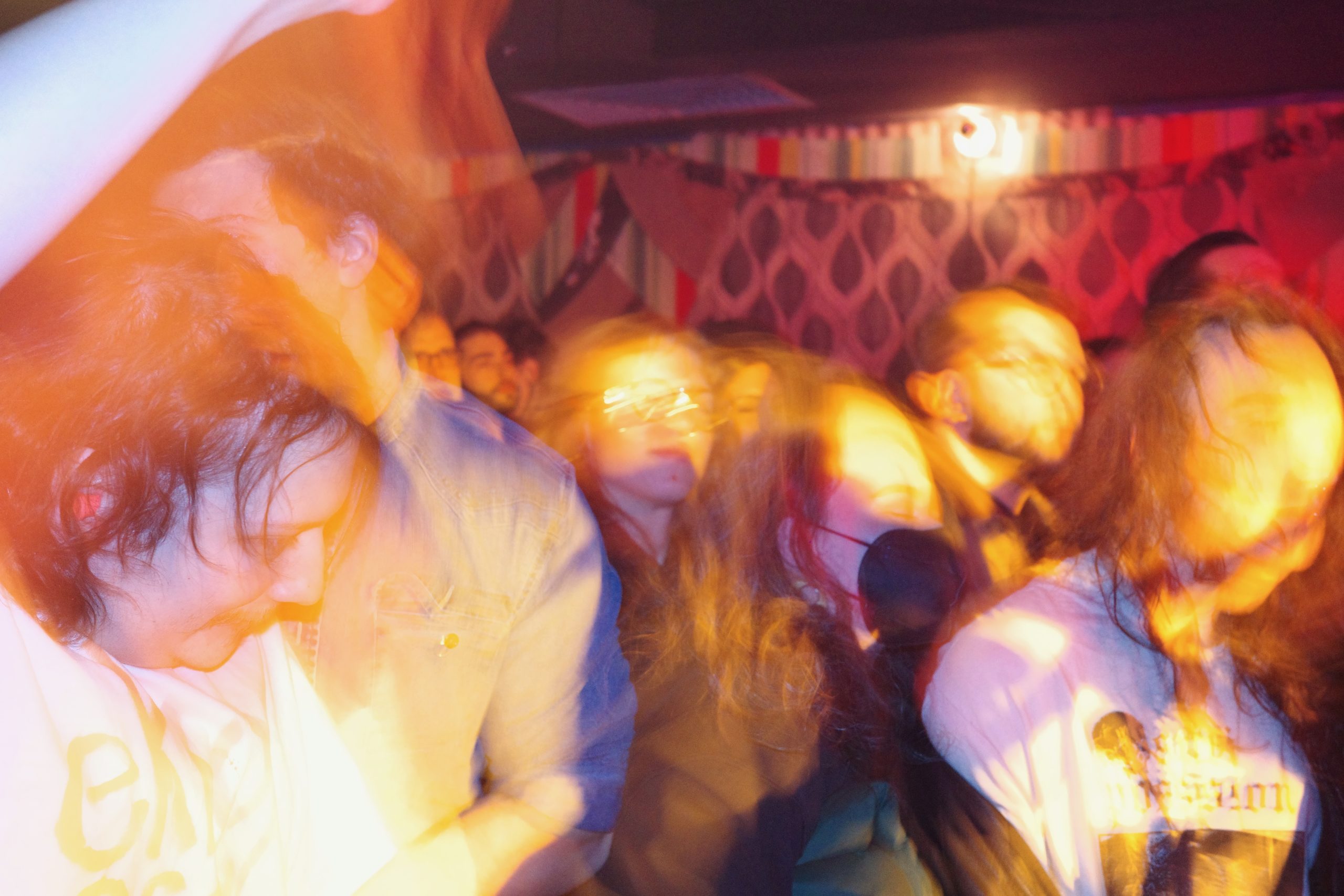
The LA-based black metal band Agriculture threw the moshing crowd into a frenzy during their concert at Baby’s All Right last week.
By Adeline Daab & Tashroom Ahsan | news@queensledger.com
“Happy Valentine’s Day guys. Are there any couples out there? Yeah, this is for everyone else.” These words cradled the crowd of Baby’s All Right on Saturday evening. A great cheer complemented the call. While many smitten New Yorkers flocked to the city’s various social spaces to celebrate their love for a romantic partner, everyone we spoke to in the pit at Baby’s had been drawn there by a magnetic love for Agriculture.
Lucia, one concert-goer who works as a digital archivist at the Frick, arrived solo. She’s been a fan for years. “A whisper network among the gothic community of Crown Heights,” as she described it, first brought Agriculture’s sound before her. But she stayed for the love embedded in their music. “It’s in their lyrics, and when you see them live—they seem like they’re having the most fun.” Above the merch table, the pristine canvas of a white T-shirt read “I LOVE THE SPIRITUAL SOUND OF ECSTATIC BLACK METAL BY THE BAND AGRICULTURE.” The crowd audibly echoed this sentiment as the four-person band took their places before the iconic glass bottle-studded backdrop.
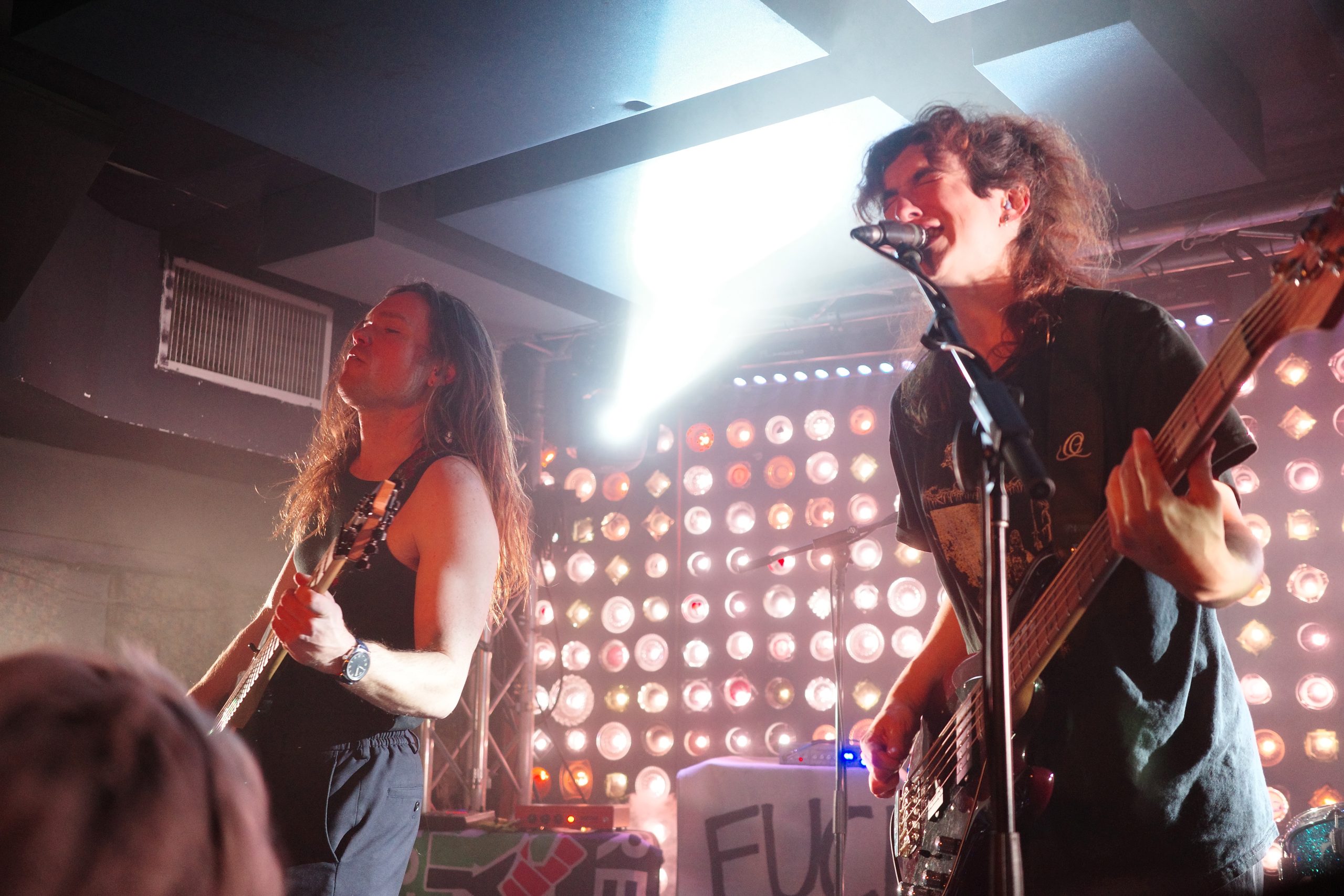
Time seemed to melt away for those of us inhabiting the music. The performance lacked a definitive linearity—meandering blues-influenced interludes coursed into the pounding force of Kern Haug’s drumming, only to slip back into the soaring vocal melodies of singers Dan Meyer and Leah Levinson. Songs did not stop or end, nor was the space continuously filled with sound. The band straddled between clarity and abrasion, noise and melody, lyricism and screams, each with orchestral virtuosity. The devoted fans oscillated between swaying softly in a religious psychosis-like trance and rattling around in the mosh pit as if they were mints in a tin that the band toyed with.
“I love them because Metal is usually so negative, but they take a positive spin to it,” one long-haired and heavily-pierced audience member explained. “They’re taking a genre that’s already transgressive, and they’re transgressing that.”

The transgressive philosophy composed into Agriculture’s music is mirrored in the band’s political ideology. Drums were whacked and guitars shredded against a backdrop of cloth banners reading “FUCK ICE” and “FREE PALESTINE.” A pause between songs opened space for Meyer to expand on these slogans, where he articulated a few of his reflections while touring. “I’ve been feeling pretty awful about the state of the country right now,” he started, “but in every show, someone’s yelled ‘fuck ICE!’” After the crowd shouted his words back in response, he finished by saying, “After this three week tour, we feel assured that their days are numbered. There are a lot more of us than there are of them.” Meyer ended his short monologue explaining that woven through Agriculture’s lyrics is the importance of finding joy and compassion in the midst of suffering, introducing the radical idea that it is both possible and necessary to hate with compassion.
Transgression also manifests in the way the spotlight passes from musician to musician throughout the show. Agriculture ensures that no musician disintegrates into the background. The set was characterized by a circular harmonization of musical ingredients, peppered with fantastic, extended solo performances from each of the band’s members, staining both the audience and momentarily-silent band members with looks of focused awe. This is a practice of improvisation, we learned through conversation with Haug over a post-show cigarette, that emerged organically. He told us that, during one of their first shows, Levinson did a bass interlude. The rest of the band latched on and encouraged her to expand into a solo. Later, he did a drum interlude and, following the excitement of his bandmates, just kept going and going, until the room was filled with his interpretation of sound. Richard Chowenhill’s melodic shredding—an indescribable performance, somewhere between a hummingbird on a harp and a broken power line—enraptured the audience at the heart of the set.
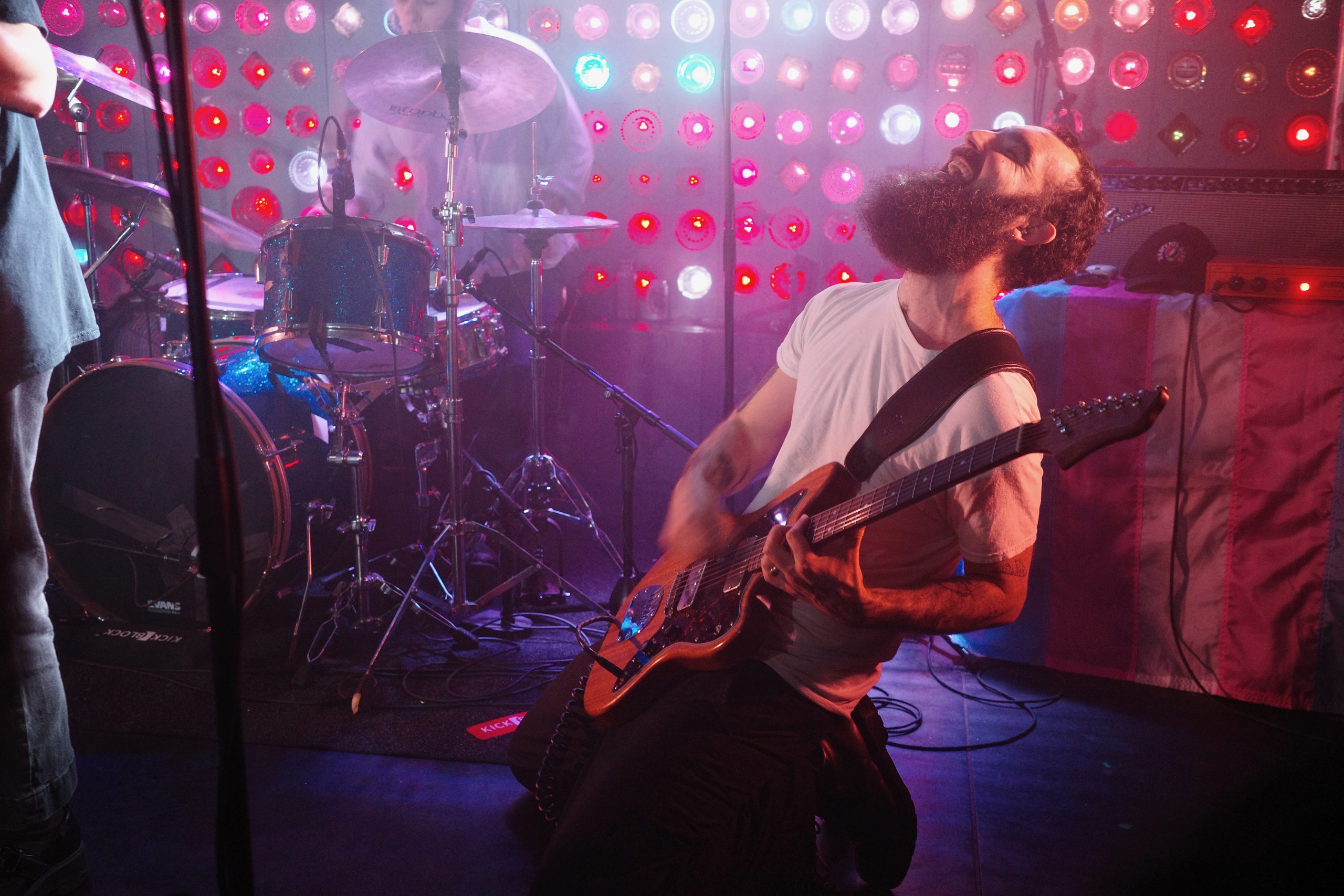
Through the soloing and pleasantly-abrasive screaming, the occasional melodic lyric landed and stuck. An hour after the words left Dan Meyer’s mouth, “there is always plenty of water” still rang in our heads. We consulted Meyer after the show, inquiring about the origins of this infectious line, and learned of its origins. “It comes from something spiritual,” Meyer said about The Well, a retelling of a Biblical story from Genesis. This, as we learned, was an anomaly, both from the satanic panic often associated with metal music and from the band’s typical wellspring of inspiration. Meyer and his bandmates study Zen Buddhism, which informs much of their songwriting. The moshing concertgoers froze at the bridge of Bodhidharma for the poetic scene of Buddhist monk Huike at the foot of a mountain waiting to be taught. And, just like the teacher, the band took us all in with an explosion of energy.