
Photos by Maryam Rahaman.
Amid lush gardens and live music, Kingsland Wildflowers offers visitors a birds-eye view of an ongoing environmental success story.
BY MARYAM RAHAMAN
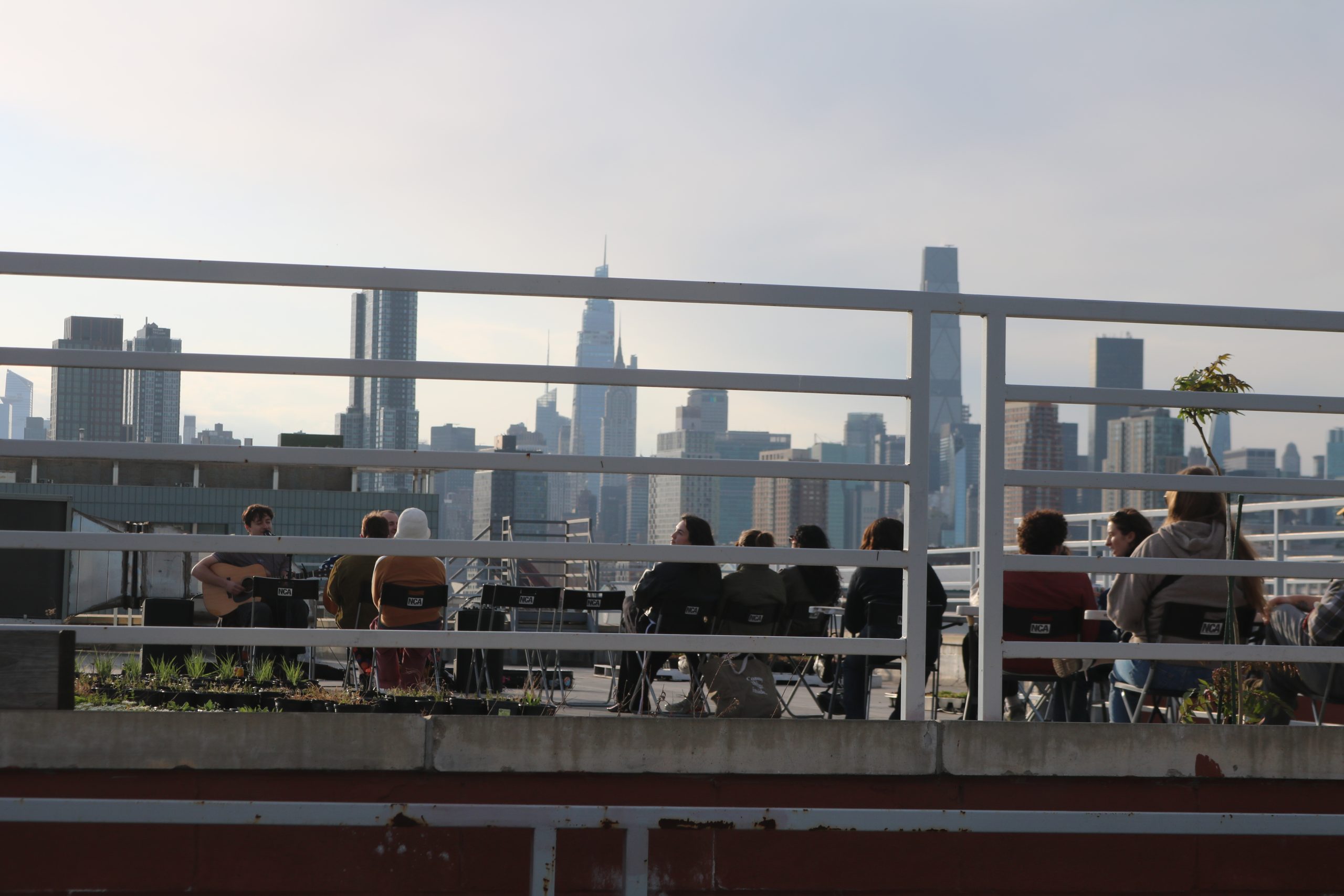
GREENPOINT — In Greenpoint’s industrial business zone, over 25,000 square feet of rooftop gardens provide a literal breath of fresh air at the Kingsland Wildflowers Community Engagement Center. The gardens live on top of an active film studio at the edge of Greenpoint, right next to Newtown Creek. Last Friday evening, families, friends, and couples followed stone paths around the garden as the sunset over the roofs, sitting and stopping to hear live performances from musician Joe Feldmann and the duo Drifter.
The gardens opened in 2016 through the efforts of Alive Structures, Broadway Stages, Newtown Creek Alliance, and NYC Audubon. Funding for the site came from the Greenpoint Community Fund, a $19.5 million New York State grant program. The money comes from a settlement with ExxonMobil, which was ordered to pay for environmental contamination at its Greenpoint facility by funding projects that improve the local environment and engage the community.
Newtown Creek forms part of the border between Brooklyn and Queens. The waterway was once marshland abundant with oysters and fish frequented by the Mespat tribe prior to European colonization. Though the Dutch and English used the creek for commerce and agriculture in the seventeenth and eighteenth centuries, heavy industrialization in the nineteenth century deeply transformed its ecology.
With little regulation, businesses had free reign to use the creek as a dumping ground for industrial byproducts well into the twentieth century. The most famous consequence of this was the Greenpoint Oil Spill. Discovered in 1978, it is the largest underground oil spill in United States history, with over 17 to 30 million gallons of oil found. Advocates and lawsuits helped secure a win against ExxonMobil in 2010—the same year the EPA declared Newtown Creek a Superfund site.
But thanks to remediation efforts, marine life and wetland plants have begun to recover. As of September 2024, 13 million gallons from the Greenpoint Oil Spill have been removed from the creek.
Photos by Maryam Rahaman.
Places like Kingsland Wildflowers help connect the community to Newtown Creek Alliance’s mission of education, restoration, and advocacy. From the roof, people can observe activities happening across the creek, as well as catch sight of the City’s largest wastewater treatment plant—part of which looks like eight giant silver eggs. The organization also restores sites along the creek to create “pocket parks,” which help build a relationship between the creek and the community.
“We’re located in an industrial business zone and because of that we see a lot of neglect,” said Brenda Suchilt, the restoration and volunteering coordinator at Newtown Creek Alliance, said.
“There’s people that live in the industrial business zone. There are people who work here…We experience it as people who work in this area every year, and we’re not alone.”
The presence of plants and green space in the gardens helps to address the urban heat effect, where cities experience higher temperatures compared to rural areas because of limited greenery and dense structures. In New York City, temperatures can even vary block to block based on composition—which is particularly important in the industrial zone.
“It’s pertinent for us to have these public events and invite people to come in so they can see that there are things in the industrial zone and the benefits of what green infrastructure looks like in larger scale buildings,” Suchilt added.
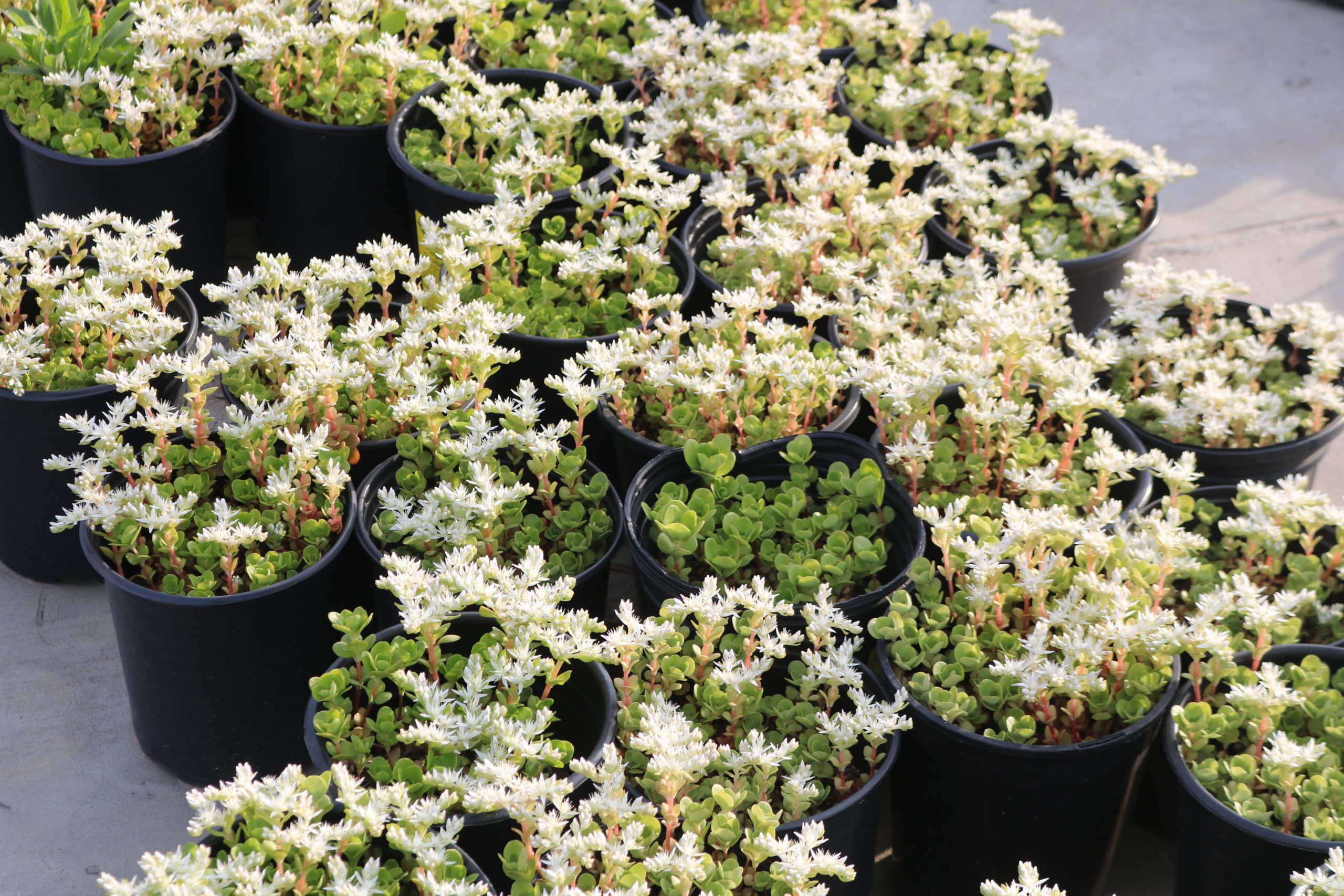
Plants native to New York City, including ones with white and pink flowers, burgeoning prickly cacti, and long, needle-like leaves were also available for purchase. All are plants grown by Newtown Creek Alliance’s in-house nursery, which Suchilt says has an “ethos” of providing the community with affordable access to indigenous plants.
“The beautiful thing about using native plants is that we become immersed in nature,” Suchilt said. “I think the more you plant native plants, the more that you immerse yourself in it, the more people really understand the intuitive way that we can all exist together.”
If you do visit, make sure to ask for help reaching the roof on the third floor, which Suchilt describes as a “secret garden.” By August, Suchilt says the plants reach eye-level.
Open hours are free and will take place every Friday until June 26, with live entertainment ranging from traditional Irish folk music to storytelling on select evenings. Visits can also be scheduled by appointment Monday-Friday from 10am-5pm. The space will also host its first monthly “Greenhouse Gang” event on May 5th, where volunteers can sign up to help with potting plants for the nursery. For more information, visit kingslandwildflowers.com.
As Feldmann closed his set with about half an hour of sunlight left, he said, “enjoy the views, buy some plants, support your local nonprofit.”