William Boyle’s Latest Novel Channels Brooklyn’s “Mythical” Quality


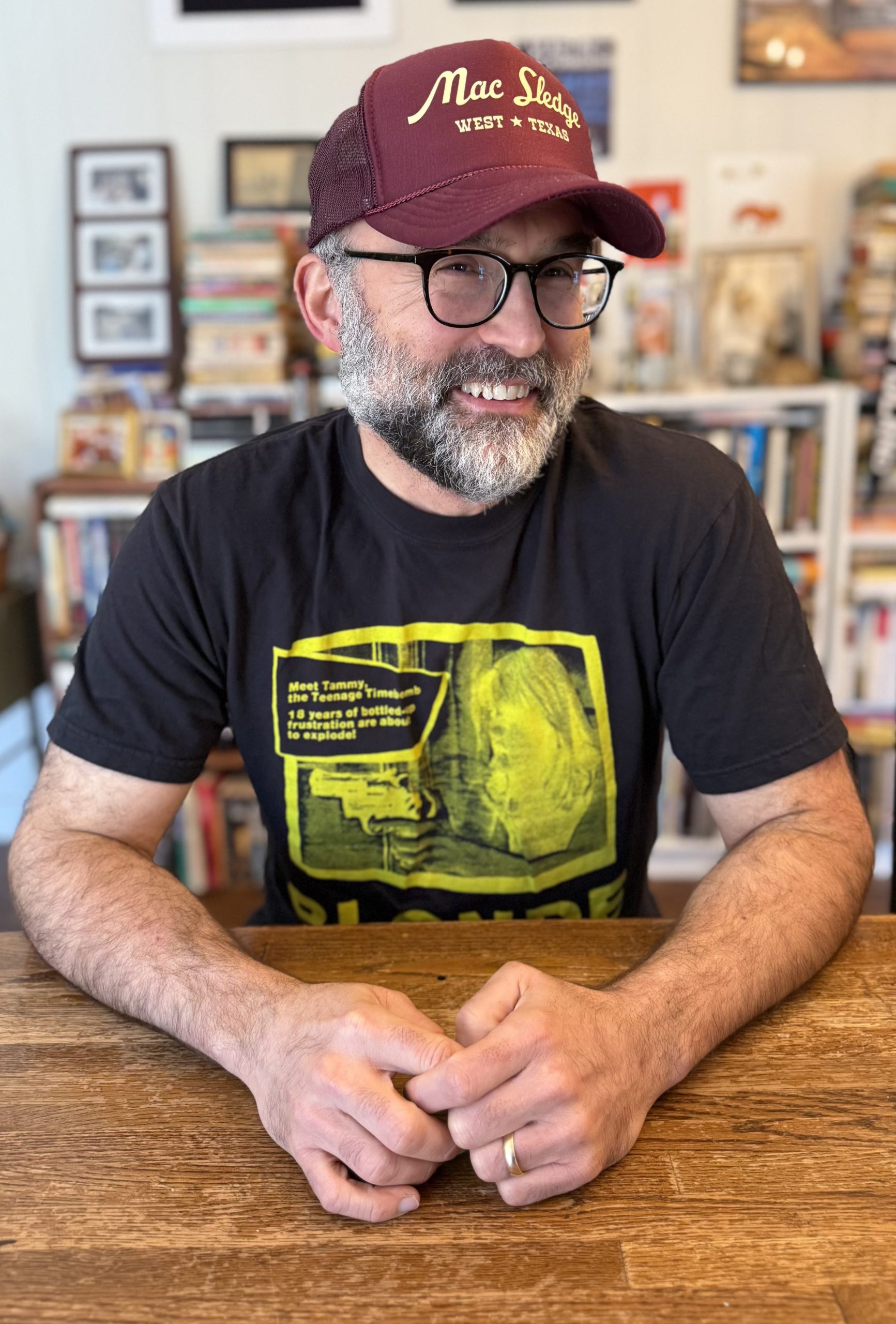
Boyle’s most recent novel is “Saint of the Narrows Street,” and another — “Heavy Sugar” — is due out next January. (Photo: Katie Farrell Boyle)
By Zachary Weg | news@queensledger.com
With “Saint of the Narrows Street” (Soho Crime, 2025), William Boyle has written one of the most compelling New York novels in recent memory. Full of both grit and heart, and an example of crime fiction at its most compassionate, the book takes place in Brooklyn over 18 years.
Boyle grew up in the Southern Brooklyn neighborhoods of Gravesend and Bensonhurst and has centered much of his writing there. His debut novel is even called “Gravesend” (2013), and he has been called the poet laureate of Southern Brooklyn. As for his continual fascination with the region, he’s drawn to both its locales and its residents.
“There are so many Brooklyn stories, so many corners of Brooklyn that I’ve never known, and will never know, but for my specific experience growing up in Brooklyn, it was definitely just kind of the people I grew up around, the stories they told,” he says. “The mythical quality of the place was always a draw for me.”
Having grown up a couple of blocks from 86th Street, where the car chase in “The French Connection” was filmed and where John Travolta does his slice-toting strut in the opening of “Saturday Night Fever,” Boyle also “grew up, of course, fascinated by mob lore,” as he says, and “always had this feeling” that he was living “in a place that was rich with both kind of history and kind of mythology.”
“Saint of the Narrows Street,” with its epic scope and length at almost 430 pages, is perhaps the culmination of Boyle’s memories of the neighborhood. A family saga centered around the incriminating secret kept between sisters Risa and Giulia Franzone, the novel sustains tension across its 18-year span. The book certainly is “a captivating, page-turning thriller,” as The Washington Post remarked.
Yet it’s more than that. Like the recent novels, particularly “Lush Life and Lazarus Man,” of fellow New Yorker and Boyle’s forbear, Richard Price, “Saint” is a panoply of characters, closing in on their innermost desires and then pulling back to reveal the outside forces that shape their lives. Even like Arthur Miller’s play, “A View from the Bridge,” “Saint” is a tragedy in miniature, its somewhat compressed timeframe building towards it shattering end.
As in “Bridge,” Brooklyn is the backdrop in “Saint.” Asked what keeps artists returning to the borough, whether it be a stalwart such as Spike Lee or the young rockers that make up the band, Geese, Boyle says, “There are just so many Brooklyn’s. That’s part of it. But it also must be something about that kind of mythical quality to it. You go anywhere in the world—not that I’ve been everywhere, certainly, but I’ve been to a few places—and people know Brooklyn.”
“And people have things that they identify with Brooklyn. I think that’s probably a little part of it. There has always been, and probably always will be, something kind of romantic about it as a place. For me, again, there are so many stories to tell and, despite the fact that people are always telling Brooklyn stories, there are still all of these untapped worlds in the borough.”
The Brooklyn of “Saint of the Narrows Street” is one of cramped kitchens, grimy bars, and hurtling trains. Beginning in 1986 and ending in 2004, the story starts almost in medias res as distressed housewife, Risa, is cooking dinner for her wild—and wily—husband, Saverio, or “Sav,” their baby, Fabrizio, or “Fab,” in the background. From this seemingly small, routine scene develops a larger story involving Risa’s younger sister, Giulia, and Sav’s close friend, Christopher “Chooch” Gardini, that explores themes of family, loss, and the choices we make. It’s a Brooklyn story, but one of universal truths.
“Saint” has received stellar reviews, including plaudits by Boyle’s fellow authors, Megan Abbott and S.A. Cosby. Regardless of all the praise, however, Boyle wants his readers to feel something after finishing the book, whatever that may be. As he says, quoting Tennessee Williams, “… I don’t even know what I mean to do, other than tell a story, find some truth, get a little communion going, and, suddenly, there are hidden messages. There are no hidden messages, no agendas, just frightened people heading toward the light.”
Yet Boyle isn’t done showing his Brooklyn. His latest novel, “Heavy Sugar,” is due in January 2027. “That book is set over one day in 1991,” he says. “Aside from one character from Saint of the Narrows Street who makes a little cameo in Heavy Sugar, it’s got nothing to do with it. But it’s set in ’91, a few months after the second part of Saint of the Narrows Street.” If “Saint” is any indication, “Heavy Sugar” is set to be another knockout. In the meantime, Boyle is putting his head down and getting back to work.