

Walking the Dutch Kills Loop with Newtown Creek Alliance

Photos by Luan Rogers.
Between the gleaming towers of Long Island City and the sludgy waters of Newtown Creek lies a rare green oasis — and a glimmer of hope for a post-industrial future.
By LUAN ROGERS
DUTCH KILLS — On Friday evening a group of about 30 people gathered on an unassuming street corner under the Long Island Expressway. As the cars roared overhead, they clambered cautiously up a dirt hill. From what afar resembled a group of intrepid ‘trespassers’, was in fact a walking tour, exploring one of the city’s more unloved and unknown waterways.
“It’s a hidden treasure,” said Dessie del Valle as she reached the summit, looking out at the jagged skyline of delivery warehouses and storage depots.
Newtown Creek, a tributary of the East River, runs 3.5 miles along the border of Brooklyn and Queens. Once the site of oil refineries, the area has since emerged as one of New York’s major logistics hubs. Last Friday, the Newtown Creek Alliance organized a walking tour through the surrounding area.
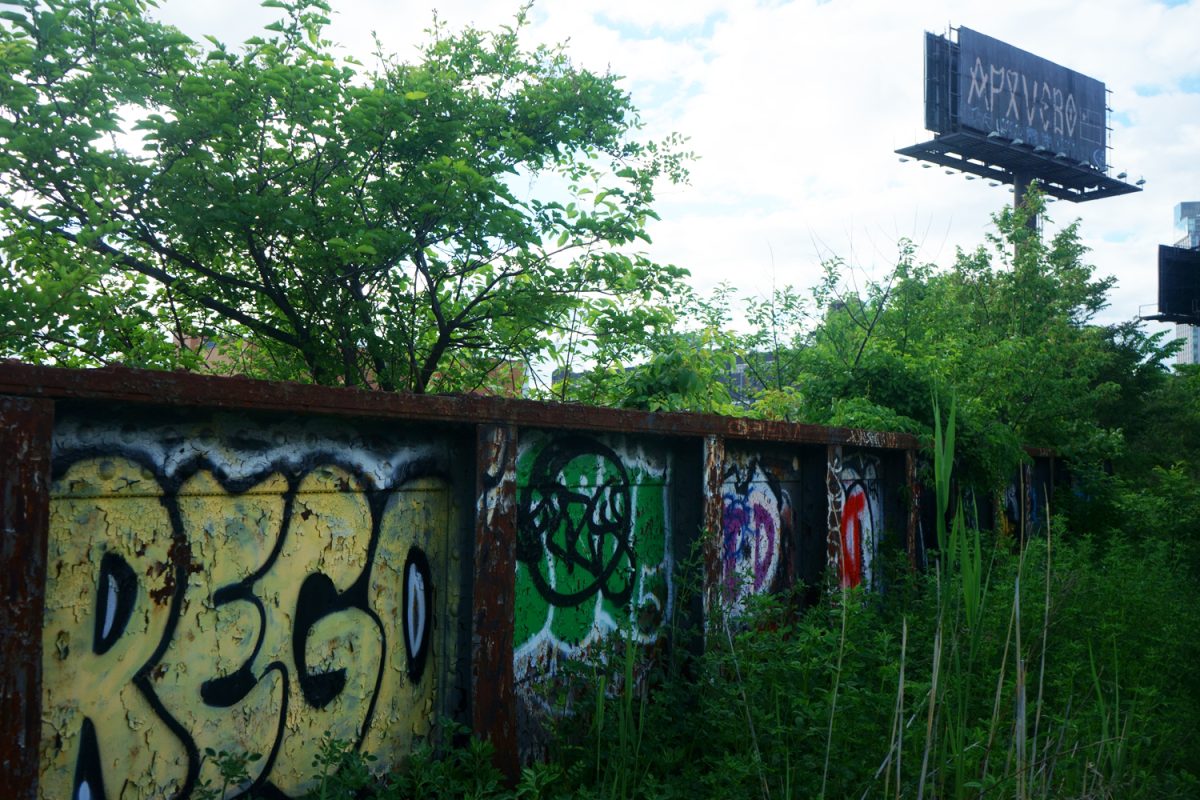
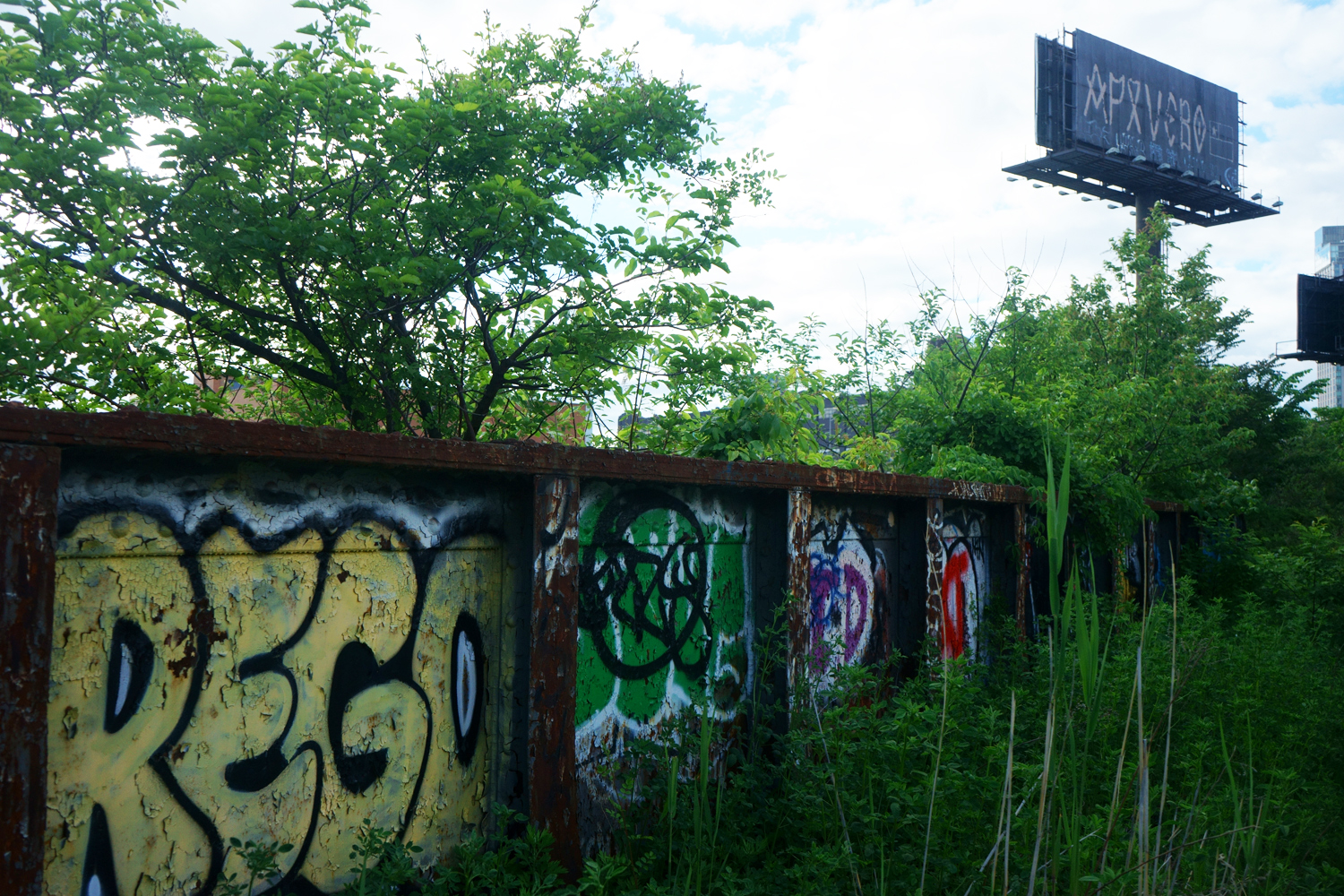
Friday’s walking tour followed the creek via the Montauk Cutoff, an LIRR freight line first built in 1907 but unused since the MTA suspended service in the 1990s. Organized by a local group called the Newtown Creek Alliance, the tour highlighted an area that the organization hopes to one day develop into the Dutch Kills Loop – a publicly accessible greenway that would extend along a disused railway line.
“We want to make use of a space that currently serves no one,” said Hart Mankin, an environmental educator with the Newtown Creek Alliance. “This is an invaluable community resource.”
Photos by Luan Rogers.
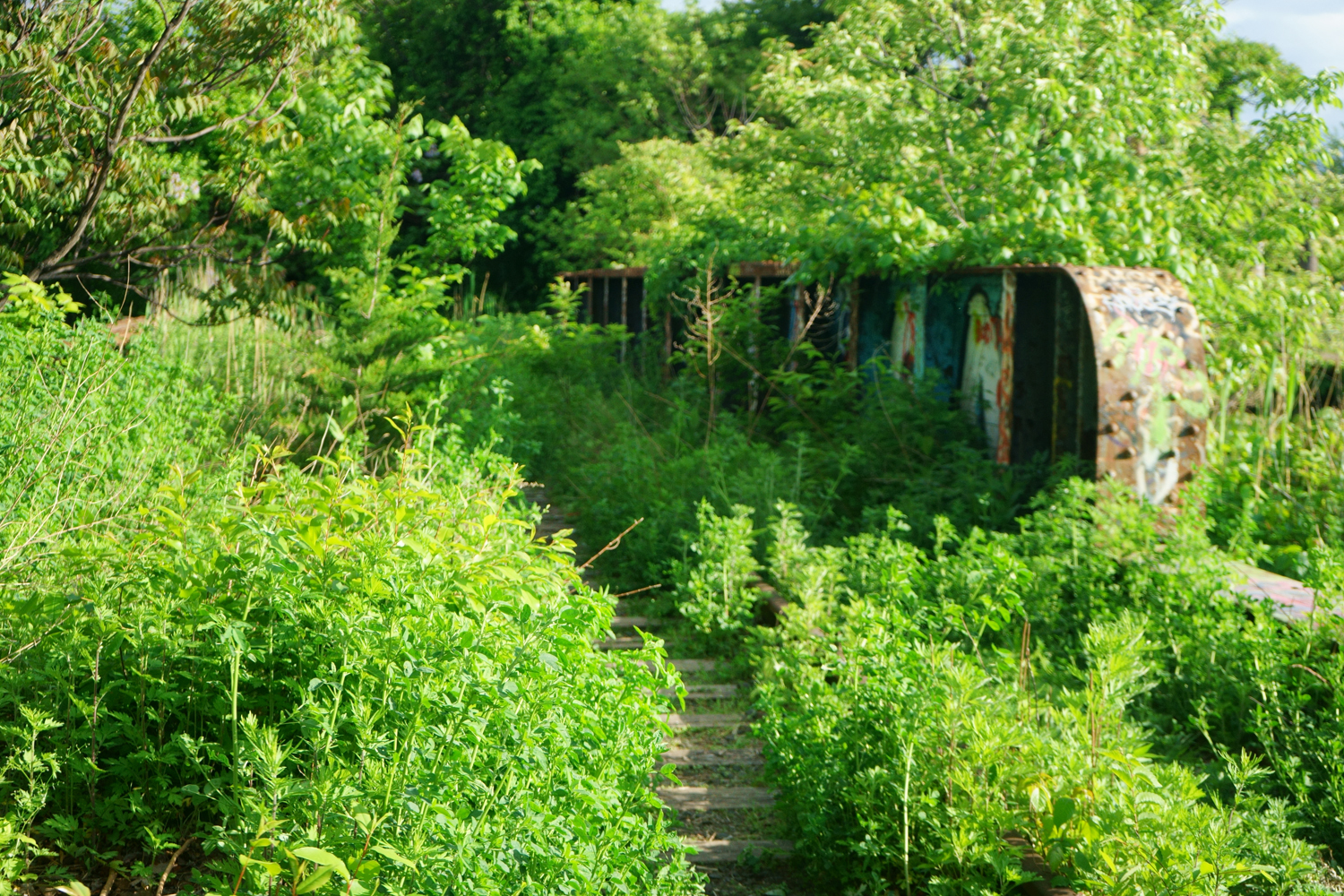
Since its abandonment, nature has fully reclaimed the railway. Verdant shrubbery creeps through the train tracks – an oasis of green amid the surrounding dereliction. The land, currently owned by the MTA, lies completely idle.
“We want to have city-owned land for public benefit,” Mankin continued. “It’s really just laziness and a lack of imagination getting in the way.”
The sight of the abandoned railway line had always piqued Katerina Verde’s curiosity. As a visual artist who incorporates nature into her work, she jumped at the prospect of a guided tour. “You really get a sense of the neighborhood’s history,” she says whilst admiring the flora along the trail. “It’s a shame how much of it has been eradicated by these new developments,” she laments, motioning at the new luxury condos that loom overhead. Newtown Creek stands in the shadow of Long Island City’s new high-rise developments, in what has become one of the city’s fastest growing neighborhoods. Mankin outlines how the influx of residents could actually help promote active investment in the creek. “The more people there are, the more they are interested in developing it into a public amenity,” he says.
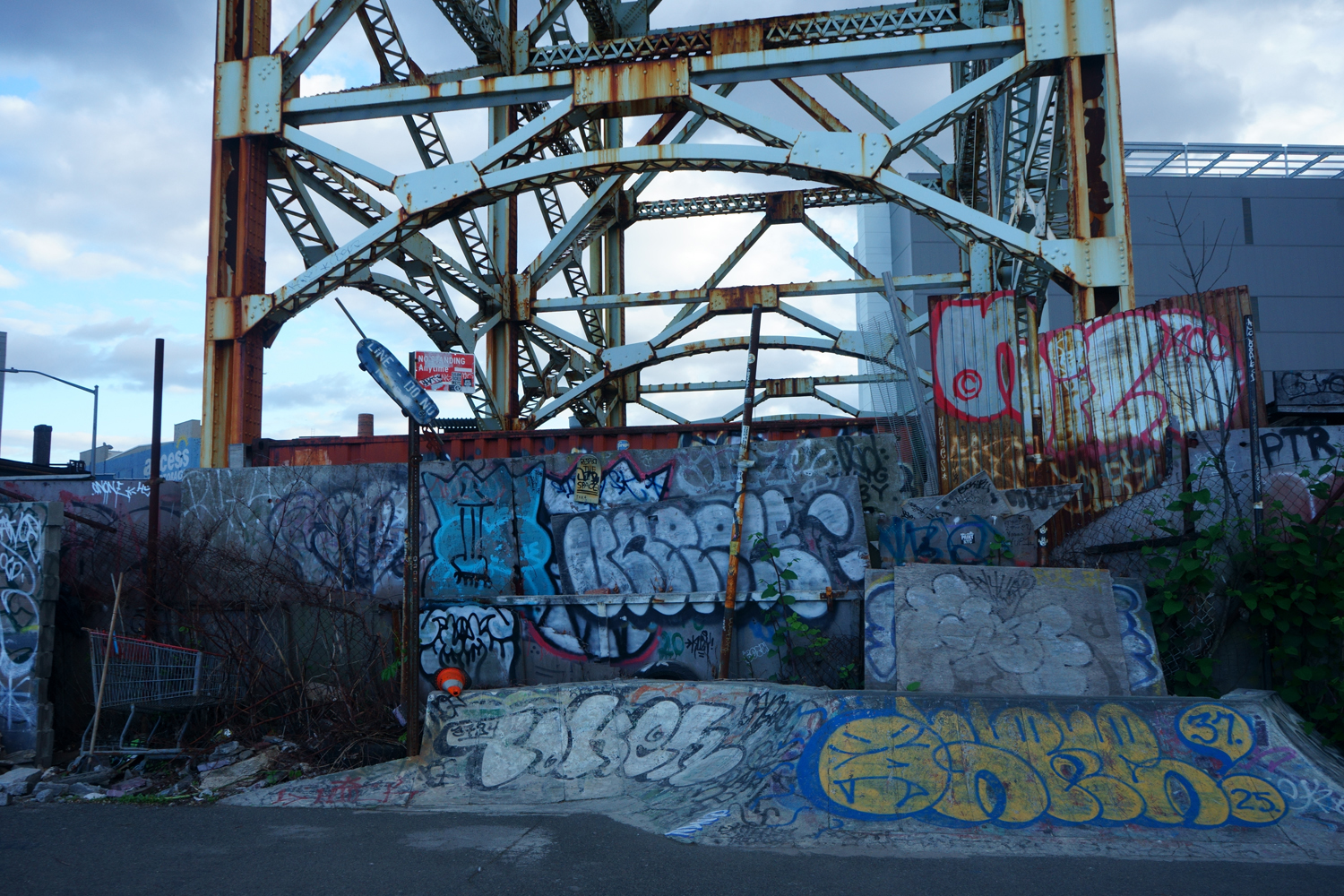
The walking tour passed by the Smiling Hogshead Ranch – a community garden along the disused railway line. The group moved down 47th Avenue to Dutch Kills, a heavily polluted branch of the creek that can no longer sustain marine traffic since the water level has dropped so low. According to Mankin, nearby sewage plants pump 300 million gallons of sewage into the creek annually. “Newtown Creek has undergone centuries of environmental degradation from the industries around it,” says Mankin.
Photos by Luan Rogers.
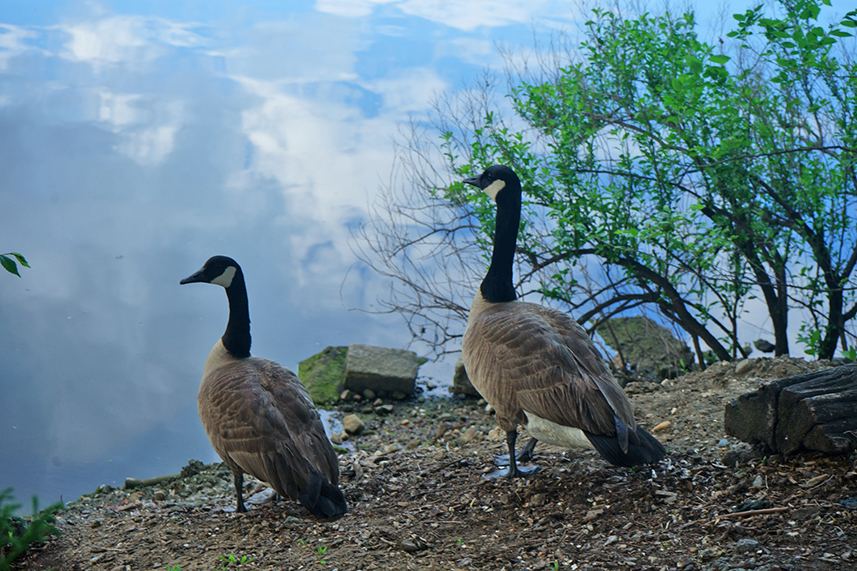
Nonetheless, the creek does still support some wildlife with a variety of birds stopping there during the migratory season. The restoration of the creek would help promote biodiversity in a part of New York that otherwise lacks natural vegetation. The surrounding area qualifies as an ‘urban heat island’ because it experiences higher temperatures in comparison to the rest of the city. “It’s not only about protecting plants and animals that use the creek,” said Nebraska Hernandez of the Newtown Creek Alliance. “Their protection benefits us as well.”
In 2010, the Environmental Protection Agency (EPA) designated Newtown Creek as a superfund site. Just last year they finalized a cleanup plan which aims to dredge the creek of industrial waste. The EPA agreement requires historic polluters such as Exxon Mobil and BP to contribute to the cleanup, with the much-awaited project set to begin in 2032. Mankin cites the Hudson River Greenway as an example of a successful transition from an industrial zone into parkland and public space. “We want to reconnect people to a resource that they’ve been severed from for generations,” he said. “The city needs to understand the value of this.”
After crossing the Greenpoint Avenue Bridge, the tour finished at the Kingsland Avenue offices of the Newtown Creek Alliance. On the rooftop garden, Adam Lipowicz – one of the tour participants – gazed out at the three ‘digester eggs’ of the adjacent wastewater treatment plant. To the east, the sun’s fading light descended on the Manhattan skyline.
“New York is just an incredible playground for exploration,” he said. “There’s always so much to discover.”
Photos by Luan Rogers.