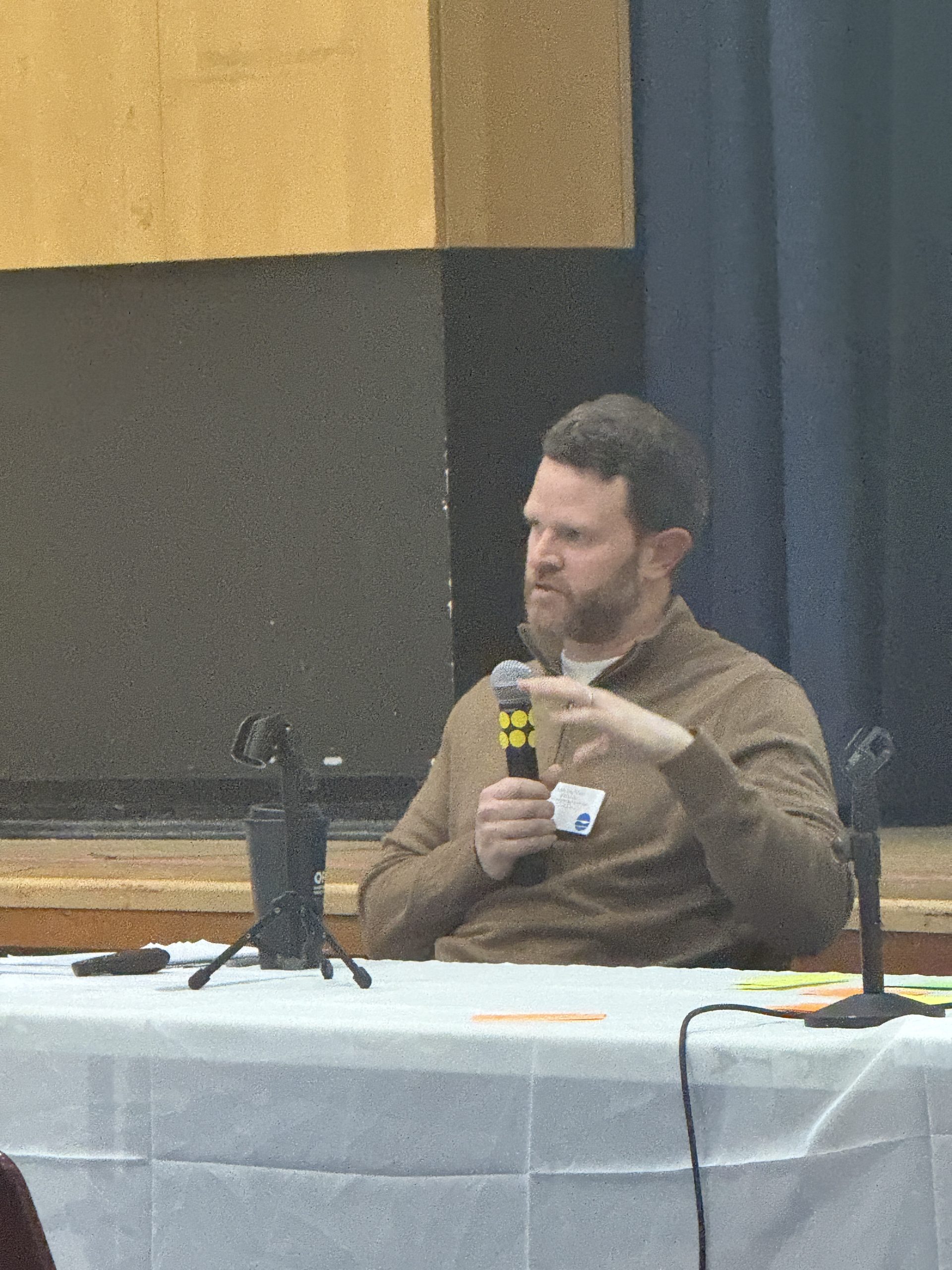
Cups of Care: Meet the Brooklynite Behind “The Tea Stand”

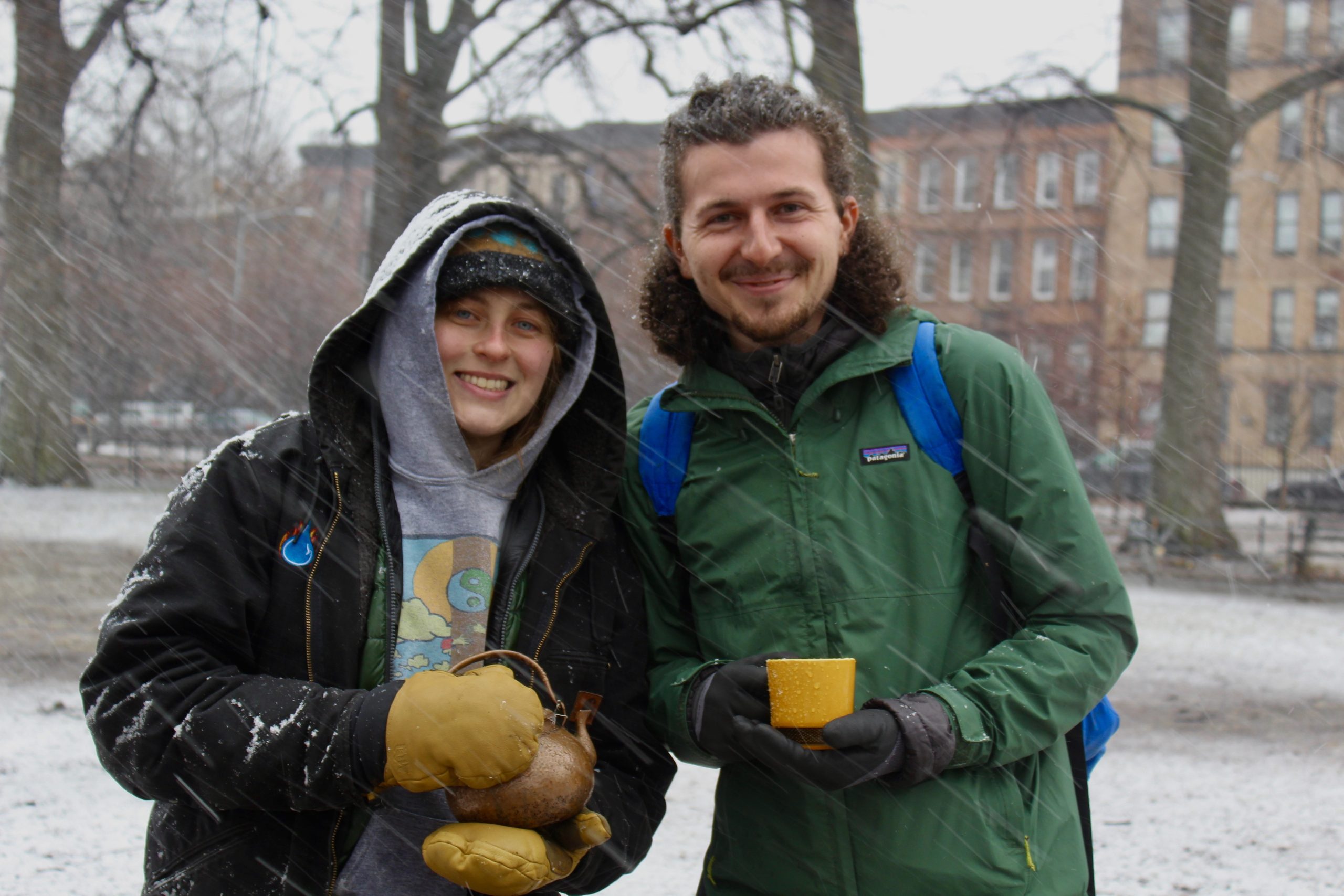
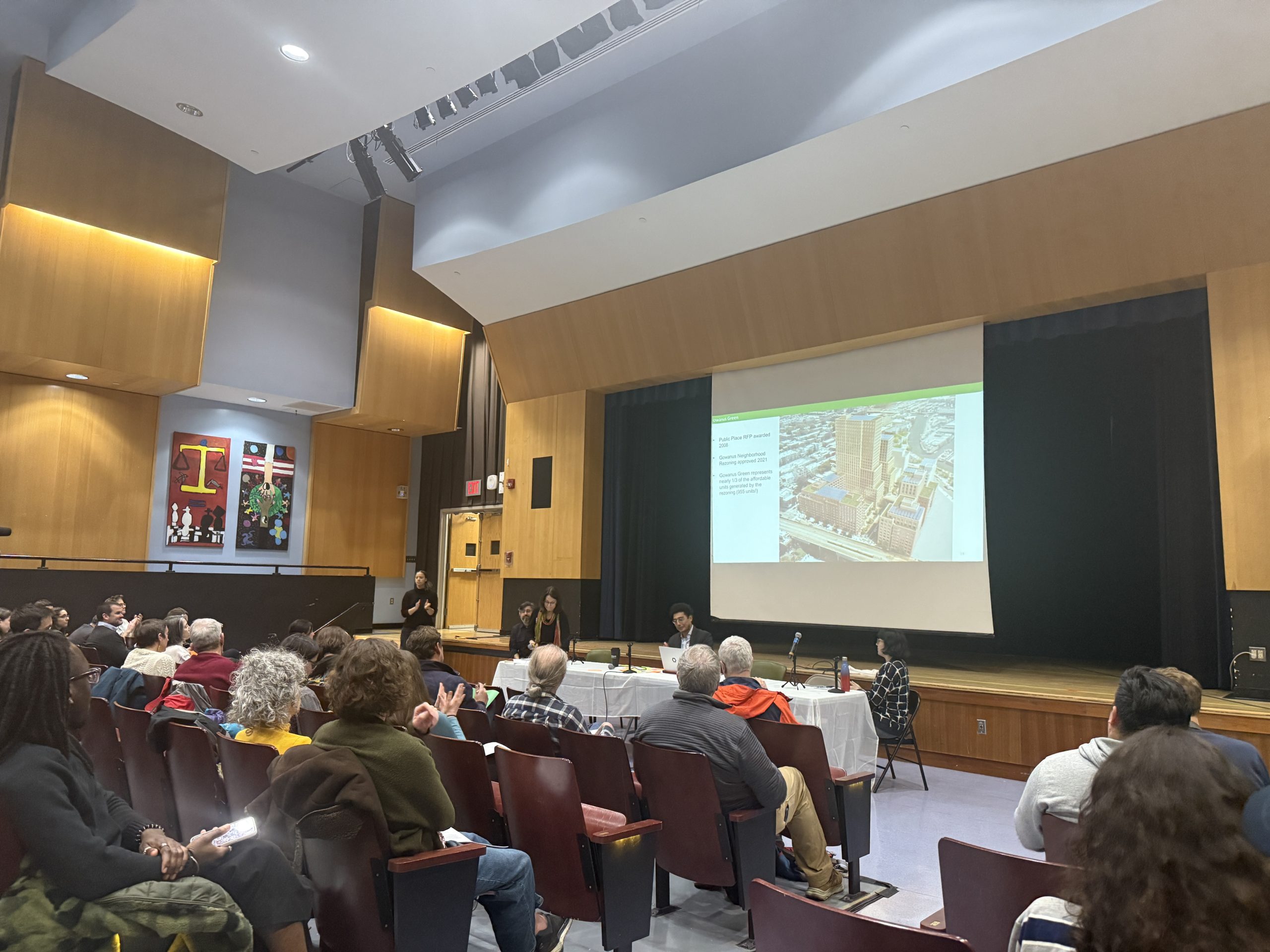
A community volunteer (left) and Miles Kirsch (right) pose for a photo after helping serve free tea at Herbert Von King Park. (Photos: Jacqueline Cardenas)

By Jacqueline Cardenasnews@queensledger.com

BED-STUY — It was the ubiquitous tea houses and warm connection he felt with fellow tea drinkers during his trip to the Middle East and North Africa 7 years ago that led Miles Kirsch to begin giving out free tea at public parks across Brooklyn.

The 29-year-old wanted to relive the ambiance of the tea houses he visited, but more than anything, he wanted to create a space where people can “slow down.”

By mounting gallons of water onto his bike, propping up a tea stand and laying out a blanket in a park, “people can just engage with their neighbors, engage with strangers, in a way that in today’s world is so difficult to do,” Kirsch said.

The Tea Stand was brought to life in December 2022 after Kirsch served tea at his local Brooklyn park and has since hosted various pop-ups where free tea has been served across the 5 boroughs.

Other programming include “Distros” where tea is served at food and resource distribution centers, “Tea Talks” where a small group of neighbors gather to connect via storytelling and tea, and more.

By creating these different opportunities for people to slow down, Kirsch said he wants to help stir people’s imagination.

“I want people to think, what else can be free in our world? What else can our public spaces be providing? And the tea stand is a great way to, in a simple way, inspire those types of ideas,” Kirsch said.

Formed in 2022, the Tea Stand has already distributed upwards of 9,000 cups of free tea.

Over 9,300 free cups of tea have been served to date, though some question how The Tea Stand remains operating without the traditional business model and without Kirsch working a full-time job.

Over 100 people contribute an average of $10 per month to The Tea Stand via a subscription that gives them access to curated tea boxes delivered to their door once per season, a travel cup and more.

This means there’s over $1,000 coming into The Tea Stand every month, Kirsch said.

“That’s almost my rent. It was my rent until my landlord raised my rent,” he said, raising his eyebrows.

Kirsch has also garnered the support from over 100 loyal volunteers who donate and help serve tea in the parks, which allows for Kirsch to integrate the community into some of the decision making process of how the tea stand runs.

Kirsch previously worked in Biotech though after quitting his job in October 2022, he says he has been “privileged” to be able to use his savings in order to pay off other living expenses until the Tea Stand becomes more economically stable.

“The fact that I can spend my life biking around, hosting events and serving free tea and have my rent covered, it’s pretty amazing, and like the just ambient support that I feel and the accountability is one of the most positive forces I’ve ever had in my life,” Kirsch said. “It’s motivating, it’s humbling. It keeps me grounded. It also allows me to imagine what this can become.”

Two community members enjoy their free tea served by The Tea Stand earlier this month.

But the work isn’t done alone.

Aidan Kaminer, a 26-year-old who moved to Brooklyn from Connecticut last August, has volunteered for The Tea Stand frequently and said each time “it’s special.”

He first interacted with the Tea Stand when he attended a community healing clinic hosted by Field Meridians, a Central Brooklyn based artist collective.

“They had sort of ear acupuncture, there was yoga, there was all the plant things. And that’s where I met Kirsch and the tea stand, because he was there serving tea. And I said, wow, there’s a cool guy here serving tea too. That’s awesome. I want to also maybe be the guy serving tea,” Kaminer said.

He said events like the ones The Tea Stand hosts show how community grows through shared effort.

“If you invest your love, time and energy in these spaces, you get it back,” he said. “New York is a city that, if you give to it, it gives back.”

Kirsch’s close friend of over 10 years, Adin Vashi, has also become a trusted voice of reason and collaborator of The Tea Stand particularly amid economically uncertain times.

Vashi recalled the time Miles applied for a grant that would have been transformational for The Tea Stand though he didn’t end up getting it.

“I think that hurt,” Vashi said. “We talked a lot about expectations, and there was no guarantee that he was going to get it, but it’s still really hard to totally divorce yourself from that. That’s like a lifelong kind of goal.”

Moments like these have led Vashi to become a compassionate soundboard for Kirsch’s as they navigated through an “uncomfortable” period.
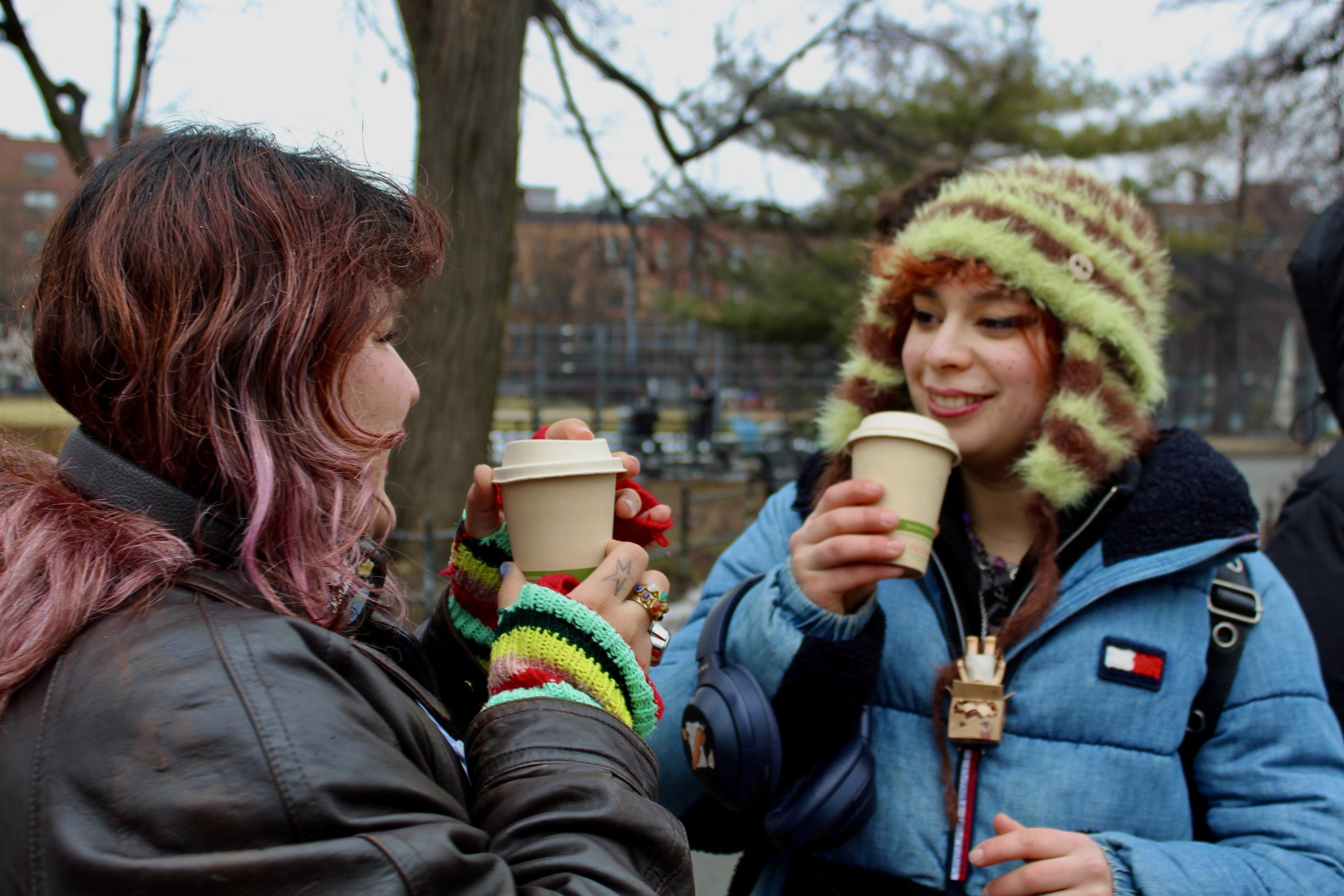
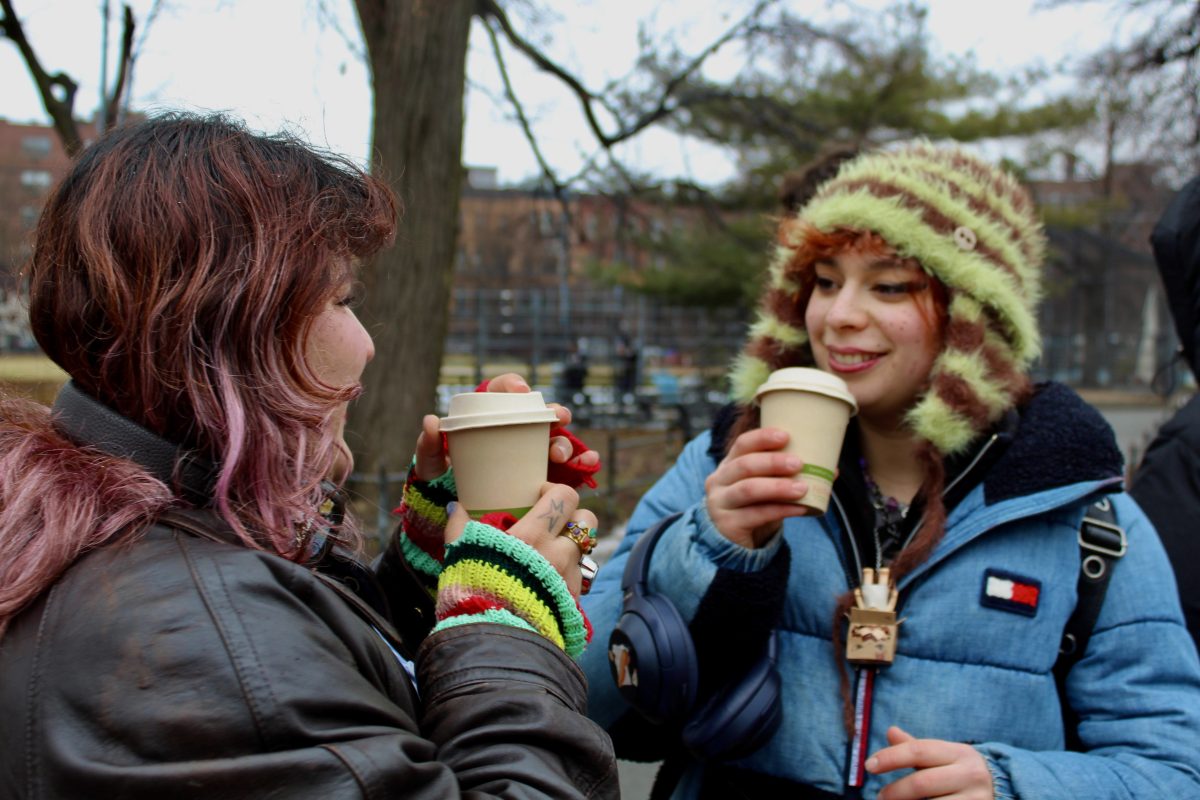
Two friends share a warm cup of peppermint tea.

“I think just a great thing about having someone to talk to about it is that you can be uncomfortable, doubtful and not be like, freaking out, or be immediately like, ‘Oh no, I have to, like, change everything, or I have to get a job, just because it’s not making enough money yet,’” Vashi said.

The two meet bi-weekly and discuss everything about how to improve the Tea Stand, from the finances, the programming, the technical and the spiritual.

Whether he is helping Kirsch decide on which font fits best a social media graphic or the two are talking about The Tea Stand’s philosophy, Vashi’s support has led the two-long time friends to refer to their as bi-weekly gathering as “Chashi meetings.”

Chashi, is a Japanese term for a tea master whose primary role is to advise tea distributors and ensure their tea blend is well-balanced and true to their vision.

Even though The Tea Stand isn’t covering all of his living expenses yet, it has provided Kirsch with something much richer: community.

“The amount of love and support that I receive back from that is overwhelming,” Kirsch said.
Brad Lander Calls for Pause on BMT Process

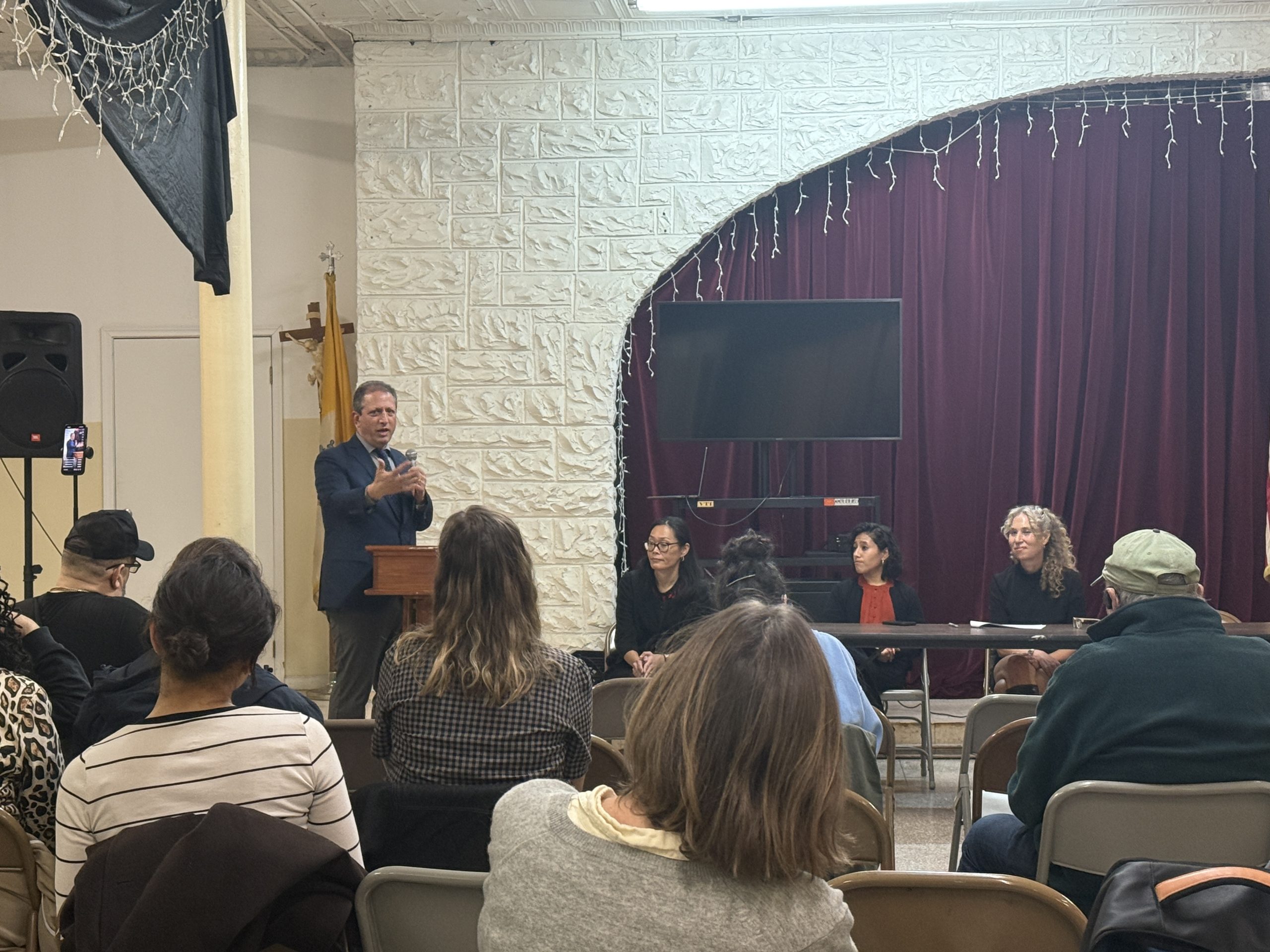
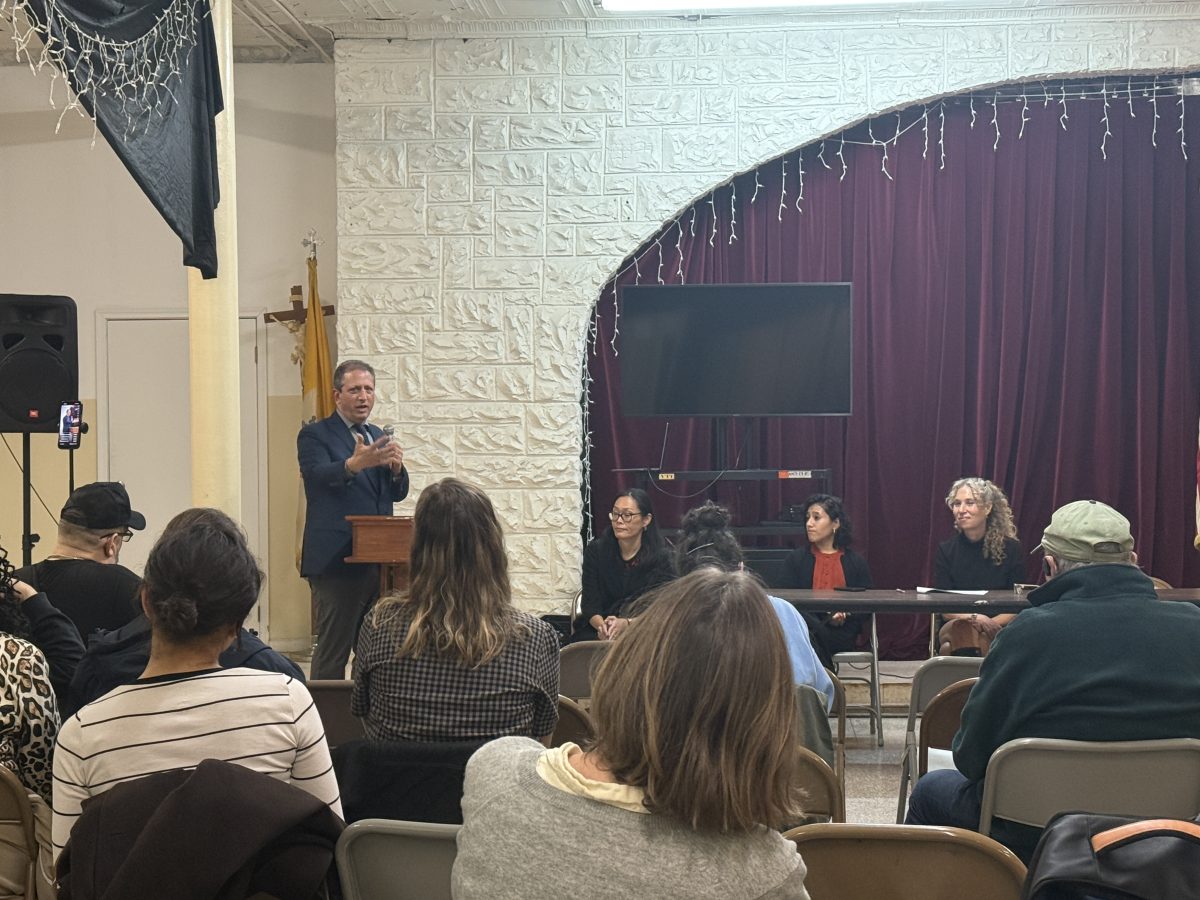
Brad Lander, the former city comptroller and now congressional candidate, speaks last week at a forum on the planned redevelopment of the Brooklyn Marine Terminal (BMT) in Red Hook.

By Jack Delaney jdelaney@queensledger.com

CARROLL GARDENS — Red Hook residents may have gained a powerful ally in their fight against the Brooklyn Marine Terminal (BMT) redevelopment — but he’s not making any promises yet.

On Wednesday, March 11, nearly 100 locals gathered in the bowels of Sacred Hearts & Saint Stephen Church by the BQE trench. The meeting was ostensibly an info session about the BMT’s environmental review process, and kicked off with a presentation by Hilary Semel, director of the Mayor’s Office of Environmental Coordination (MOEC).

Once the Q&A arrived, however, attendees went on the offensive. Axel from the Columbia Waterfront District posed the essential question: Could the environmental review lead to any meaningful changes to the existing plan, which would see approximately 6000 homes built along the decrepit piers south of Brooklyn Bridge Park?

Semel’s answer — that the review’s findings were non-binding — triggered a muffled outcry. Local activist John Leyva argued that the process was simply meant to appease residents, while the New York Economic Development Corporation moved ahead without alterations to its original proposal. (“This is BS. Quote me on that,” Leyva would say after the meeting.)

A Red Hooker named Lou agreed: “The preamble makes it seem like the mostly-port alternative has no legs,” he noted, referencing a master document called the draft Scope of Work. “It’s a foregone conclusion that there will be housing.”

Other residents raised what they view as fundamental issues with constructing high-rises on the waterfront. Maria LaRocca pressed officials about a recent study published in Nature, which found that scientists have been severely underestimating sea level rise. Lisa Baustead, a veteran business owner from Carroll Gardens, added that buses were already gridlocked at the intersection of Atlantic Ave and Columbia St — what would happen with thousands of additional cars? And Pablo Garcia highlighted the 10 tons of waste that would need to be removed daily, to which an EDC rep replied that they were in contact with DSNY.

As part of the review process, known as CEQR, the MOEC is required to study the environmental impacts of alternative plans. Yet despite soliciting applications from potential port operators, the city has thus far signaled it is unlikely to tweak the core proposal.

These are familiar concerns, ones which failed to scuttle the BMT project when it passed a task force vote last fall. But a new face was in the crowd on Wednesday: former Comptroller Brad Lander, who joined the line to ask his own question.

“Why are we moving forward with one fleshed out plan, and a vague sense of another?” said Lander, pressing Semel. “Sometimes there’s urgency. Here it just seems like — hit pause, and let the alternatives develop.”

Semel replied that the city “had to start somewhere,” leading to a brief back-and-forth. The meeting wound to a close, and locals chatted with Lander, who said he was still researching and considering his position on the BMT. But even that was significant — Though the forum was a reminder of residents’ frustrations with the engagement process, it also introduced a curveball into an already tumultuous contest over the future of Red Hook.

State to Owner of Toxic Gowanus Lot: “Time’s Up”

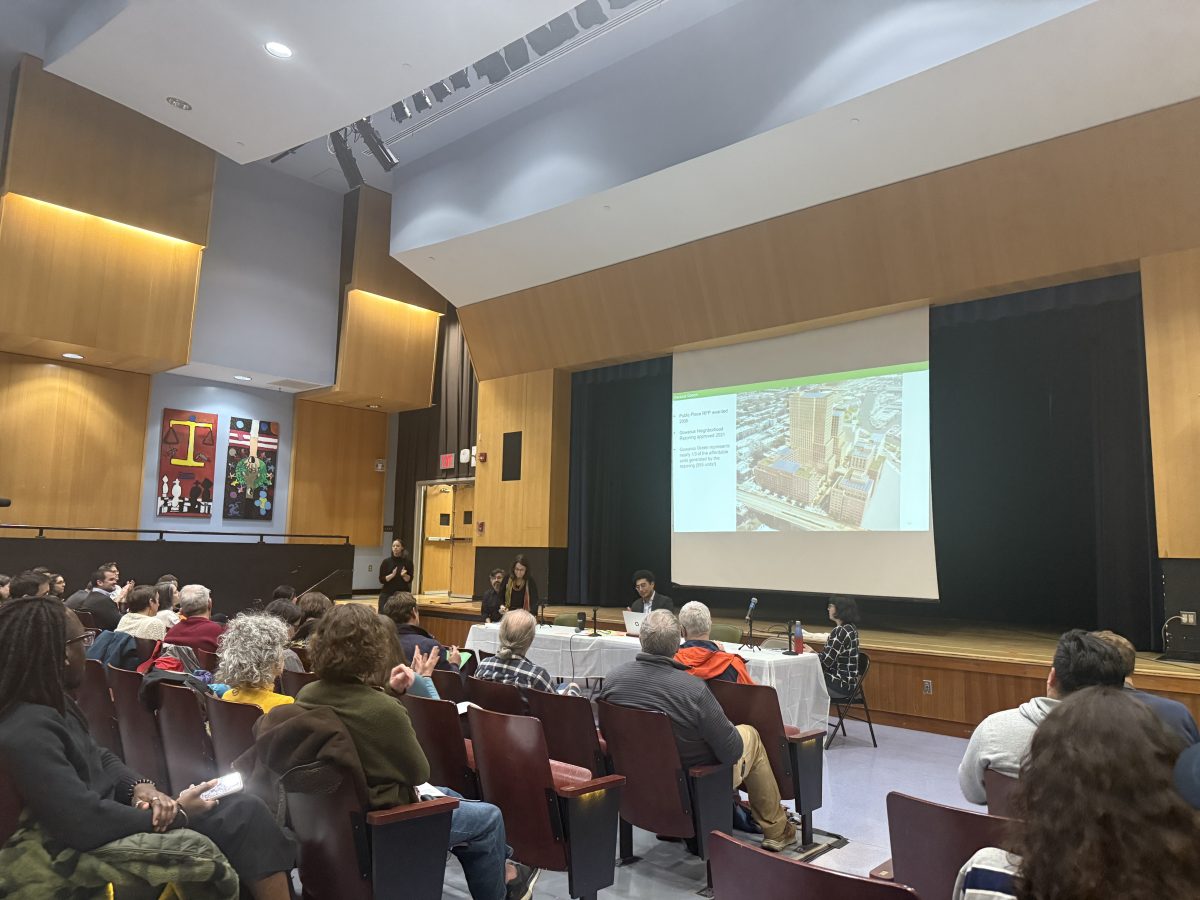
The Gowanus Oversight Task Force hosted an info session on Thursday, March 12, to discuss the polluted land that’s earmarked to become a mixed-use development called Gowanus Green.

By Jack Delaney | jdelaney@queensledger.com

GOWANUS — One of Gowanus’ most controversial sites is finally seeing some movement.

For years, state regulators with the Department of Environmental Conservation (DEC) have struggled to enforce the cleanup of a huge — and massively polluted — chunk of land along the banks of the Gowanus Canal.

From the 1860s until the 1960s, the Citizens MGP site off Smith Street was home to a manufactured gas plant that provided energy to the neighborhood, but left coal tar and other toxic byproducts in the soil. Today, the zone slated for remediation has been divided into four parcels, each with their own roadblocks.

Parcel 4, or 424 Hoyt St, has frustrated DEC officials for a simple reason: They can’t get in. Since 2019, the owners of what is now a commercial parking lot for food trucks have ignored regulators’ attempts to test the property and formulate a cleanup plan.

The state’s patience has finally worn thin. Last week, at a meeting of the Gowanus Oversight Task Force on Thursday, March 12, DEC representative Andrew Guglielmi announced that his team had issued a “record of decision” document for Parcel 4, and will be entering the site — “Whether or not they want us to” — later this summer.

Along with the move to confront Parcel 4’s owners, Guglielmi added that seven years of stop-and-start remediation have removed approximately 66,000 gallons of pollutants from the site. And he dropped another piece of good news: The dispute resolution, a lawsuit by National Grid in 20 that argues it should not be the only gas company on the hook for remediation, “is very close to being over.”

At the end of Guglielmi’s presentation, the auditorium broke into applause, a rarity for meetings in Gowanus about remediation efforts.

But other aspects of the cleanup continue to face local scrutiny.

Andrew Guglielmi of the DEC said his office will be taking action on Parcel 4 this summer.

At an info session last summer, DEC regulators announced that the Citizens MGP site would be handled under New York’s Brownfield Cleanup Program (BCP), rather than the stricter framework of a State Superfund designation. Residents immediately called foul, arguing that the BCP is insufficient given the high level of toxins in the soil and that it would result in superficial remediation.

Yet Guglielmi pushed back against a similar line of questioning at last Thursday’s meeting. In response to a resident wondering why only Parcel 4 was placed under the Superfund program. “No one approached us,” Guglielmi maintained that his office would have transferred it to the BCP — which incentivizes outside companies to take on remediation in exchange for tax breaks — if an applicant had materialized.

The DEC rep also noted that a sub-slab depressurization system (SSDS) will block any toxins from seeping into the apartments planned at the western wing of the parcel, a project known as Gowanus Green. (Building A is set for completion in 2029; the developers shared that over 120,000 people recently applied for only 45 affordable units in the neighborhood, highlighting what they say is an urgent need to expand the local housing stock.)

Only some of the crowd was convinced. Jack Riccobono, a member of the grassroots advocacy group Voice of Gowanus, blasted the DEC for using the BCP — a decision he said would endanger future residents, given that some evidence suggests toxins may be migrating off-site.

“You’ve been misleading the public about these two programs, and we’re sick of it,” he told Guglielmi. “It’s about money, not about health.”

Fill the Form for Events, Advertisement or Business Listing