JJ: “Finally! A Met Offseason Move to Celebrate!”

New York, New York

By John Jastremski

The winter months so far have not been kind to David Stearns and the New York Mets.

Sure, they’ve told you that a plan is in place. Yes, publicly they have remained confident about their process.

However, as of 4 days ago. The plan was not exactly one that had Mets fans jumping for joy.

So far this winter, it’s been the winter of departure. First Brandon Nimmo, but in a two day span Edwin Diaz and Pete Alonso became former Mets.

No disrespect to Jorge Polanco and Luke Weaver, but not exactly the moves that have you high fiving your buddy at work walking into the office.

The Mets last week appeared poised to make a big splash. As of last Thursday, the team was hot and heavy for Cubs All Star outfielder Kyle Tucker.

Tucker was looking for a short term contract with a crazy high yearly salary.

Despite some of the fit concerns I had with the player, on a short term deal, this appeared to be in the David Stearns wheelhouse, until guess who?

Yep… The Dodgers!!!!! Swooped in and made Tucker an offer he couldn’t refuse.

After losing Alonso and Diaz and now missing out on Kyle Tucker, the Mets had to do something this offseason. After all, you just can’t sit on all that Steve Cohen loot!

Thankfully Friday, they pivoted beautifully.

Out of nowhere, the Mets signed infielder Bo Bichette to a three year contract. 

Bichette is a right handed hitting machine. He is a throwback player, puts the ball in play and has exactly the sort of attitude the 2026 Mets should be looking for.

He is a natural shortstop, so he will be moving positions, which certainly contradicts the run prevention narrative you’ve heard throughout this offseason.

However, cast that aside. 

Bichette makes the 2026 Mets a significantly better team.

He can hit behind Juan Soto. He has the right makeup to handle New York City.

Oh and the Phillies were interested! So much for that!

The Bo Bichette signing will bring about a variety of questions about how the rest of the roster will look moving closer to Opening Day.

However, there is no question that the Mets are a much better team than they were on Thursday night.

This was a move that had to be made.

You can listen to my podcast New York, New York on The Ringer Podcast Network on Spotify/Apple Podcasts every Sunday & Thursday. You can watch me nightly at 11 PM on Honda Sports Nite on SNY. 

Call it a New York Cosmos Comeback

Local roots forge path for historic club’s rebirth

By Noah Zimmerman

noah@queensledger.com

The New York Cosmos remain one of the most historic clubs in American soccer history. Founded in 1970, the club has been graced by some of the world’s greatest players, bringing Pelé, Franz Beckenbauer, Raúl, Carlos Mendez, and many other icons to the Metro area.

While it hasn’t all been good, the Cosmos have enjoyed many memorable moments throughout their history in New York City, Long Island, and New Jersey. Now they’ll once again look to establish themselves as a premier spot for high level soccer in the Northeast, hoping to regrow the local roots that made them so popular in the past.

The Cosmos began play in the NASL, winning five titles before the league began to falter and eventually fold. The club attempted a revival with hopes to secure a Major League Soccer expansion franchise in the 2010s. 

From 2013 to 2016 the Cosmos claimed three championships, the only team to win multiple league titles. They also claimed US Open Cup victories against MLS clubs like New York City FC and the New York Red Bulls.

Unfortunately the NASL lost Division II status in 2018 and significant financial issues pushed the club to fold in the years after. The Cosmos took a hiatus during the COVID pandemic, one that became permanent.

Now under former COO Erik Stover, the club is preparing to take the pitch once again. They’ve secured a home stadium at Hinchcliffe Stadium in Patterson, NJ, and are hoping to use that as a backbone for the club’s third iteration.

“The Cosmos are American soccer, good and bad. There’s been a lot of ups and downs,” said Stover, who is now serving as the club’s CEO. “A lot of soccer in the United States hasn’t been done properly and we want to be a part of changing that.”

To not only change the club’s culture but lead others in growth requires a major focus on building local communities, and that’s a central piece of the Cosmos’ plan. They’ve already partnered with roughly 20 teams, academies, and organizations to build stronger networks and pathways to competitive play.

“The whole idea is to be as inclusive as possible to work together in a way that’s cooperative and supportive,” said Stover. “Our plan is for that network to give people opportunities that they wouldn’t have otherwise and we’re off to a good start so far.”

Among these partnerships are youth academy affiliations with clubs like New Jersey’s Morris Elite SC. Other partners are scattered around the five boroughs and Long Island, building a map for the future of the Cosmos and their network.

The club is also turning to former stars and top-level soccer minds to jumpstart the club ahead of their 2026 season. Giuseppe Rossi has joined as a Vice Chairman and head of soccer, bringing him back to Northern New Jersey where he was born and raised. The Cosmos also named Italian coach Davide Corti as the club’s 9th manager and first in the USL era.

On the field, the Cosmos are also looking to recapture previous success. Their first signing was Sebastián Guenzatti, who was with the club during their run of championships in the 2010’s.

Growing up in College Point, Queens, Guenzatti started for four years for the soccer team at Francis Lewis HS before moving to his native Uruguay to join Peñarol’s academy. He signed his first pro deal with Huracán, but soon moved back to the US where he joined the Cosmos.

Guenzatti won two championships on the field and watched teammates seal a third in 2016 as he was injured for the final matches. He was also with the club for their historic triumph over NYC in the Open Cup.

“That first title when we first got together, we only had six months together as a team and it was a big shock for the league,” recalled Guenzatti about his first year back in NY. “We had a lot of hardworking young kids with a lot of talent and bright futures.”

“Seba and the crew did great things for us around 2013. We won some championships and brought soccer back in a different way to a lot of folks in the area,” added Stover.

In essence, that’s what the Cosmos aim to do in 2026 and beyond. Soccer in the US is at its best when local teams have passionate followings and that happens when teams make a point of partnering with the local community and making them a part of the club.

Guenzatti also looked back to his days growing up in Queens and his path to competitive soccer.

“My biggest memories are playing pickup. Right in front of my house there was an abandoned hockey rink so we used to get in there and play all day and all night. My dad would come bring us water,” he said. “Now they turned it into a public soccer field in Queens, right in College Point where I had a lot of memories.”

In their new form, the Cosmos know there is plenty to achieve and strive for in the future. 

“A question we got a lot on Long Island was ‘yeah you won the league, but what’s next?’ and we didn’t really have an answer,” Stover said.

With USL on track to implement promotion and relegation in the near future, the Cosmos hope to make a push for their top division. Perhaps if the USL can get the Division 1 classification it’s been seeking, the Cosmos can finally return to top division play as they once were.

Until then, the focus remains on developing a competitive team and building a new Cosmos culture from the ground up.

“Building a culture that resonates in the community and gives long lasting opportunities to people is extremely important,” stated Stover about his first season goals. “Bringing in players who understand who we are like Seba, bringing in coaches like Davide Corti and directors like Giuseppe Rossi to build a foundation is the most important to me.”

“I’ve seen a lot of people fall through the cracks,” Guenzatti said about his experience growing up with the beautiful game. “I was lucky enough to end up on a team with unbelievable people to help me along the way and not everybody gets that chance. We should give everyone a fair chance to follow their dreams, whether that’s soccer or other things.”


100 Years of the Northside’s Puerto Rican Community

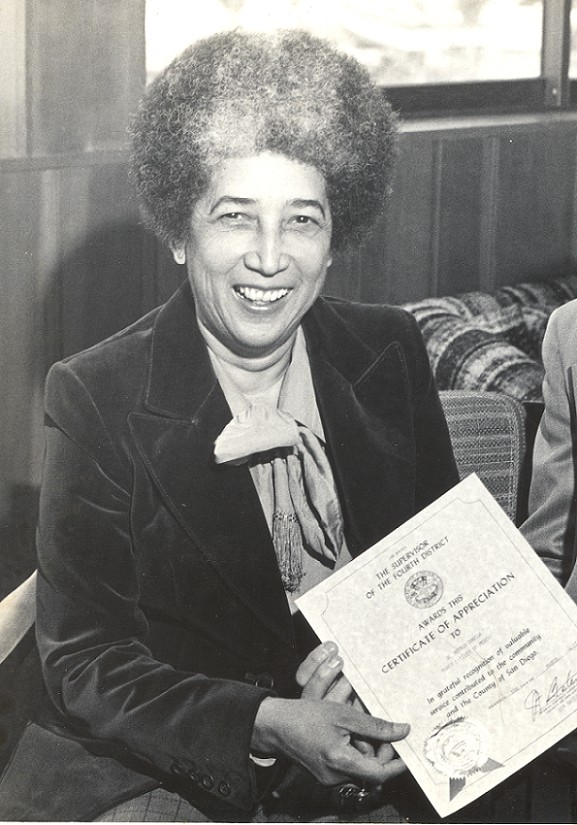
Antonia Pantoja founded ASPIRA in 1961, helping to force New York City to provide bilingual education options in public schools. (Photo: NYC Schools).

GEOFFREY COBB

Author, “Greenpoint Brooklyn’s Forgotten Past

gcobb91839@Aol.com

The other night I met James Nunez, a lifelong Greenpointer of Puerto Rican heritage and we reminisced about the long history of Puerto Ricans in North Brooklyn. Though Puerto Ricans still comprise a vibrant part of our community, many have been forced out of our area, victims to gentrification. James’ grandmother ran a Puerto Rican restaurant in the area until the 1990s. When I first arrived in Greenpoint in the early 1990s, walking north of Greenpoint Avenue meant experiencing Puerto Rico’s exuberant culture. Families sat outside on the street often playing dominoes while listening to salsa music, the smell of pork or chicken being barbecued on a grill wafting through the air.

Many North Brooklyn residents are surprised to learn that Puerto Ricans have lived in our area for over a century. In 1924, Congress passed the first immigration law, severely restricting immigration by establishing national quotas based on the 1890 census, heavily favoring Northern and Western Europeans, and completely barring Asians, particularly Japanese, reflecting widespread nativism and xenophobia. This act dramatically reduced overall immigration, created the first U.S. Border Patrol, and aimed to preserve a perceived homogeneous “American” demographic makeup for decades.  In the 1920s, North Brooklyn was the beating heart of industrial New York City, then the planet’s largest industrial city. Local factories, heavily dependent on immigrant Jewish, Polish and Italian labor, facing a manpower shortage, looked to Puerto Rican whose residents were American citizens legally able to work in New York.

One of the local industries hit was the by the labor shortage was the American Hemp Rope Manufacturing Company located on a sprawling campus on West Street. Desperate for workers, the firm sent a ship to Puerto Rico and returned with 130 Puerto Rican women to make rope and shoelaces for the company Other local industries also recruited workers in Puerto Rico including Domino Sugar, which once ran the world’s largest sugar refinery in Williamsburg.

Puerto Ricans who spoke Spanish as a first language encountered many problems, including racism, discrimination and language issues because local schools for many years had no programs for immigrant children to learn English as a second language. Puerto Rican children suffered a very high dropout rate in schools.  In 1961, Puerto Rican woman Antonia Pantoja founded ASPIRA (Spanish for “aspire”), a non-profit organization that promoted educational reform to help struggling Hispanic students. In 1972, ASPIRA of New York, filed a federal civil rights lawsuit demanding that New York City provide classroom instruction for struggling Latino students and bilingual and English as a Second Language instruction was born helping Hispanic students learn English and stay in school.

By the 1950s, North Brooklyn had become home to thousands of Puerto Rican migrants. Many white residents left Brooklyn in the 1960s for the suburbs and Puerto Ricans quickly replaced them. The North end of Greenpoint became predominately Puerto Rican and the south side of Williamsburg also grew into a huge Puerto Rican quarter.

By the late 1960s, Puerto Ricans comprised about a third of the local population. Many Puerto Ricans bought houses left by locals fleeing the area for the suburbs and a generation of Puerto Rican Greenpointers came of age locally. Although some Puerto Ricans owned their own homes most were renters who were forced out by rising housing prices.

Puerto Ricans soon organized to fight gentrification. In 1972, Puerto Ricans and other Hispanics in the south side of Williamsburg helped organize Los Sures, a community organization that still exists, which fights to help working-class people secure their housing rights. Los Sures was also perhaps the first North Brooklyn organization to provide a number of vital community services including education, senior citizen services and even a food pantry. Los Sures began responding to problems that confront tenants today, including withdrawal of city services, lease violations and illegal evictions. The organization also fought property owners trying to vacate their buildings to gentrify and whiten the neighborhood. Los Sures promoted community-based control of housing, both through management and ownership. In 1975, Los Sures became Brooklyn’s first community-based organization to enter into agreements to manage City-owned properties. It also became one of the first tenant advocacy groups to undertake large-scale rehabilitation. Still fighting for local people, Los Sures is a vital force in community activism.

Though the Puerto Rican presence in North Brooklyn is far smaller than it once was, many Puerto Ricans still and work in our area. Many Puerto Rican Greenpointers run local businesses including lifelong resident Catherine Vera Milligan who runs a wonderful coffee shop at 269 Nassau Avenue. If you want to eat delicious  authentic Puerto Rican food try Guarapo restaurant on 58 North 3rd Street, Chrome at 525 Grand Street or La Isla at 293 Broadway. These places prove that Puerto Rican culture is still a vital part of the gorgeous mosaic of cultures that make up North Brooklyn. The other night I met James Nunez, a lifelong Greenpointer of Puerto Rican heritage and we reminisced about the long history of Puerto Ricans in North Brooklyn. Though Puerto Ricans still comprise a vibrant part of our community, many have been forced out of our area, victims to gentrification. James’ grandmother ran a Puerto Rican restaurant in the area until the 1990s. When I first arrived in Greenpoint in the early 1990s, walking north of Greenpoint Avenue meant experiencing Puerto Rico’s exuberant culture. Families sat outside on the street often playing dominoes while listening to salsa music, the smell of pork or chicken being barbecued on a grill wafting through the air.

Many North Brooklyn residents are surprised to learn that Puerto Ricans have lived in our area for over a century. In 1924, Congress passed the first immigration law, severely restricting immigration by establishing national quotas based on the 1890 census, heavily favoring Northern and Western Europeans, and completely barring Asians, particularly Japanese, reflecting widespread nativism and xenophobia. This act dramatically reduced overall immigration, created the first U.S. Border Patrol, and aimed to preserve a perceived homogeneous “American” demographic makeup for decades.  In the 1920s, North Brooklyn was the beating heart of industrial New York City, then the planet’s largest industrial city. Local factories, heavily dependent on immigrant Jewish, Polish and Italian labor, facing a manpower shortage, looked to Puerto Rican whose residents were American citizens legally able to work in New York.

One of the local industries hit was the by the labor shortage was the American Hemp Rope Manufacturing Company located on a sprawling campus on West Street. Desperate for workers, the firm sent a ship to Puerto Rico and returned with 130 Puerto Rican women to make rope and shoelaces for the company Other local industries also recruited workers in Puerto Rico including Domino Sugar, which once ran the world’s largest sugar refinery in Williamsburg.

Puerto Ricans who spoke Spanish as a first language encountered many problems, including racism, discrimination and language issues because local schools for many years had no programs for immigrant children to learn English as a second language. Puerto Rican children suffered a very high dropout rate in schools.  In 1961, Puerto Rican woman Antonia Pantoja founded ASPIRA (Spanish for “aspire”), a non-profit organization that promoted educational reform to help struggling Hispanic students. In 1972, ASPIRA of New York, filed a federal civil rights lawsuit demanding that New York City provide classroom instruction for struggling Latino students and bilingual and English as a Second Language instruction was born helping Hispanic students learn English and stay in school.

By the 1950s, North Brooklyn had become home to thousands of Puerto Rican migrants. Many white residents left Brooklyn in the 1960s for the suburbs and Puerto Ricans quickly replaced them. The North end of Greenpoint became predominately Puerto Rican and the south side of Williamsburg also grew into a huge Puerto Rican quarter.

By the late 1960s, Puerto Ricans comprised about a third of the local population. Many Puerto Ricans bought houses left by locals fleeing the area for the suburbs and a generation of Puerto Rican Greenpointers came of age locally. Although some Puerto Ricans owned their own homes most were renters who were forced out by rising housing prices.

Puerto Ricans soon organized to fight gentrification. In 1972, Puerto Ricans and other Hispanics in the south side of Williamsburg helped organize Los Sures, a community organization that still exists, which fights to help working-class people secure their housing rights. Los Sures was also perhaps the first North Brooklyn organization to provide a number of vital community services including education, senior citizen services and even a food pantry. Los Sures began responding to problems that confront tenants today, including withdrawal of city services, lease violations and illegal evictions. The organization also fought property owners trying to vacate their buildings to gentrify and whiten the neighborhood. Los Sures promoted community-based control of housing, both through management and ownership. In 1975, Los Sures became Brooklyn’s first community-based organization to enter into agreements to manage City-owned properties. It also became one of the first tenant advocacy groups to undertake large-scale rehabilitation. Still fighting for local people, Los Sures is a vital force in community activism.

Though the Puerto Rican presence in North Brooklyn is far smaller than it once was, many Puerto Ricans still and work in our area. Many Puerto Rican Greenpointers run local businesses including lifelong resident Catherine Vera Milligan who runs a wonderful coffee shop at 269 Nassau Avenue. If you want to eat delicious  authentic Puerto Rican food try Guarapo restaurant on 58 North 3rd Street, Chrome at 525 Grand Street or La Isla at 293 Broadway. These places prove that Puerto Rican culture is still a vital part of the gorgeous mosaic of cultures that make up North Brooklyn.

Fill the Form for Events, Advertisement or Business Listing