Brooklyn Hospitals Spared As Historic Nurse Strike Rocks Manhattan, Bronx

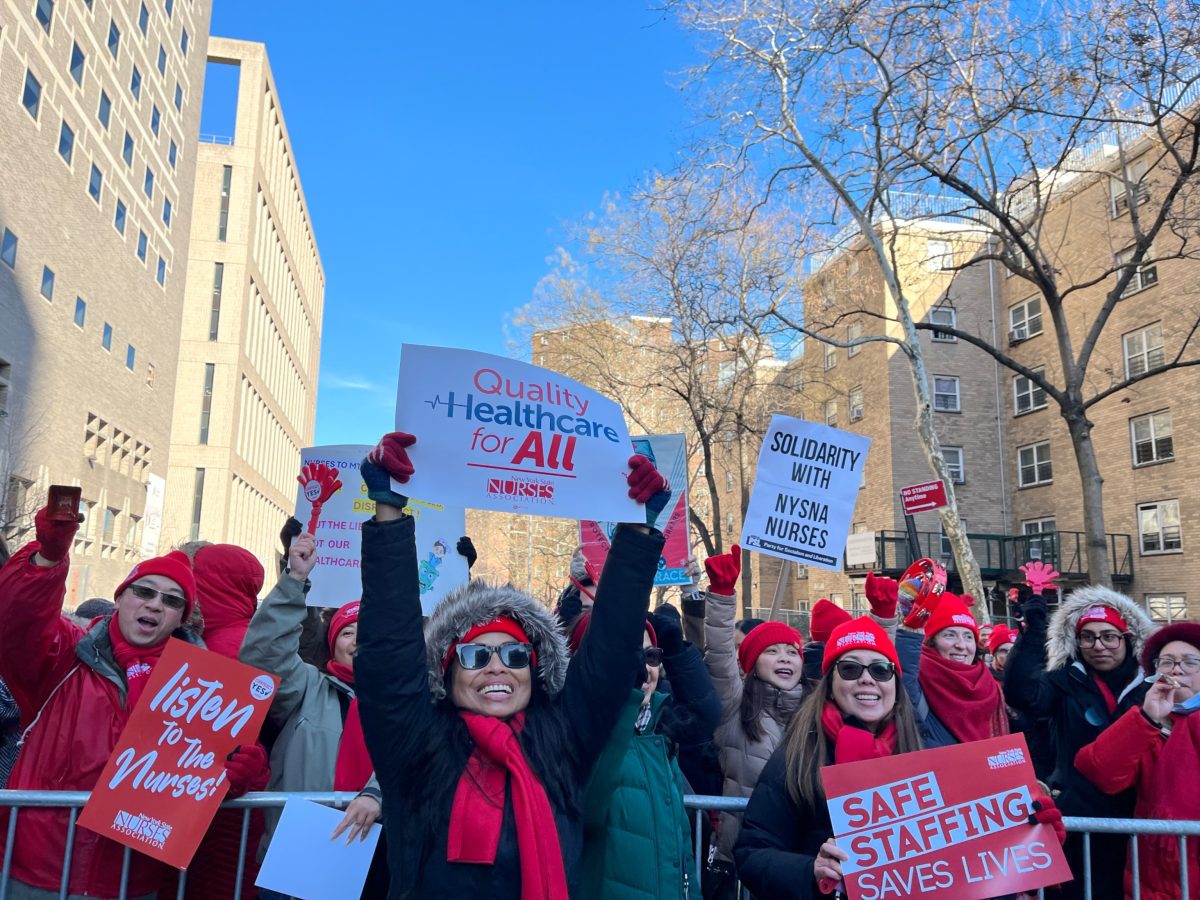
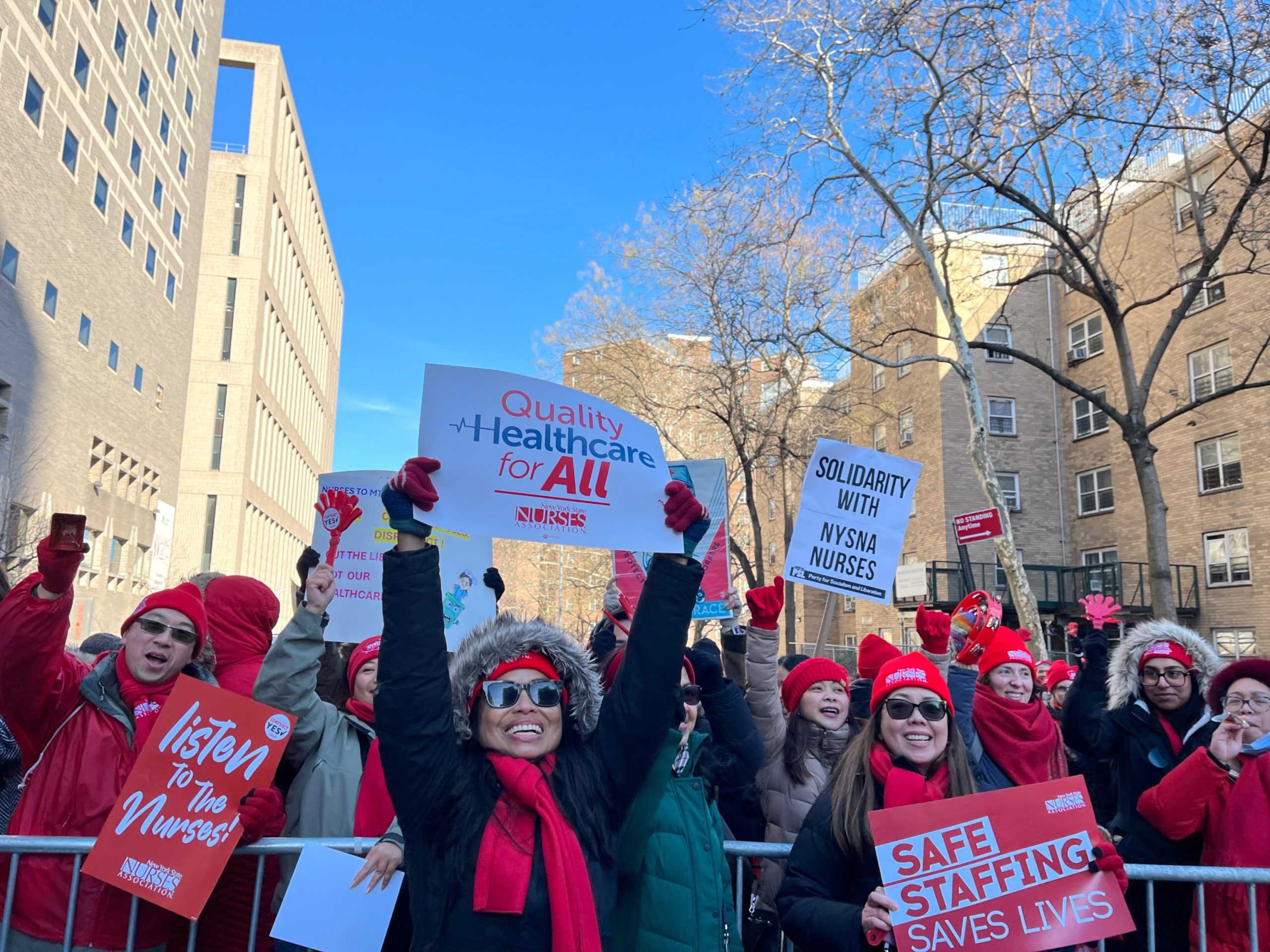
Photo via @nynurses on Instagram.

By COLE SINANIAN

news@queensledger.com

Nearly 15,000 nurses went on strike Monday morning at three of New York City’s wealthiest private hospitals in the largest nurse strike in city history. 

The nurses have accused management at Montefiore and NewYork-Presbyterian hospitals and multiple Mount Sinai hospital branches of threatening to cut nurses’ health benefits plan, failing to address workplace violence, keeping dangerously low nurse-patient ratios, and rampant union busting amid a surging flu outbreak and increasing instances of violent confrontations at hospitals around the city. Nurses are also asking hospitals to ensure that patients always have access to a real human at their bedsides at a time when some hospitals have moved to implement AI tools in patient care.  

Some 16,700 nurses at 15 hospitals throughout New York City and Long Island unionized under New York State Nurses Association (NYSNA) gave strike notices on January 2. Since then, 4,000 of those have withdrawn their strike notices after management at eight safety-net hospitals — which accept Medicaid and generally serve the city’s poorest communities — came to a tentative agreement with nurses. One of these, Maimonides Medical Center in Brooklyn, is in the midst of a merger with NYC Health and Hospitals after years of financial hardship. 

Mount Sinai fired several nurses on Monday morning just hours before the picket was said to begin, in what a NYSNA press release described as illegal terminations. According to NYSNA president and veteran Maimonides nurse Nancy Hagans, the fact that the city’s most cash-strapped hospitals are willing to negotiate when its wealthiest are not illustrates the greed and disregard for nurse and patient safety at New York City’s largest private hospitals.

“If the poorest hospitals in the city of New York could come to the table, negotiate a fair contract in order to protect our communities, in order to protect our patients, the rich hospitals should do the same,” Hagans said at a press conference on January 8. 

Along with Maimonides, The Brooklyn Hospital Center, Wyckoff Heights Medical Center, Bronxcare, Flushing Hospital Medical Center, and several other safety-net hospitals have come to tentative agreements with NYSNA nurses. Striking nurses are picketing at 10 locations, including the Montefiore Hutchinson Medical Center and Jack D. Weiler Montefiore campuses in the Bronx, and the Columbia University NewYork-Presbyterian Hospital, the Morgan Stanley Children’s Hospital of New York-Presbyterian, Mount Sinai Hospital and Mount Sinai Morningside in Manhattan. 

In a statement to the Ledger, Marketing and Communications Vice President for Maimonides Sam Miller expressed management’s willingness to continue negotiations with NYSNA: 

“We have resolved many of the key contract issues, and will continue negotiations toward a final agreement that rewards nurses for their important work while recognizing the increasingly difficult financial challenges that we and other safety net hospitals face,” he wrote. “We are grateful for our partnership with NYSNA, now and always, and look forward to finalizing a new contract soon.”

This is not the first time New York nurses have gone on strike for better staffing and work conditions. In January 2023, 7,000 nurses at Montefiore in the Bronx and Mount Sinai in Manhattan went on a three-day strike that resulted in a tentative contract that in theory would guarantee better staffing and wages. But three years later, nurses say that the for-profit hospitals have not honored their agreement and allowed conditions to slide. 

“We went on strike then, and we won what hospitals said we couldn’t: enforceable safe staffing ratios throughout our hospitals,” Hagans said. “Now the same hospitals are trying to undo the progress we’ve made on safe staffing for our patients. They want to take back everything we accomplished three years ago.” 

Many hospitals lack any kind of metal detectors or security infrastructure, Hagans said, which has allowed violent incidents to occur that put the lives of staff and patients at risk. 

Last week, a mentally disturbed patient at the NewYork-Presbyterian Methodist Hospital in Park Slope cut himself with a piece of broken toilet seat and threatened an elderly patient and hospital staff member before being fatally shot by police. And in November, a 20-year-old man entered Mount Sinai Medical Center with a gun and threatened to shoot the staff inside, before police apprehended him and shot him dead. Nurses at the hospital — who had attempted to save the shooter’s life after police shot him — rallied outside the hospital after the incident to demand increased security measures, and were subsequently issued disciplinary write-ups by management in what union reps alleged was an illegal disciplinary action. 

Meanwhile, the New York State Department of Health announced January 2nd that the state was experiencing its highest recorded number of flu hospitalizations in a single week, pushing nurses to the brink as they endure long shifts and high patient loads while struggling to maintain their own health amidst cuts to healthcare benefits. 

NYSNA nurses are also seeking to prohibit hospitals from relying on artificial intelligence for patient care. As part of their tentative agreements, safety net hospitals have already agreed to this, while Mount Sinai, NewYork Presbyterian, and Montefiore have refused to negotiate. 

“Every patient deserves a nurse at the bedside to take care of them, not artificially,” Hagans said. Patients need human touch. Every patient is a VIP, regardless of your zip code, regardless of your immigration status.” 

In a recorded press update, Mount Sinai Health System Chief Executive Officer Brendan G. Carr urged nurses to come back to work.

“Nurses want to be back at the bedside even though the unions have instructed them to stay home,” Carr said. “In fact, we had about 20% of our nurses show up for work today. I’m grateful to those of you who chose to stay at the bedside, and I welcome those of you who’d like to come back to work, to come back. And I commit to all of you, no matter what  your decision, that we will work tirelessly to come to an agreement that balances the incredible value you bring to our teams, with the financial crisis that’s facing healthcare today.”  

On Friday, Governor Kathy Hochul announced that she would issue an executive order to ensure striking hospitals stay operational. 

“This could jeopardize the lives of thousands of New Yorkers and patients, and I’m strongly encouraging everyone to stay at the table, both sides, management and the nurses, until this is resolved,” Hochul said in a recorded statement posted on social media. 

Mayor Mamdani, for his part, voiced his support during a picket in Morningside Heights on Monday. 

“New Yorkers have a right to quality healthcare, as do the nurses who provide that care,” he said. “My job as mayor is to protect both of those rights.” 

According to a Monday NYSNA press release, NewYork-Presbyterian, Montefiore and Mount Sinai had spent more than $100 million on replacement nurses bussed in from elsewhere around the state, money that Hagans says could have been spent meeting the nurses demands. Mount Sinai had an annual revenue of $11.9 billion in 2024, while NewYork-Presbyterian CEO Steve Corwin earned a salary of $26.3 million, or about $72,000 per day. 

“They are spending millions of dollars to bring in out of town nurse replacements that are not as highly qualified as our nurses,” Hagans said. “We are asking them to take the money and invest them into our communities, invest them into our patient care, and invest them into reducing workplace violence.”

Maduro Arrives in Brooklyn

Locals protested outside the notorious Sunset Park jail where Venezuela’s president is being held, though few Venezuelans were in attendance. 

By JACK DELANEY 

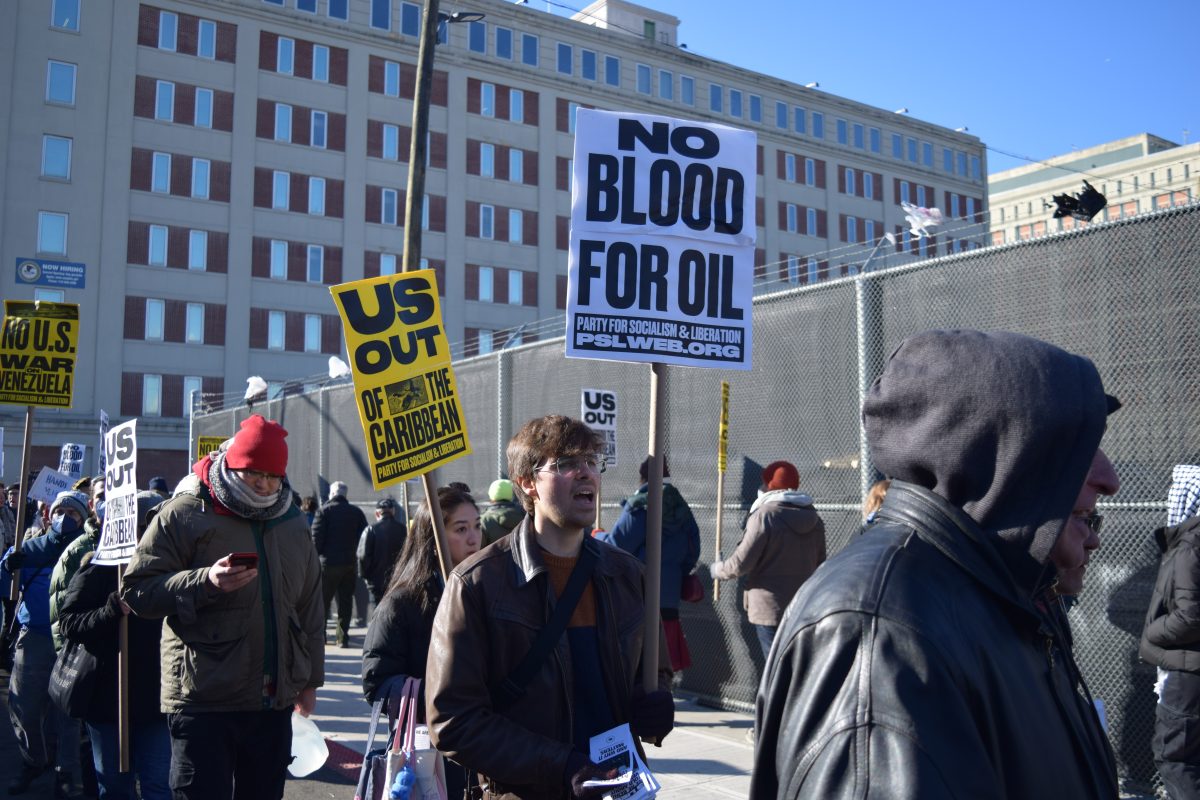
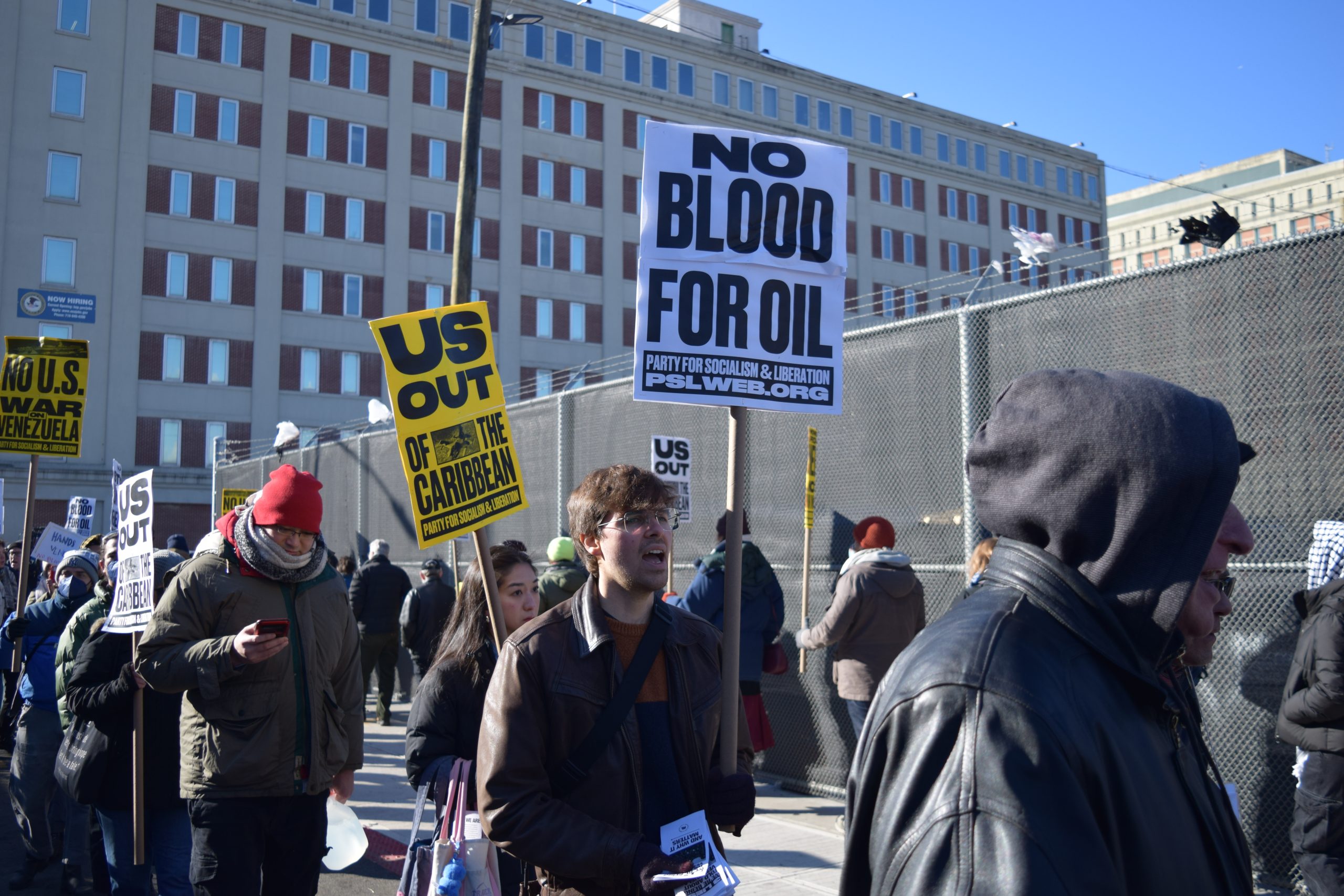
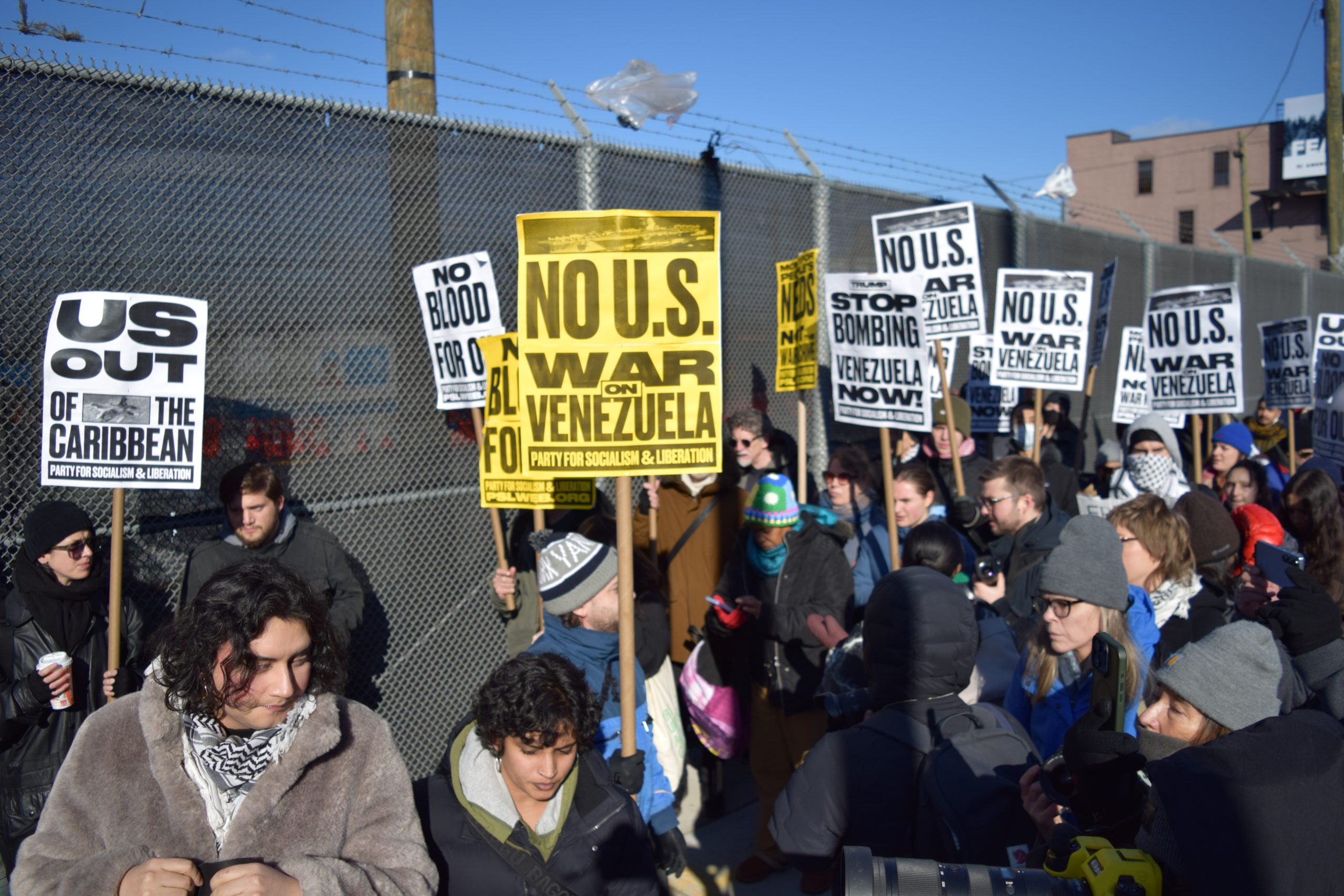
“No blood for oil. Hands off Venezuela’s soil!”

On Sunday, January 4, about 80 pro- testers gathered around the corner from the Metropolitan Detention Center — a notorious jail in Sunset Park where Nicolas Maduro, the president of Venezuela, is being held.

“We need to reject this now,” said Taher Dahlel, a Sunset Park resident and an organizer with Palestinian Youth Movement. “We don’t want any more forever wars: not in Venezuela, not in Palestine, not anywhere across our region.”

What Happened?

Tensions between the United States and Venezuela have been rising since September, when the Trump admin- istration began striking alleged “drug boats” in the country’s waters.

But the capture of Maduro and his wife, which occurred last Saturday dur- ing a “large-scale strike” of the capital, Caracas, marks an extraordinary escala- tion in the conflict — the first unilateral kidnapping of a sitting leader by the US since the 1989 invasion of Panama.

On Monday, Venezuelan Vice Presi- dent Delcy Rodriguez was sworn in as interim president, condemning the at- tack — which killed 40 people, includ- ing civilians in a three-story apartment complex and 32 soldiers sent from Cuba — but noting she would work with the US “on an agenda of cooperation.”

In New York, meanwhile, Maduro arrived at Brooklyn’s Metropolitan De- tention Center (MDC) late on Saturday, and was arraigned in Manhattan on Monday.

The MDC, a well-known landing pad for celebrity arrests, has a troubled history. “Inmates at the chronically-un- derstaffed MDC have suffered through an eight-day blackout during a polar vortex,” said State Senator Andrew Gounardes earlier this year, as well as “constant lockdowns, medical mis- treatment and botched cancer diagno- ses, and complaints of maggot-infested food.”

Opened in 1990, the MDC became the only major federal jail in New York City in 2021 when the Metropolitan Correctional Center (MCC) in Manhat- tan closed — temporarily, officials say — after Jefferey Epstein died while in custody.

The MDC now holds Luigi Man- gione and Sean “Diddy” Combs, among other household names, and was used last summer to jail over 100 immigrants who had been detained by ICE.

“The horrors I witnessed behind those walls will never leave me,” wrote Sean Chaney, a formerly incarcerated artist who spent 15 months in the MDC. “The conditions inside are beyond inhumane — they are deliberately cruel.”

Residents and PSL members rally around the corner from the Metropolitan Detention Center, near Industry City.  

What Are People Saying?

Speaking in a press conference shortly after the initial announcement, President Trump said that the US would temporarily “run” Venezuela, though other officials appeared to contradict his statement; he also promised to “get the oil flowing,” with talks reportedly set with industry giant Trafigura on next steps.

“Maduro is a horrible dictator,” said Governor Kathy Hochul on Monday. “He’s a bad, bad person, [but] I also be- lieve in following the Constitution and the rule of law that we have in place.”

For his part, newly-elected Mayor Zohran Mamdani noted at an unrelated event in Greenpoint that he had called Trump to “to register his opposition” to the coup, “based on being opposed to a pursuit of regime change, to the viola- tion of federal international law, and a desire to see that be consistent each and every day.”

The rally outside the MDC in Sun- set Park on Sunday morning, organized by a coalition that includes the Party for Socialism and Liberation, followed a similar theme. “I think the rule of law is really important, even when someone that is not that great gets kidnapped,” said Nadine, a local, who stood at the outskirts of the designated protest area with a homemade sign before eventu- ally joining the throng.

Another recurring beat was a pro- gressive riff on America First. “It’s important to show [that] people aren’t going to tolerate the US meddling in other countries’ affairs, taking their oil, taking their resources,” said Jake, a lifelong Sunset Parker. “Brooklynites don’t want all of their money being put toward in- vasions, or being spent on these things that don’t help our own conditions in our own lives.”

Some protesters mused about why Maduro was brought to New York City, specifically. “It’s not unconnected to the attacks we’ve seen on our immigrant neighbors, many of them Venezuelans, who were driven out of their country after more than 15 years of brutal sanc- tions,” said Dahlel. “Now Brooklyn is being used by the United States to build a further authoritarian system.”

Yet very few Venezuelans, if any, were in attendance. TV crews clumped around an older Latino man waving a Venezuelan flag, taking quotes. But when a correspondent finally asked whether he was from Venezuela, he laughed. “Me? No, I’m Puerto Rican.”

Elsewhere in the city, many Venezuelan New Yorkers celebrated Maduro’s ouster. Venezuelans and Immigrants Aid, a prominent local nonprofit, posted a cartoon of a grandmother crying tears of joy, captioned “For justice and the swift liberation of Venezuela!”

And at Lulla’s, a Venezuelan-owned cafe and bakery in East Williamsburg, the owners told NewsNation’s Marcus Espinoza that they were “rejoicing,” with one patron saying “We have been waiting for this day for decades.”

In Sunset Park, however, the crowd that assembled around the corner from the MDC worried about the precedent this attack might set. “I came out here today because a president of another country was kidnapped and put into federal prison,” said Emmanuel, whose family is Dominican. “I live in Sunset Park, but regardless of where I lived I would’ve been here today to support the cause — because there should be no blood for oil. That’s the number one problem.”

An Elegy for Oakland Street

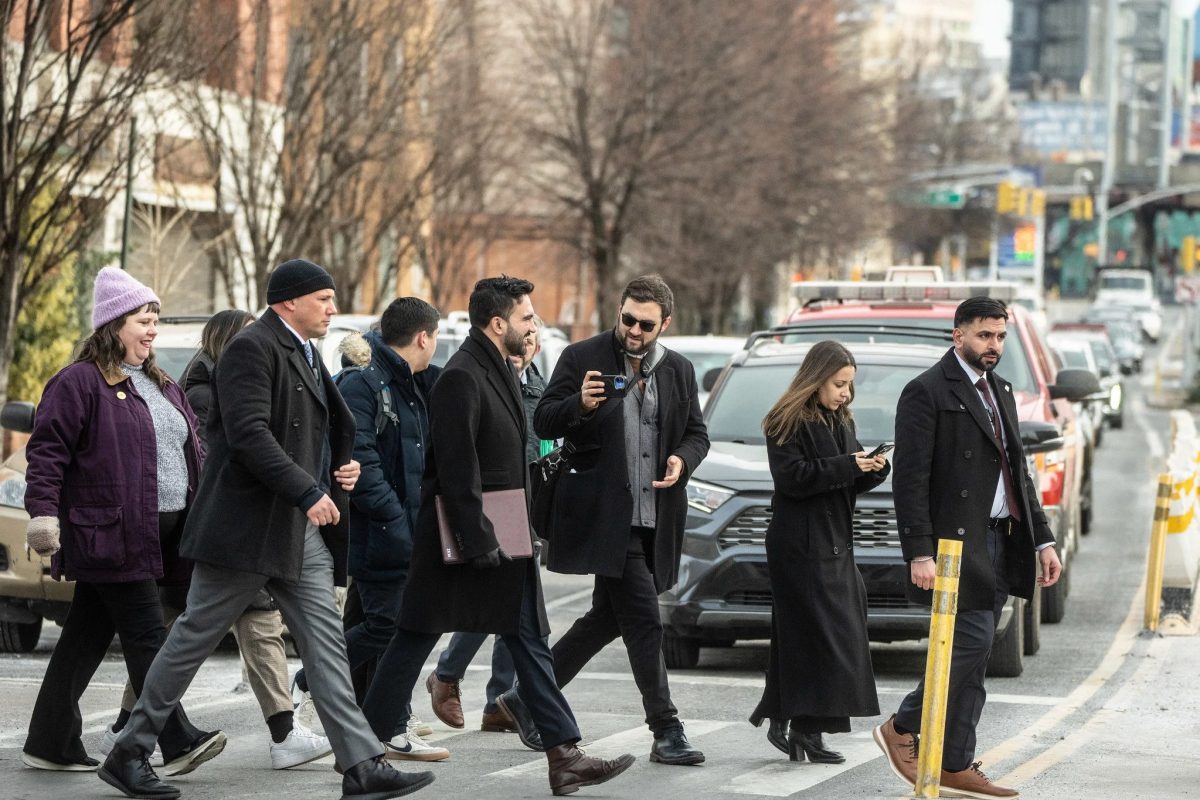
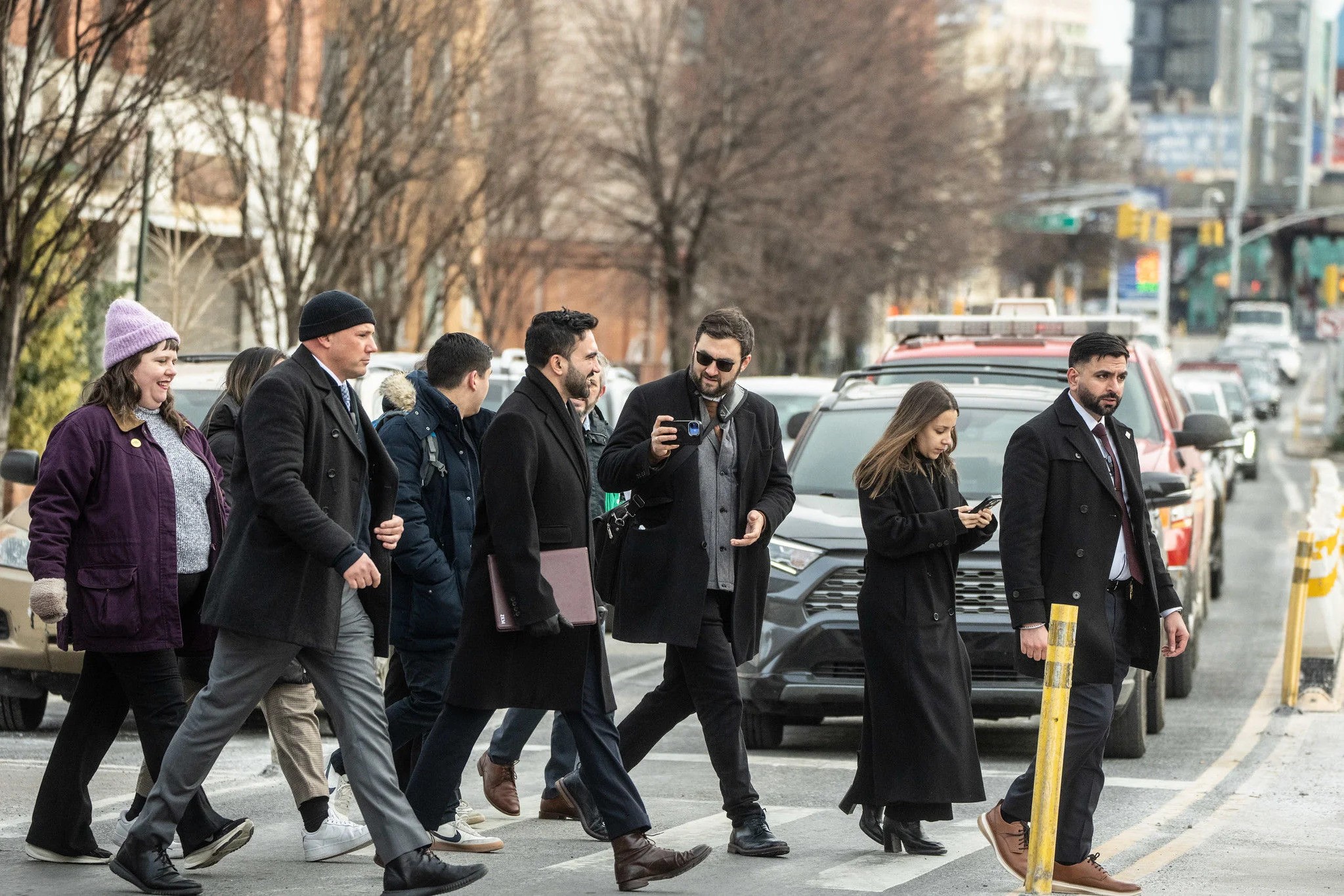
Mamdani crosses McGuinness Boulevard. Photo: Mayor’s Office.

GEOFFREY COBB

Author, “Greenpoint Brooklyn’s Forgotten Past”

gcobb91839@Aol.com

One of the first things that our new Mayor Zohran Mamdani did was to come to Greenpoint and address the controversy surrounding McGuinness Boulevard, the four- lane traffic artery that divides the neighborhood and many local resi- dents. Before we address the present controversy let’s take a look at the history of the boulevard. Once, Mc- Guinness Boulevard was not a four- lane speedway at all/ It was once quaint Oakland Street; a charming cobblestoned street lined by pretty, wood-frame 19th-century homes typical of our historic district.

It is hard to conceive the mindset that wanted to destroy such a lovely street and replace it with a soulless four-lane highway, but in the late 1950s automobiles were seen as the future of transportation and the city was ready to carve up Greenpoint for motorists. Robert Moses, the in- famous power broker, had his sights on our area. Moses, who arguably had the greatest influence on New York’s infrastructure of any person who ever lived, wanted to destroy Oakland Street. The destruction of Oakland Street was only a small piece in the grand scheme of Rob- ert Moses who built the BQE, the Tri-borough Bridge, and the Cross-

Bronx Expressway. Moses wanted a city for motorists and tens of thou- sands of homes across the city fell victim to his projects.

Oakland Street was, sadly, the only north-south street, other than Manhattan Ave. that stretched to Newtown Creek. In the late 1950s the city determined that the rick- ety old Vernon Blvd. Bridge, which Greenpointers called the Manhattan Avenue Bridge, should be replaced. The north end of Oakland Street be- came the logical place to build a new bridge of the creek, and they built the Pulaski Bridge to funnel traffic between the Brooklyn Queens Ex- pressway in Brooklyn and Long Is- land City.

When the new bridge first opened, Oakland Street was widened, but only as far south as Greenpoint Ave- nue – and gas stations to service the heavy car and truck traffic quickly appeared. The narrow section of Oakland Street remaining beyond Greenpoint Avenue survived, but created traffic jams, dooming the quaint cobblestone street and its pretty houses.

All of the houses on the east side of Oakland Street and all the houses from Driggs Ave to the BQE were condemned by the City to create the new grand boulevard. Some residents tried to fight and save their homes, but their utilities were cut off, and they grudgingly accepted com- pensation for their beloved homes. Amazingly though, most people did not protest. They regarded losing their homes and the cobblestoned street as the price to pay for progress. The only defiance by the community was a proposal for more gas stations on the boulevard south of Meserole Av- enue. The commu- nity killed the idea and that is the only reason new hous- ing was built on the thoroughfare at all.

In 1964, Sal- vatore Tortorici pressed his local alderman, Joe Shar- key to rename the new boulevard in honor of the great- est politician in lo- cal history: Peter J. McGuiness, who had passed away in 1948. The City Council passed the name change unani- mously and Oak- land Street was re- named McGuinness Boulevard.

Many local residents have complained about the way motorists drive along the boulevard. The four wide lanes encouraged aggressive driving, illegal passing, and excessive speeding—conditions that routinely lead to serious motor vehicle collisions. Hundreds of pedestrians have been hit on McGuinness Boulevard, with over 200 fatalities since 1956, including 11 pedestrians or cyclists killed between 1995 and 2021.

Activists in the community pushed for the transformation of McGuinness into a two-lane, pedestrian friendly artery with bike lanes. Wealthy production company own- ers Gina and Tony Argento funded a movement to block the changes to the boulevard. After the redesign began in 2023, the Adams admin- istration abruptly switched course, throwing its support behind a re- vised plan for the northern section of the road that critics called wa- tered down and insufficient.

In August, the Manhattan district attorney charged Ingrid Lewis-Mar- tin, a top aide to Mr. Adams, with conspiring to kill the original pro- posal, in exchange for a relatively small sum of money and a speaking role on a television series owned by the Argento siblings. Ms. Lewis-Martin pleaded not guilty, as did the production company’s owners, Gina and Anthony Argento, who were also charged.

Last week, Mayor Mamdani, surrounded by supporters with signs bearing the names of crash victims on the boulevard, said he would finish the original, full plan for the roadway as soon as weather permit- ted, and that he would not be “bowed by big-money interests.” “Thanks to so many who went out and pounded the pavement, that pavement now will change,” he said. Some residents fear that the changes to the boulevard will lead to increased auto traffic on the streets running parallel to the boulevard. One thing though is certain, the boulevard will soon change into a narrower, more pedes- trian and cyclist friendly artery.

New Years Fireworks Fraud in DUMBO

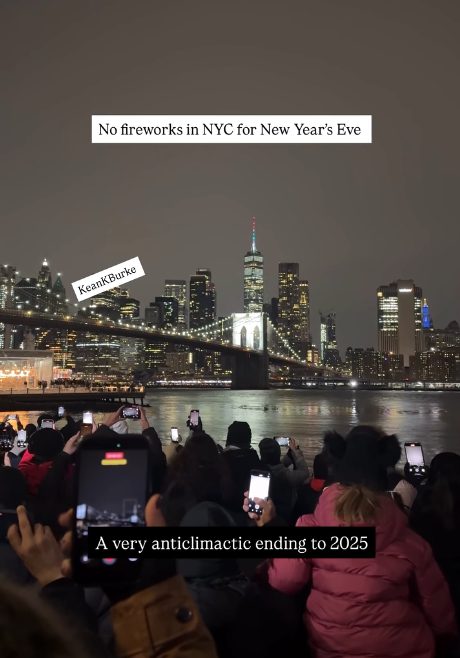
A crowd massed by the Brooklyn Bridge on NYE for fireworks that never came. Photo: Kevin Burke, @keankburke on Instagram.

By COLE SINANIAN 

news@queensledger.com 

Thousands of people were left disappointed on New Year’s Eve after waiting in the cold at Brooklyn Bridge Park for a midnight fireworks show that never came. 

According to 40-year-old photographer and Brooklynite Kevin Burke, the confusion likely stemmed from erroneous information from popular tourist account Time Out New York, which posted an article advertising a New Year’s fireworks show over the Brooklyn Bridge. In reality, fireworks shows on New Year’s are held annually in Central Park and Prospect Park, but not at the Brooklyn Bridge, which is instead known for its July 4th fireworks.  Additionally, a Facebook video posted on an account called New York Vibes that showed the July 4th fireworks show over the Brooklyn Bridge circulated on multiple social media platforms, which Burke suspects might’ve contributed to leading some tourists astray. 

By the time Time Out New York issued a correction to its article it was too late. Burke had been in Midtown, attempting to photograph the Times Square New Year’s Eve festivities. But when the immense crowds blocked him from getting anywhere near the celebration, he decided to check Google for a last-minute plan B. 

“I saw the AI response from Google saying where to see fireworks,” Burke said. “They mentioned all these normal places, like Prospect Park, Central Park, and it also mentioned Brooklyn Bridge Park.”

“I’m like, Brooklyn Bridge Park, they don’t do fireworks,” Burke continued. “Then I saw articles from Time Out New York, which is a big Instagram page. So I’m like, ‘hold on, maybe they got some inside information that I don’t know about.”

The A train was quiet until he got to High Street, Burke said, where large crowds clogged the stairs and subway entrances. Outside, there were cops, police barricades, and what looked like thousands of people, some with tripods set up, Burke said, yet the bridge was still open and full of cars. The crowds at the park were so large that Burke hardly had space to set up his own camera. 

Burke also noticed that there were few English speakers among the crowd, suggesting the majority could have been tourists who were easily misguided.

“The crowd didn’t even want to let me get a spot there,” he said. “I was like ‘let me squeeze in here.’ And they were, they were looking at me funny. I don’t know if they didn’t understand me, they were just like, staring at me. I had to push my way through.” 

Videos on TikTok and Instagram showed crowds of people on the grassy hill overlooking the East River at Brooklyn Bridge Park counting down with their phones out. Some cheered and shouted “Happy New Year!” despite the lack of fireworks. In other videos people danced and posed for photos, seemingly unphased by the disappointment. According to Burke, people stuck around until about 10 minutes after midnight. 

”No one got pissed off,” Burke said. “That’s another reason I knew they weren’t from New York. New Yorkers would have been like, bugging out.”

Waterfront Museum Gets 400k Boost

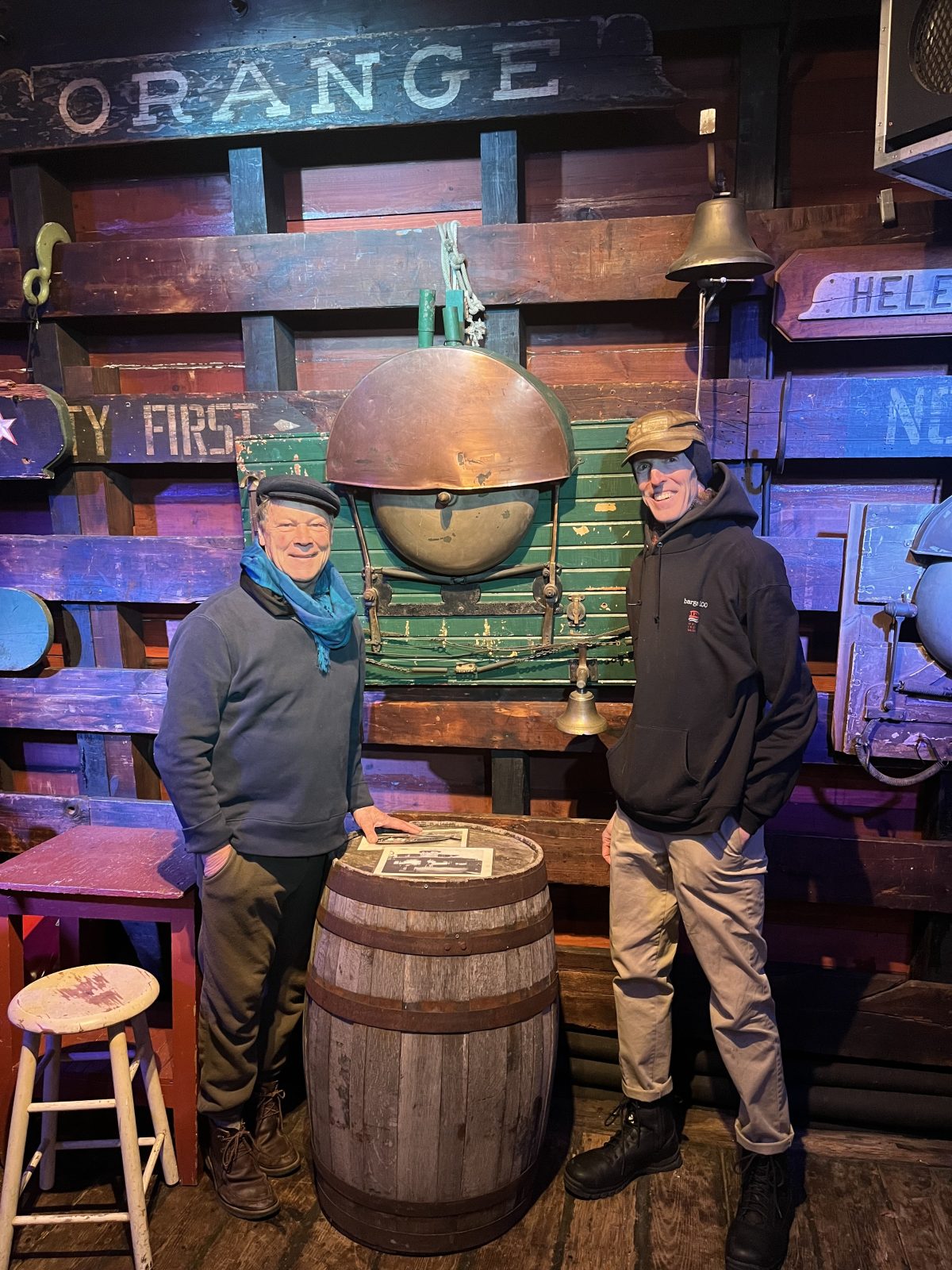
Waterfront Museum Director David Sharps (left) and museum Docent and Researcher Stefan Dreisbach-Williams (right).

By COLE SINANIAN 

news@queensledger.com 

There’s only one wood-covered barge in all of the five boroughs, and it’s about to get a makeover. 

The Lehigh Valley 79, better known to its Red Hook neighbors as the Waterfront Museum, has for decades been a floating testament to the region’s maritime-industrial past. Now, thanks to a $410,702 state grant, the boat will be towed to Staten Island for structural repairs in the spring, while its dock will be fortified to keep the barge afloat in an age of worsening storms and rising sea levels.

Built in 1914, the boat is the project of Captain and Museum Director David Sharps, a professional juggler who spent his career performing on boats in Europe and the Caribbean. Sharps, who acquired the Lehigh Valley 79 in 1985 and has spearheaded its restoration, belongs to a presumably niche community dedicated to the art of floating theater. Visitors to the barge are greeted upon entry with a bizarre contraption that passes a ball through a series of elaborate slides and pulleys—a nod to Sharps’ juggler past. 

It is among the last remnants of a period of New York history known as the Lighterage Era, during which small barges called “lighters” transported railroad cargo from railyards on the mainland to and from the islands of New York Harbor. Now, the barge offers a rare glimpse into this near-forgotten era of maritime commerce. But keeping a 112-year wooden boat afloat is no easy task— the wood structure is susceptible to rot and destructive mollusks called ship worms. With the grant, Sharps will lead structural improvements to the ship’s wood body, as well as the construction of a new mud berth that will help keep the barge grounded during storms and flood conditions. 

”I bought the boat for $500,” Sharps said. “It had 300 tons of mud in it.  Took two years to float it, another couple of years to get it accessible for the public.” 

Despite major redevelopment coming to Red Hook in the coming years, Sharps is confident that the Lehigh Valley 79 will remain for decades to come. Docked on private land, the barge turns into a floating theater in the summer, offering concerts and children’s programming to the public. In May 2026, the barge will host a Cajun music night called “Swamp in the City.” This past May, it hosted a Moby Dick-themed performance called “Into the Charmed, Churned Circle” by NYC artist Stanzi Vaubel. 

When Sharps first arrived in Red Hook in 1994, the neighborhood was what he described as a “no man’s land.” Part of his goal with the Waterfront Museum has been to build a cultural hub that draws visitors to Red Hook with the promise of a unique experience. 

“Now that there’s people here, it’s our hope to provide a community space where people can come together, where diverse people can share ideas, where creative people can maybe take you out of your everyday life and maybe transport you in time,” Sharps said. 

Altogether, Sharps said the repairs will take about eight weeks and will likely begin sometime in the spring. In the meantime, the Waterfront Museum has free open hours on Thursdays from 4-8pm and Saturdays from 1-5pm at 290 Conover Street in Red Hook. 

Fill the Form for Events, Advertisement or Business Listing