
Kashi Brings North Indian Flavors to Downtown BK

By COLE SINANIAN | news@queensledger.com
History, spirituality, and cuisine collide spectacularly in the North Indian city of Varanasi, where the Buddha is said to have given his first sermon in the 5th century BC and where Hindus believe the waters of the Ganges River have the power to wash away the sins of mortals.
As Mark Twain once said, the city is “older than history, older than tradition, older even than legend and looks twice as old as all of them put together.” It is also a world-class culinary destination known for a diversity of cuisine that reflects its position at the crossroads of Mughal, Punjabi, and Awadhi cultures, noted for its heavy use of aromatics like cardamom, clove and saffron, slow-cooked lamb and mutton stewed with bright herbs, rich curries, and addictive fried street snacks.
Brothers Sam and Nick Yadav, along with renowned Chef Hakikat Dhawan, bring a piece of this rich tradition to Kashi, their new restaurant on Livingston Street in Downtown Brooklyn. Named for Varanasi’s ancient moniker, Kashi’s menu highlights both hard-to-find North Indian specialities and beloved global Indian classics. It’s all paired with an equally exhilarating cocktail menu that showcases Indian whiskies and South Asian flavors like cardamom, rose water, coconut and hibiscus.
The restaurant’s roots go back to 2000, when Nick Yadav worked alongside Chef Dhawan at the Taj Palace Hotel in New Delhi. But their professional relationship didn’t begin until 2023, Nick said, when the trio got together to discuss the restaurant concept. Sam and Nick had by this point spent more than 20 years working in the New York City restaurant scene, while Dhawan had built a career helming kitchens at classic NYC Indian joints like Union Square’s GupShup and the Upper West Side’s Baazi.
“Most of our signature dishes are coming from North India,” Nick Yadav said. “Before we were more in the American restaurant scene, but our dream concept was to one day open an Indian restaurant.”
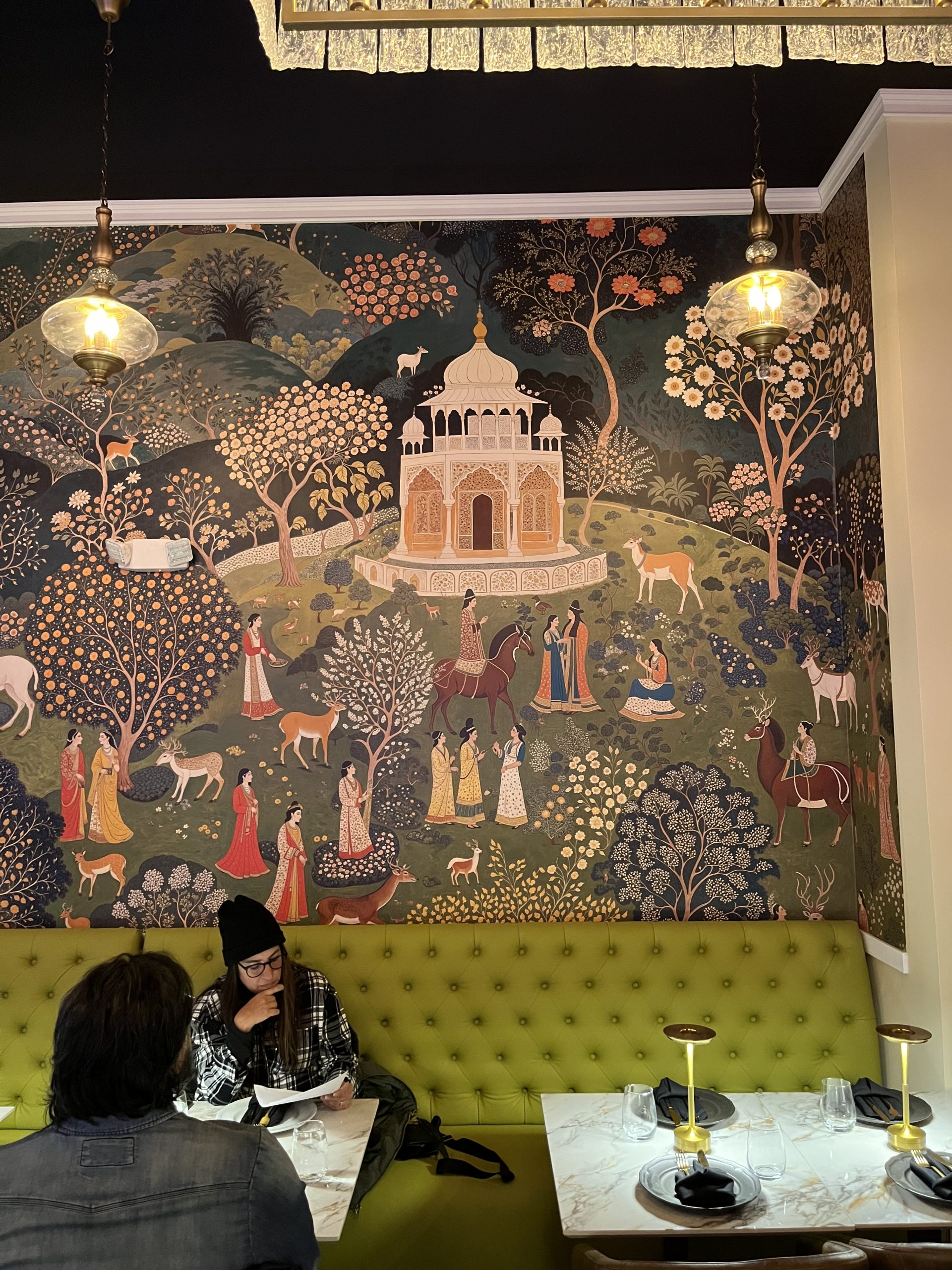
Sam and Nick kept a close dialogue with the Staten Island-based designer Maria Shafran during Kashi’s design process, ensuring that the deep spiritual roots of the restaurant’s namesake could be felt in its two dining rooms. The first dining room, for example, features a wall-to-wall painting of a tranquil forest scene in which followers of the Hindu deity Krishna romp among the trees and flowers. Called gopi, these worshippers are often depicted as young women and are regarded in Hinduism for their unwavering commitment to Krishna and are said to embody unconditional love.
In addition to Indian diasporic classics like Butter Chicken and Dal Gosht — or slow-cooked lamb and yellow lentil stew — other specialties at Kashi unique to North India include Methi Murgh, a rich, Fenugreek chicken curry with roots in the 17th century Mughal Empire, and the Paratwala Paneer Tikka from Punjab, marinated cubes of salty paneer cheese cooked with mint and cilantro chutney.
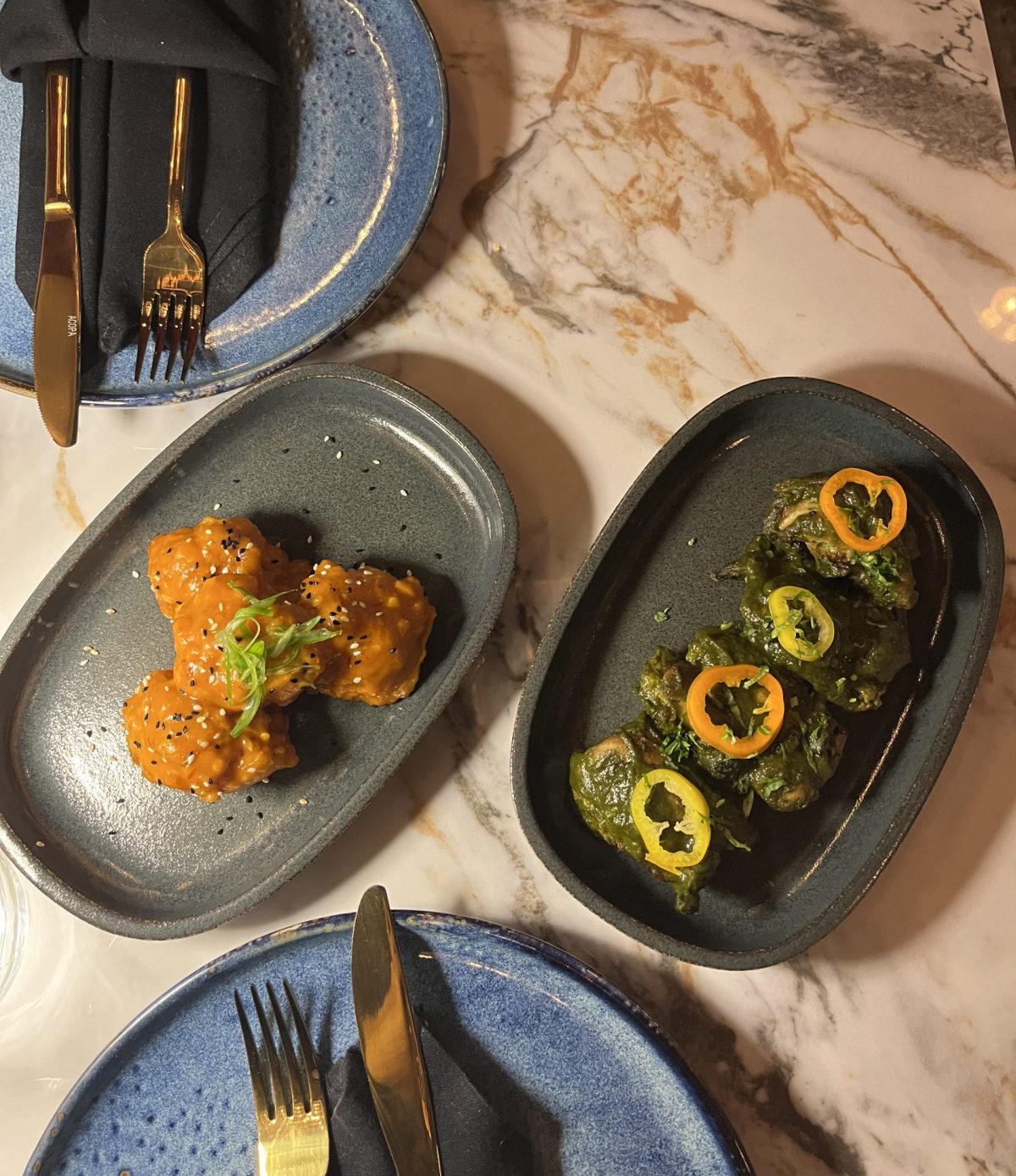
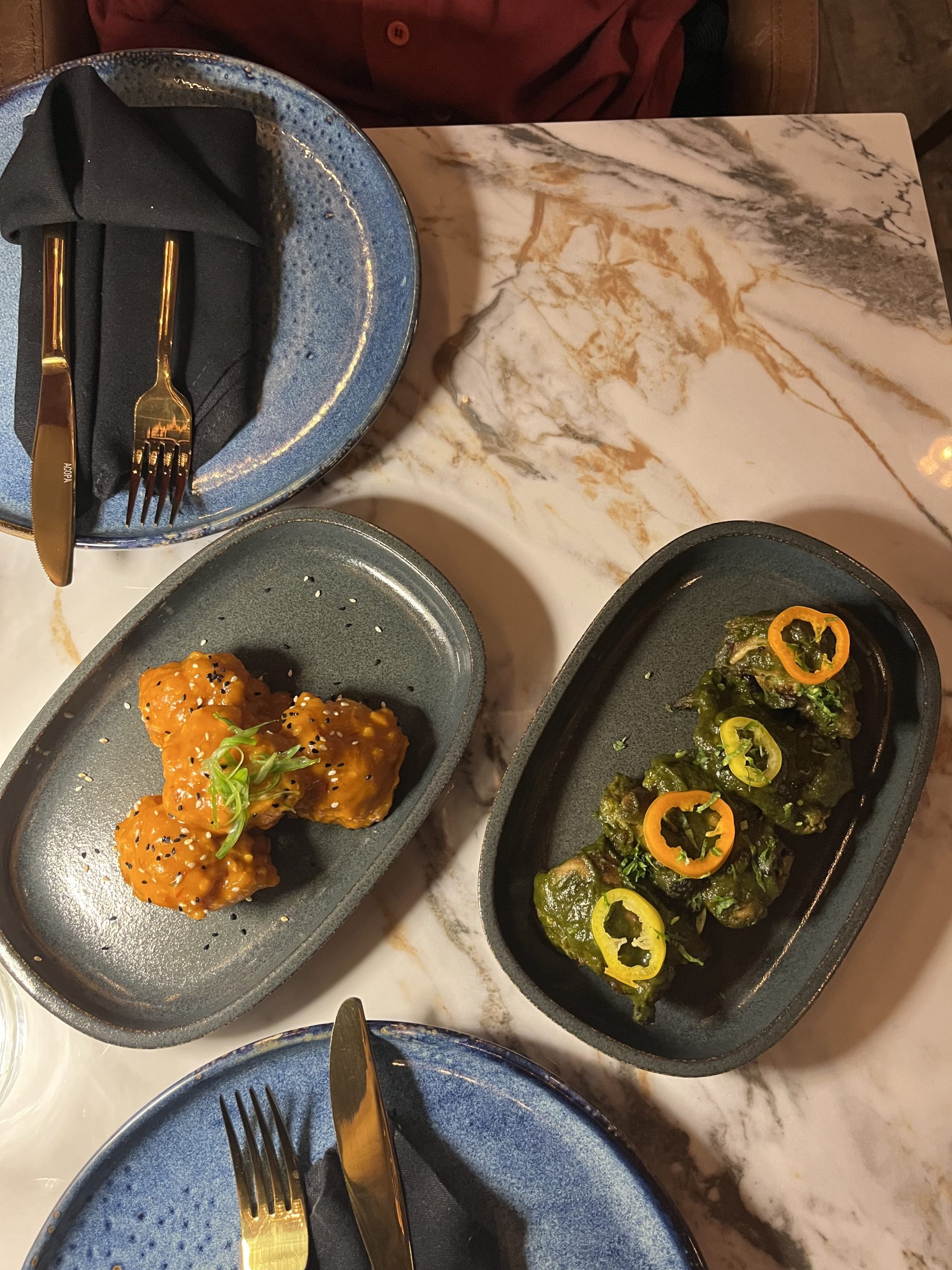
Kashi’s Achari Gobhi, or chili-laced fried cauliflower, is a tempting appetizer in its own right, though it’s also, perhaps inadvertently, a shockingly convincing meat substitute. As the Yadav brothers explained, the dish is a version of a popular street snack in the North Indian state of Uttar Pradesh, traditionally made with battered and deep-fried fresh cauliflower. But Kashi’s version forgoes the deep-frying for a less greasy pan-fry and is served in a bright orange spicy-sweet chili sauce and garnished with black and white sesame seeds.
“The traditional one they make with batter and a sauce, it could be coriander and mint chutney,” Nick said. “But with this one you don’t need anything because it’s already sauteed with sweet chili.”
Other dishes are creations of Chef Dhawan’s inspired by regional flavors. In what he’s dubbed Chicken Tikka Chlorophyll, four herby, deeply spiced slabs of green-hued chicken breast come topped with sliced yellow chilis. And in a rice dish called Gucchi aur Sukhe Tamater Ka Pulao, wild Himalayan morel mushrooms — foraged only in the alpine forests of Kashmir — are paired with acidic pops of sundried tomato and fragrant basmati rice.
“You won’t see a lot of places that are using Gucchi mushroom,” Nick said. “It’s very expensive. It comes dry and you soak it in water and it gets very soft and spongy.”
As Sam explained, the brothers grew up in New Delhi but would spend their summers visiting their relatives in Uttar Pradesh, not far from Varanasi. Evenings in this part of India indisputably taste of Malaiyo, Nick said, a kind of condensed milk confectionery eaten throughout the region. The brothers recalled their grandfather taking them out for nightly Malaiyo during visits. Although it’s sweet and decadent, so ubiquitous is Malaiyo in Uttar Pradesh that it’s hard to even call it a dessert, Sam said.
“In India, in a lot of places, they’re eating it as an evening snack,” he said. “A few friends meet in the evening, they’ll say ‘ok, I had a very good day, let’s go for a party, a little treat. Let’s go eat Malaiyo.”
But in US restaurants authentic Malaiyo is not so easy to find. This is partly due to its laboriousness, as it can take up to ten hours to prepare. The milk is gently cooked on low heat for eight hours, then left to cool in the fridge before sugar and sometimes cardamom is added for flavor. The result is a dense but light mixture that’s thicker than condensed milk.
But the most exotic item at Kashi might actually be on its cocktail menu. Kashi’s Old Fashioned features rosewater, Indian whiskey, black cherry and is garnished with a betel leaf, known in India as paan. Used for millenia throughout southern Asia as a palette cleanser, breath freshener, and stimulant not unlike tobacco, paan imparts a mild bitterness to the drink. As a garnish it represents another bridge between modern Western dining and the ancient culinary traditions of Uttar Pradesh. For example, a popular snack found at markets in the region involves a paan leaf rolled into a cone with rose petals, honey, cardamom and sometimes tobacco.
To experience the full effect at Kashi, Nick and Sam recommend chewing a bit of the paan between sips and bites.
“Varanasi is the main place I would say where a lot of people eat paan in very large quantities,” Sam said. “So we made our old fashioned with it. But ours has no tobacco, of course.”
Kashi is open Monday through Thursday from 5pm to 10pm and Friday through Sunday from 11am to 10pm. For reservations, check Resy, OpenTable, or visit Kashiny.com